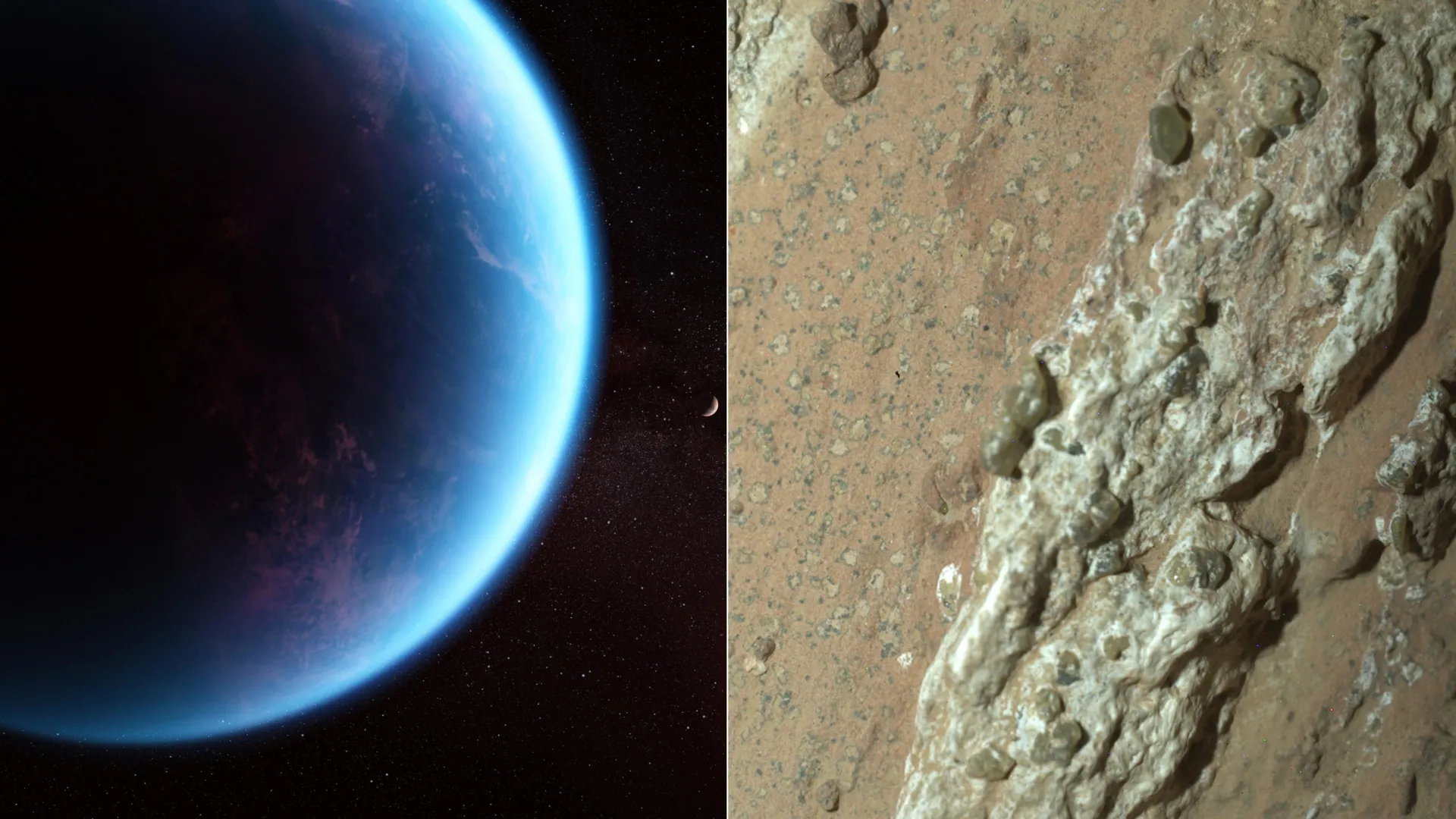
It may seem like we are on the verge of discovering alien life. In 2025, a press release stated that we have the “strongest hints yet” of extraterrestrial life on the exoplanet K2-18b. And when talking about a collected sample from a rock named “Cheyava Falls” on Mars, NASA Administrator Sean Duffy said this was the “closest we have ever come” to discovering life on the red planet.
Such moments capture the imagination. But they also raise an important question: what do the majority of scientists actually think? Surprisingly, we usually don’t know.
When a scientific controversy or breakthrough dominates headlines, press officers and journalists often quote a handful of experts. These views may be insightful, but they rarely tell us what the wider scientific community thinks. And yet public discussions frequently rely on phrases such as “the science says” or “scientists believe”, as if there were a clear and measurable answer.
In reality, systematic evidence about scientific opinion is often missing. My colleagues and I recently tried to change that in the domain of astrobiology. Shortly after the two major announcements of possible extraterrestrial life in 2025, we surveyed astrobiologists to understand how expert judgment was distributed across the field.
The first case concerned the exoplanet K2-18b. In April 2025, researchers reported possible traces of molecules called dimethyl sulfide and/or dimethyl disulfide. On Earth, these are associated with biological activity.
Media coverage was extensive, with many reports framing the finding as an extraordinary advance in the search for alien life. The second case came in September, when NASA announced that Cheyava Falls appeared to preserve a potential biosignature – so-called “leopard spots” which are mineral rings that on Earth are often formed by microbial activity. Again, headlines, and NASA officials themselves, suggested something momentous.
Extract — continue reading at the source.


