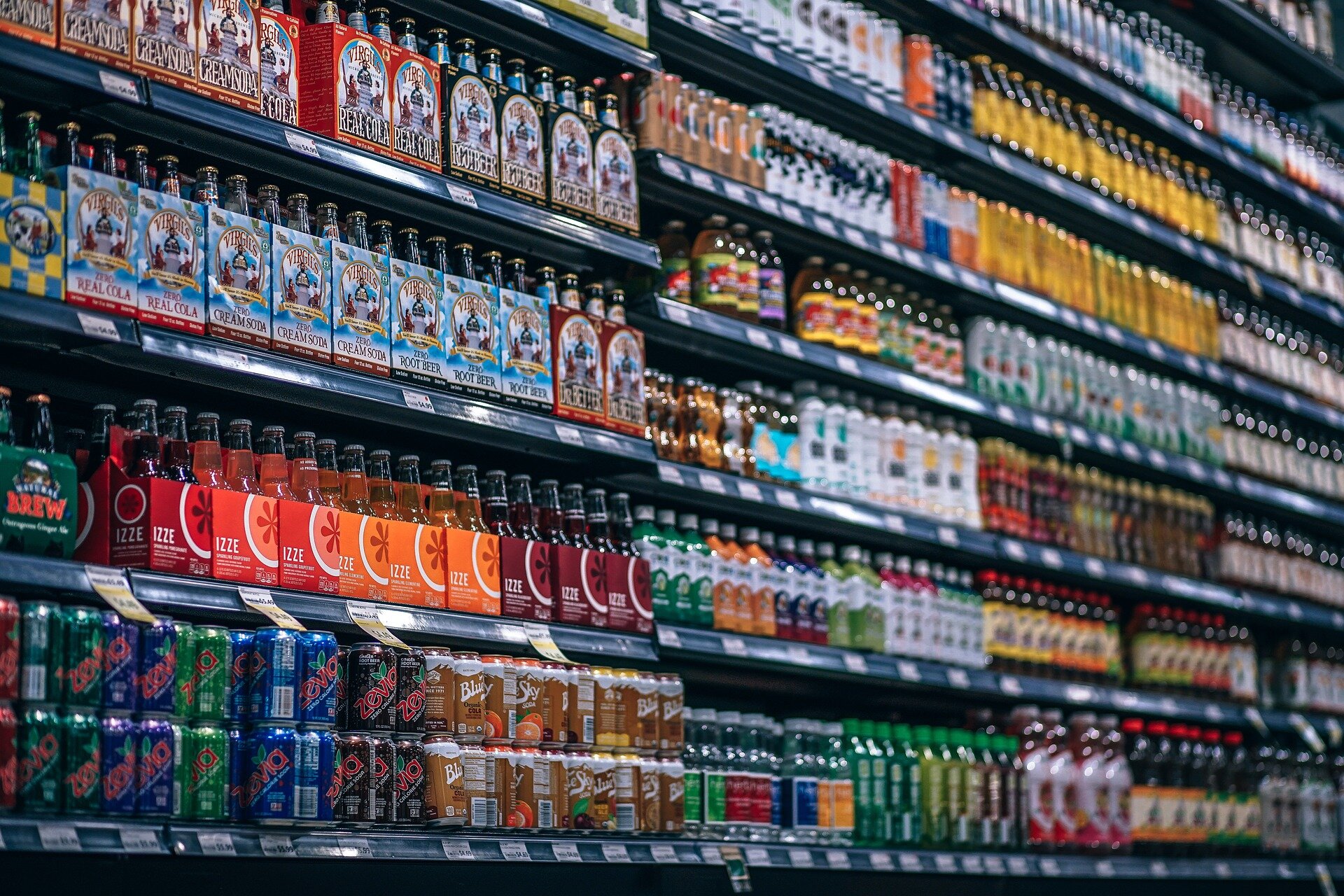
This article has been reviewed according to Science X's editorial process and policies. Editors have highlighted the following attributes while ensuring the content's credibility: In March 2021, Berkeley, Calif., became the first city in the world to ban the display of sugary beverages and snacks in store checkout lanes, where candy, chocolate and soda are commonly placed to encourage impulse buying while shoppers are in line. A new study led by researchers at Boston University School of Public Health (BUSPH) and the University of California, Davis (UC Davis) examined the effects of this healthy checkout ordinance (HCO) on shoppers' purchasing decisions and found that the policy was linked to a decrease in soda sales and small-package candy sales in supermarkets, but not total candy sales.
Published in The Lancet Public Health, the study assessed candy and soda sales in supermarkets, drugstores and mass-market retailers in Berkeley, as well as three comparison cities in California, after the HCO was implemented in 2021 and then became enforceable in 2022. Changes in sales varied by product and store type: Soda sales decreased substantially after the HCO was implemented and enforced, while sales of small-package candy decreased significantly in supermarkets after the HCO was enforced. Overall candy sales increased moderately after the policy was implemented (but not after enforcement), but so did sales of healthy, lower-sugar items such as snack-sized nuts and seeds.
Supermarkets, which had the highest compliance with the HCO, saw the greatest declines in sales of these sugary items, while drugstores, which had the lowest compliance, did not have reduced candy or soda sales. Overconsumption of candy and sugar-sweetened beverages can lead to a range of health issues, including type 2 diabetes, heart disease and tooth decay. The 2025–2030 federal Dietary Guidelines for Americans recommend that children under 11 refrain from consuming any added sugar, yet nationwide, 6 in 10 youth drank a sugar-sweetened beverage on a given day, according to the Centers for Disease Control and Prevention.
As other cities in the U.S. and other countries consider and begin to implement similar HCO policies, this new insight can inform checkout standards in other settings. "Through bright lighting, colorful packaging and eye-level placement, checkout lanes are intentionally designed to draw shoppers' attention to snacks and beverages with high added sugar," says study co-lead author Dr. Justin White, associate professor of health law, policy and management at BUSPH, who led the analysis with Dr.
Ziyue Xu, a research scientist in the Department of Health Law, Policy & Management at BUSPH. "Our findings suggest that healthy checkout policies can help reduce impulsive purchases and even encourage healthier snack choices, but it is critical for cities to actively enforce these policies if they aim to see meaningful and sustained decreases in sugary product sales." The study builds on prior assessments of store checkouts in Berkeley and nearby California cities, led by Dr. Jennifer Falbe, senior and corresponding author of the The Lancet Public Health study and an associate professor of nutrition and human development in the Department of Human Ecology at the College of Agricultural and Environmental Sciences at UC Davis.
The previous work showed that candy and sugar-sweetened beverages were among the most common items found in checkout aisles and that the amount of added sugar in checkout foods and beverages decreased by 70% in the first year after the HCO was implemented. The latest findings reveal that this policy also changed purchasing behavior. Discover the latest in science, tech, and space with over 100,000 subscribers who rely on Phys.org for daily insights. d research that matter—daily or weekly.
Extract — continue reading at the source.