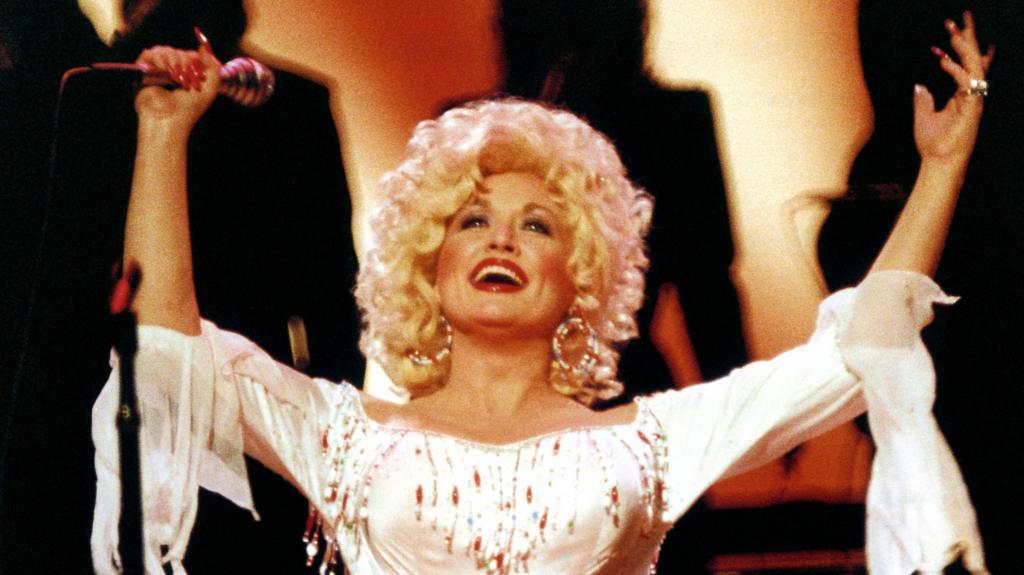
In 1980, Dolly Parton was filming her first Hollywood movie, 9 To 5, and between scenes she had an idea for the tune that would become the movie's theme song. But her guitar was banned from the set - so she made the beat by strumming her acrylic nails together. The sound, she realised, was just like the typewriter used by her character, a married secretary who is constantly belittled and sexually harassed by her boss.
Excited, she ran over and sang the song to her co-stars Lily Tomlin and Jane Fonda, who was also the film's producer. "Lily and I looked at each other and we had goosebumps," Fonda said. "And we knew, this is not just a movie song, this is an anthem." Taylor Swift and Beyoncé lead tributes after death of 'bold and brilliant' Dolly Parton How Dolly Parton told her life story through six iconic songs 'If you want the rainbow, you gotta put up with the rain': The wit and wisdom of Dolly Parton Released in November 1980, 9 To 5 became Parton's only US number one as a solo artist, and earned her an Oscar nomination for best song.
She loved to tell the fingernail story, but 9 To 5 has another legacy - for its powerful statements about working life and women's place in the corporate world. You can probably sing the hook off the top of your head. "Working 9 To 5 / What a way to make a living!" It's jaunty and catchy.
The sentiment is universal. But dig deeper and Dolly's expressing real fury. "It's a rich man's game, no matter what they call it / And you spend your life putting money in his wallet," she sings.
"They just use your mind and they never give you credit." The lyrics tapped into real frustrations and gave working women a voice. But there's a reason why you might not have noticed the anger that fuels Dolly's song. She simply doesn't sing it that way - even though she had every right to, having navigated the sexism of the music industry from the age of 13.
Her early breakthrough came in 1967 when she was hired as the "girl singer" on The Porter Wagoner Show, a TV showcase for country singer Porter Wagoner that reached millions of viewers each week. Together, they released 21 hit duets including Just Someone I Used to Know, If Teardrops Were Pennies and Please Don't Stop Loving Me. But as Parton's star rose, she began to outshine her co-star.
Extract — continue reading at the source.