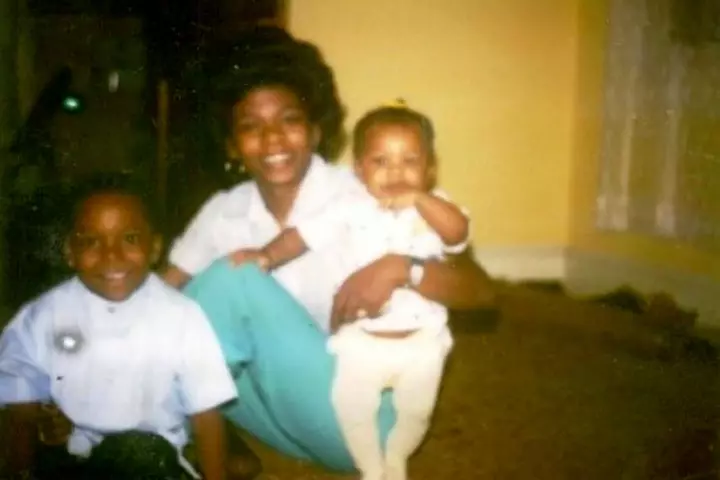
For nine years, Williams lost the right to vote due to a Jim Crow-era state law that disenfranchised Virginians with a felony conviction. Williams wasn’t the only one: Her parents also faced felony convictions when she was a child. Brockington, could not vote for 24 years.
In 2013, Williams and Brockington successfully petitioned then-Virginia Gov. Bob McDonnell, a Republican, to have their voting rights restored. Since that time, in spite of the law that pushed them to the margins of society, the mother and daughter chose to serve as poll workers for every election and spoke openly about the value of voting to anyone who would listen, Williams said.
On Election Day five years ago, her mother died from lung cancer before she could bear witness to the victory that her spirit helped shape in this year’s midterms. Virginia voters approved a ballot measure last week that will amend the state’s constitution to enshrine a “fundamental right to vote” for all citizens and automatically reinstate voting rights to people convicted of felonies once they are released from prison. The victory was the culmination of hard-fought advocacy, spearheaded by Black women organizers and legislators who traveled the state to educate voters about the racial history of the law and its ripple effects for generations of families.
As part of negotiations to readmit Virginia to the United States after the Civil War, Congress passed the Virginia Readmission Act in 1870, permitting the state to deny voting rights as punishment for 11 “common-law” crimes like arson, burglary, murder and rape. But the state adopted a constitution in 1902 that expanded the voting ban for all crimes classified as felonies. This number grew to include more than one thousand offenses, though a federal court ruling earlier this year narrowed the list of crimes that could result in a voting ban.
At the heart of these restrictions was the intent to restrict free Black residents from gaining access to the polls during the Jim Crow era, when states enforced racist laws that dictated how Black Americans could move through society. Carter Glass, a key architect of that state constitution, pointed to the felony voting ban’s motivation, stating that it would “not necessarily deprive a single white man of the ballot, but will inevitably cut from the existing electorate four-fifths of the negro voters.” “That was the purpose of this Convention; that will be its achievement,” he added at the time. Unsurprisingly, the law hit Black citizens hard, a throughline to the modern-day criminal justice system where Black people comprise 18 percent of the Virginia population but represent nearly 52 percent of those in prison, according to The Sentencing Project.
Her mother was sentenced to six months in jail, and her father was imprisoned for nearly 20 years, Williams said. Williams’ encounter with the court system came in 2004, when she says she was wrongly convicted of a crime. She petitioned to have her record sealed.
Extract — continue reading at the source.