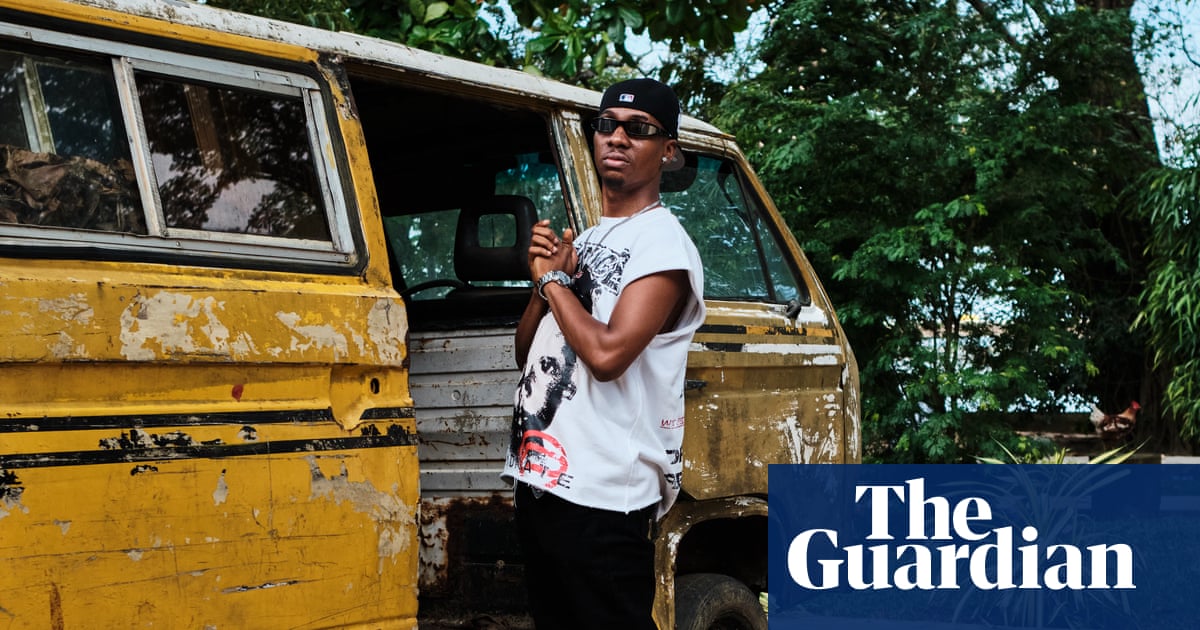
For the 2015 freshmen cohort of the history degree programme at the University of Lagos, their classmate’s first-semester presentation was so captivating that they began calling him Toby Shang, after the 16th-century Chinese dynasty he had focused on. His crowd engagement that day had been harnessed from his high school days as a ginger-man (energiser) in a three-man band and as a private tutor. By his final year at university, his viral catchphrases and infectious energy had resulted in a hit song, Shedibalabala.
Today, he is one of the self-acclaimed “evangelists and pioneers” in the Afrobeats sub-genre some are now calling Afrohype or lamba. Since then he has hosted his own rave, released two EPs and run four editions of his School of Hype – a one-day masterclass with online mentoring that has launched several rising stars. Hypemen neither sing nor rap entirely, but perform high-octane ad-libbed vocals “and onomatopoeic sounds” over fresh beats or popular instrumentals such as Dorime, a made-in-Nigeria version of 1996’s Ameno by the French group Era, a song that has become a continental nightclub classic.
In response, nightclub patrons donate or spray money – the Nigerian custom of throwing or placing money on someone to celebrate them. Hype is now omnipresent at wedding after-parties, raves and corporate parties. On Instagram, one teenage sensation is now known for recording 30-second hypes for birthday celebrants at the request of friends or relatives.
Despite being a male-dominated sub-genre, a few women have made their mark, such as the Yaoundé-based bikutsi artist Lady Ponce, known as the “100,000-volt lady” because of her energy. Other notable female figures in the scene include Deborah ‘Hype Queen Baddy’ Francis – an alumnus of Shang’s school who died in September – and the radio presenter Melody “M.I.A” Adigo, both from Lagos. The art of hyping as it is known in west and central Africa has its roots in praise-singing and call-and-response music styles ingrained for centuries in Black populations on both sides of the Atlantic.
In west Africa, this tradition took the form of oral historians known as griots. In the US, it was sustained by negro spirituals, sacred folk songs created by enslaved African Americans. These styles laid the foundation for the atalaku (meaning “look here, look at me” in the Kikongo language of the DR Congo) tradition that came alive in 1980s Kinshasa, followed by today’s hype scene.
Exponents of this style include the American gospel singer Kirk Franklin as well as the Congolese rumba bandleader Koffi Olomide and the Congolese singer Awilo Longomba. The success of Olomide and Longomba at the turn of the 21st century set off a craze in Côte d’Ivoire, where coupé-décalé music embraced the atalaku trend alongside farotement, the act of showing off by throwing cash at performers or guests at parties. A line encouraging audiences to gallop like a horse in the Ivorian star DJ Arafat’s 2003 viral homage to a late friend – “Tout le monde galope, kirikata kirikata” – influenced later hits from Nigerian Afrobeats musicians Flavour N’abania and Skales.
Extract — continue reading at the source.