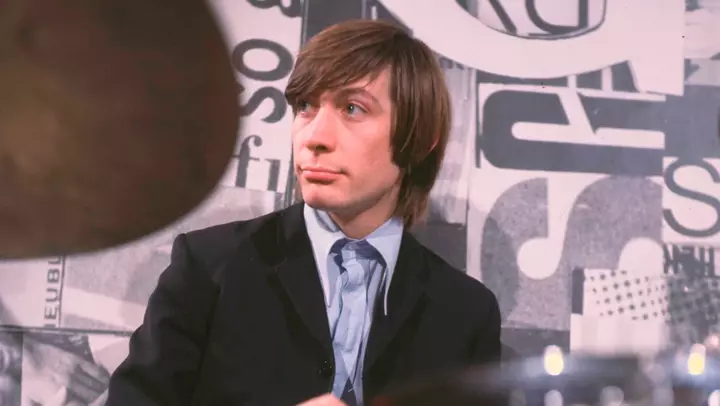
A previously unknown letter from Rolling Stones founder Brian Jones to Charlie Watts in July 1962, inviting the drummer to join the fledgling band several months before he accepted the job, is headed to the auction block. The handwritten letter and envelope are part of Sotheby’s New York’s Rock & Pop Sale on December 15 and are estimated to sell for between $70,000 and $80,000. Jones mailed the letter to Watts days before the Stones played their first official gig at the Marquee Club in London.
They performed with future Kinks drummer Mick Avory at their early rehearsals and spent several months gigging with Tony Chapman, but neither drummer was a permanent solution. At the time of the letter, Watts was the drummer in Alexis Korner’s Blues Incorporated. Already we consider our band far better than Alex’s — we are getting a very tightly-knit sound.
We are rehearsing on Monday, Wednesdays and Fridays. Anyway, if you have time, let me know what’s happening. Cheers, Brian Jones.” As a postscript, Jones added: “If you are interested, our present line-up is a 2 guitars, harp, piano, + drums.
We are going to use a bass guitar eventually. Our present drummer is atrocious!” He was referring to himself and Keith Richard as the two guitarists, Ian Stewart as the pianist, and Mick Jagger as the harp (harmonica) player. The “atrocious” drummer was most likely Chapman, but it’s impossible to be 100 percent sure since the band tried out many different drummers during this time.
Watts initially rebuffed Jones’s offer to join the band, and the Stones carried on with a rotating crew that included Chapman, Steve Harris, Carlo Little, and Colin Folwell. But in January 1963, six months after receiving Jones’s letter, Watts joined the Rolling Stones. He remained in the lineup until his death in 2021.
It’s a story that’s been told many times in Rolling Stones books and documentaries, but this letter adds fascinating new details and demonstrates just how crucial Jones was to the band’s early success. Knowing the extraordinary musical partnership that followed makes it all the more compelling to read today.”
Extract — continue reading at the source.