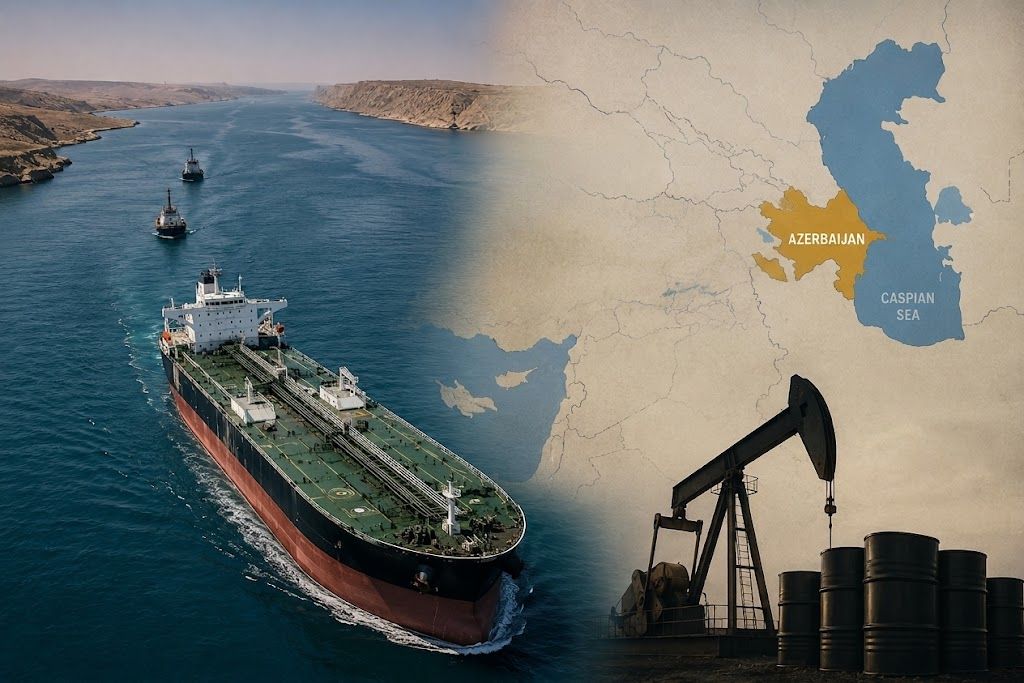
The closure of the Strait of Hormuz has done more than interrupt tanker traffic. It has exposed a fundamental weakness in the global energy system. During the first half of last year, an average of 20.9 million barrels of oil and petroleum products passed through the strait each day.
This volume was equivalent to approximately one-fifth of global oil consumption. The closure of the Strait of Hormuz directly affects the energy exports of Gulf countries such as Saudi Arabia, Iraq, Kuwait, Iran, the United Arab Emirates, and Qatar. Azerbaijan, however, is in a different position.
Unlike these countries, it exports its oil to international markets mainly across the Caspian Sea and through pipelines. Consequently, the closure of the strait does not directly block Azerbaijan's oil exports. Its effects on the country are primarily indirect and are transmitted through global oil prices, demand, transportation costs, insurance rates, and changes in international oil flows.
Over the 20 years since BTC began operating, more than 560 million tons of Azerbaijani crude oil and condensate have been exported through the pipeline. The 1,768-kilometer route was commissioned in June 2006. From that date to the end of June of the current year, approximately 631 million tons of crude oil, equivalent to more than 4.7 billion barrels, were transported through BTC.
At Ceyhan, this oil was loaded onto 6,276 tankers and delivered to global markets. The Baku-Supsa and Baku-Novorossiysk pipelines are also part of Azerbaijan's oil export infrastructure. The Baku-Supsa pipeline has a daily transportation capacity of 150,000 barrels, while the Baku-Novorossiysk pipeline can carry 100,000 barrels per day.
The key advantage of these routes is that they bypass the Strait of Hormuz. A closure of the strait therefore does not create a physical obstacle preventing Azerbaijani oil from reaching export markets. BTC carries Azerbaijani oil directly to the Mediterranean Sea, providing the country with access to international buyers without relying on the Persian Gulf route.
Extract — continue reading at the source.