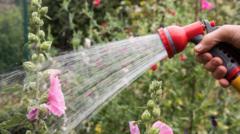
Drought has been declared across large parts of central, eastern and southern England and the whole of Wales as successive heatwaves have left water supplies under strain. Both England and Wales provisionally recorded their driest July on record. This lack of rainfall - on top of hot, dry conditions in spring and early summer - has begun to take its toll on rivers, crops and nature.
Roughly 25 million people in England and Wales have now been placed under a hosepipe ban, as some water companies struggle to cope with the dry weather and high demand for water. So how is your area doing and are you in a drought? There is no single definition of drought, but it is characterised by a period of low rainfall.
As the ground dries out, crops and vegetation can begin to struggle. If dry conditions persist, rivers, reservoirs and groundwater levels can also fall, putting pressure on water supplies. Environmental bodies in each UK nation decide whether to declare drought or water scarcity by assessing current water resources alongside weather forecasts.
Both drought and water scarcity can lead to hosepipe bans, if they are not already in place. While drought is driven by prolonged dry weather, water scarcity occurs when demand for water outstrips the available supply. This summer, restrictions have been introduced in some areas to help manage high demand.
But while recent months have seen temperatures regularly exceed 30C, winter was much wetter than usual. It has raised questions about how effectively water resources are being managed, and whether the UK is prepared for drier summers expected with climate change. So far, nine UK water companies have announced hosepipe bans.
This means hosepipes cannot be used for watering gardens, washing vehicles and windows and filling pools. Eight companies are spread across central, southern and eastern parts of England, and one is in Wales. In England, more than half of the country is now in drought, according to the Environment Agency (EA).
Extract — continue reading at the source.


