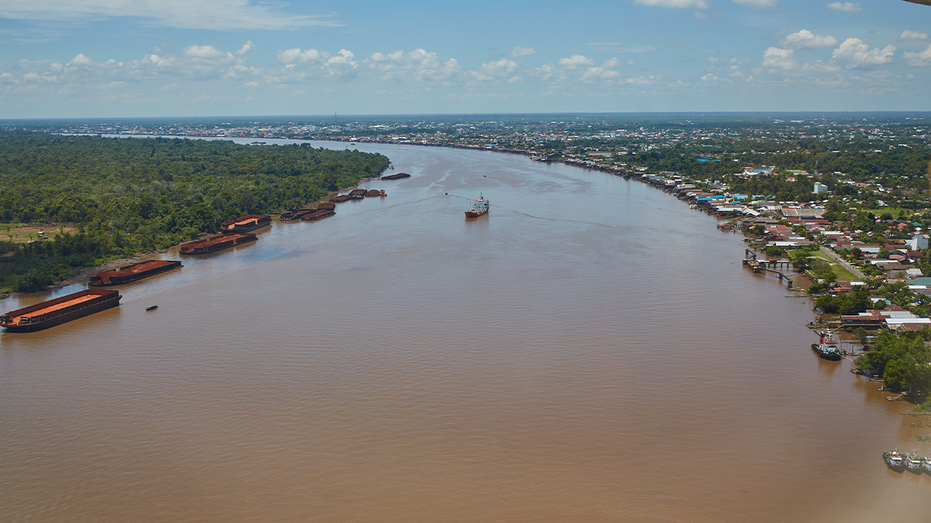
The rapid Houthi advance down Yemen’s Red Sea coast this week is an astonishing military victory, but not quite the game-changer it is being portrayed as. The group has been able to threaten the vitally important shipping route, but they have been doing so since 2023. This new victory consolidates that control, proving that Yemen’s government is not currently in a position to defeat them.
The prior Houthi control over the northern section of Yemen’s Red Sea coastline, including the major port city of Hodeidah, has allowed the Iran-allied rebel group, for years, to first attack shipping linked to Israel and the United States – and then, in recent months, Saudi Arabian-linked vessels. That control also damaged the global economy. Long before the US war with Iran and the transformation of the Strait of Hormuz into a tool to throttle international trade, Houthi attacks around Yemen had turned Bab al-Mandeb into a similar weapon, and led to bombing campaigns against the Houthis by the US, the United Kingdom, and Israel.
Houthi officials themselves have emphasised this, with one leading official, Abdulqader al-Murtada, saying earlier this week that the group did “not need control over Bab al-Mandeb, for the blockade [on Saudi ships] is already in place”. Al-Murtada could point Saudi ships that have avoided Bab al-Mandeb since the Houthis began attacking them in July, even before their latest progress. However, the Houthi lightning advance makes it even easier for the group to disrupt shipping.
They now have access to the Red Sea’s narrow entry point and several islands in it, allowing them to use shorter-range weapons and more easily reach vessels they want to attack and board, as well as potentially using sea mines to further restrict shipping. The increase in the Houthi ability to target shipping – even with the caveats outlined above – does have an impact on market sentiment. Oil prices have increased as traders price in the ability for Iran and its allies to disrupt shipping in Hormuz and Bab al-Mandeb, the two maritime chokepoints of the southern Arabian Peninsula.
However, the consequences of this advance are not limited to the increased ability of the Houthis to attack shipping, but to the increasing reality that the Houthi problem on the Red Sea is not going away. For months, after Saudi Arabia backed a Yemeni government campaign against southern Yemeni separatist forces earlier this year, the mood had shifted in the country’s anti-Houthi camp. The perception was that the Yemeni government, led by the Presidential Leadership Council, had finally gotten its act together.
President Rashad al-Alimi repeatedly spoke of a unified military chain of command, allowing the military to overcome the divisions blamed for its inability to defeat the Houthis. Yemeni and Saudi officials had hinted at an anti-Houthi campaign all year. The Red Sea coastline was a possible location: the largely flat geography suited the government, allowing Saudi Arabia to effectively use its air power; much of the population is not made up of the Houthis’ traditional support base; and prior Houthi attacks on Red Sea shipping meant that there would likely be international buy-in for such a campaign.
Extract — continue reading at the source.