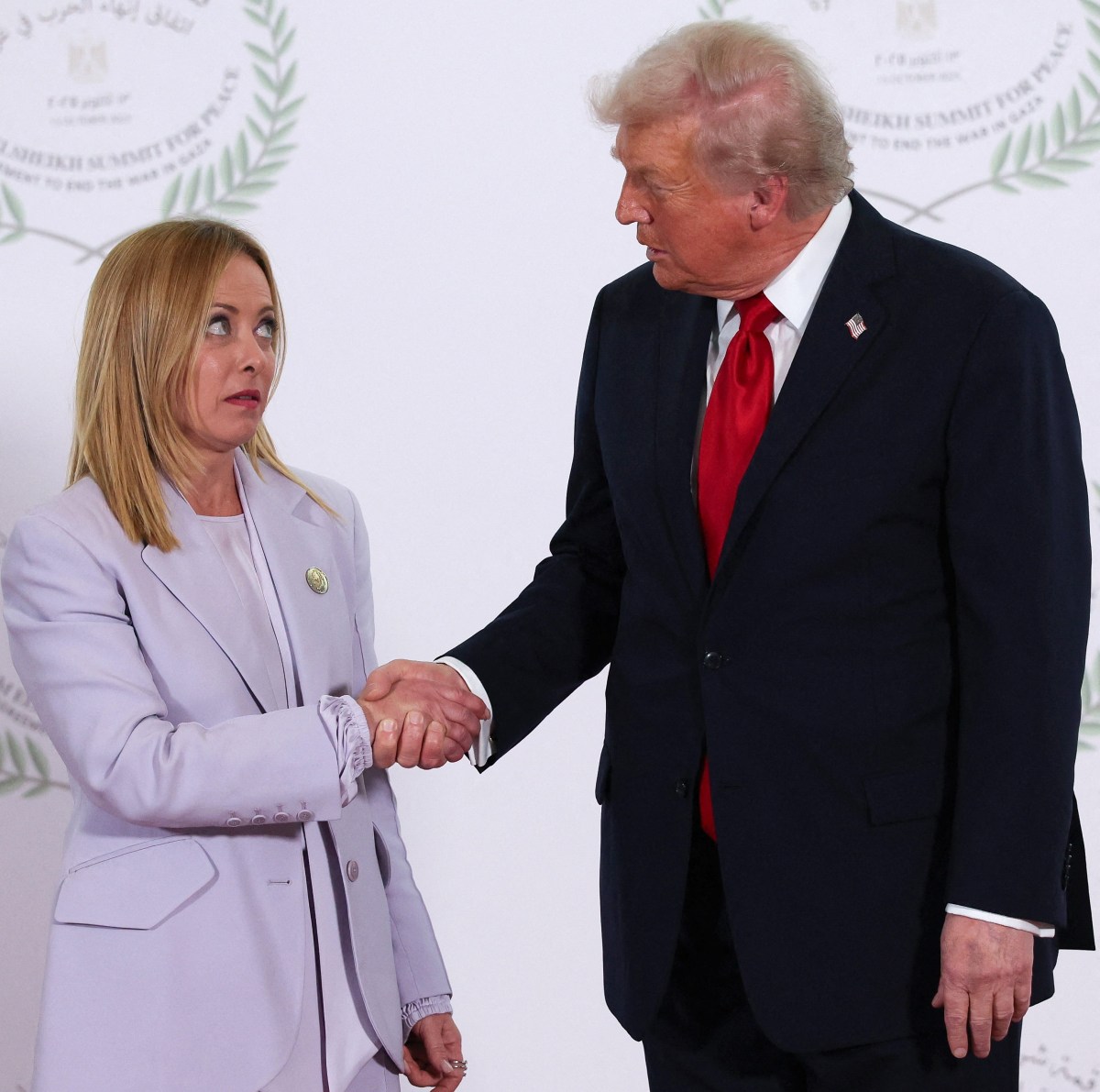
In a country where there have been 68 governments in 80 years, the revolving door of Italy’s politics has been held still by Giorgia Meloni, who has become the longest-serving post-war premier in a tenure marked by her alignment and disputes with President Donald Trump. Meloni’s Brothers of Italy party will use a pre-election rally in the southern city of Bari on Friday to mark her leadership of the same administration for 1,413 days—beating the record held by the late Silvio Berlusconi during one of his four stints in office. Meloni entered office sharing Trump’s politics on immigration, identity and criticism of so-called "woke culture".
But she told The New York Times that while her convergence with MAGA offered benefits, "things have turned out otherwise," as she revealed she had not spoken with the U.S. president for weeks, following a series of public spats. Lisa Musiol, head of EU affairs at the International Crisis Group, told Newsweek that Meloni saw that public opinion in Italy was going in one direction and seized it as a chance to distance herself from Trump. "The contradictions between making America great again and making Europe great again are increasingly harder to contain," said Musiol.
Heading a post-fascist party, Meloni has gained acceptance in the mainstream by presenting a pragmatic conservatism since she took office and was seen as a right-wing leader who could bridge the gap between Europe and Trump. "We’ve seen last year that she had tried to really be a Trump whisperer and use the close relationship with him to her strategic advantage and position herself in Europe as a person with a direct line to Trump," said Musiol. But the relationship deteriorated this year when Meloni responded to Trump’s criticism in April of Pope Leo XIV, a fellow American, of being "weak on crime and terrible for foreign policy" after the pontiff’s criticism of the Iran war.
Opposition parties in Italy wanted Meloni to react and in the end, she defended the Pope, saying it was "right and normal for him to call for peace and to condemn every form of war," in a statement that added Trump’s comments were "unacceptable." Trump countered: "It's her who's unacceptable." He added: "I thought she was brave, but I was wrong." The dispute attracted cross-party support for Meloni as politicians from across the political spectrum came to her defense. "There was a bit of a rallying around the flag moment," said Musiol. The atmosphere between the leaders soured further at June's G7 summit in Evian, France, when Trump said Meloni had "begged" him for a photograph together.
The Italian premier replied, "Italy and I never beg." Her riposte defending both herself and her country was received favorably in Italy. "I'm sure that Meloni was convinced that she could use President Trump as a golden card, with their close relations, based on ideological grounds and economic strong ties," Teresa Coratella, policy fellow at the European Council on Foreign Relations, told Newsweek. Meloni’s hand was forced by the economic consequences of the Iran war being felt in Italy, Coratella said.
"This is where Meloni decided that a freezing of relations aimed at getting some distance from Trump was badly needed." A poll by the Piepoli Institute found that only 11 percent of Italians supported Trump, five percentage points less than Russian President Vladimir Putin. Other surveys show the depth of the U.S. leader's unpopularity in Italy. Meloni then benefited from distancing herself from Trump after he pledged to take Greenland and told Fox Business that NATO allies had not been involved in frontline combat in Afghanistan.
Extract — continue reading at the source.