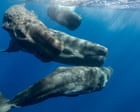
In 2015, the whale researcher Valeria Vergara pitched a small tent at the icy water’s edge on Somerset Island in the remote Canadian high Arctic, shrouded in a freezing fog so thick she struggled to see her own hands. She trailed a cord out to the coast and plopped a hydrophone into the water to record the calls of belugas. As many as 1,000 of the whales, accompanied by their newborn calves, frequented the surrounding bay.
Belugas’ ceaseless chatter, made up of dozens of unique sounds, is crucial to keeping these creatures connected in the dim, turbid waters of the Arctic. Sheltering back in her tent, Vergara pulled on her headphones at the other end of the hydrophone line and was suddenly immersed in a boisterous chorus of clicks and squeals, whistles, mews and trills. And I realised in that moment: they live in a similar kind of visual fog, and yet they are profoundly aware of each other’s presence,” she says.
Sound is the fabric of these creatures’ highly sociable lives: they sing in breeding grounds, chatter in groups during birth, and echo-locate to help each other find food. Individual species have dozens of distinctive dialects, and the structural makeup of their communication shows parallels with human speech. Whales also produce the loudest sounds of any animal, the same that once resonated through the wooden hulls of whaling ships, unsettling hunters of old.
With the emergence of new analytical technologies, insights into whale communication are amassing swiftly. In an era when most whales are protected from hunting but face myriad other threats, researchers are asking: what clues do their sounds contain to better protect whales from a noisier, warmer and more unpredictable ocean? The beauty of acoustic data is that it is a relatively easy way to gather information about marine mammals: a single floating hydrophone can record years of sound from passing whales.
This eavesdropping has yielded discoveries both delightful and profound. Beginning with the study of infant whales during her doctorate, Vergara, who is director of the cetacean research programme at Raincoast Conservation Foundation, a Canadian environmental charity, discovered that like humans, baby belugas have to learn to communicate from adults, which involves plenty of charming gibberish along the way. They are clumsy initially.
They play with sound – they babble, very much like human toddlers,” Vergara says. One of the first sounds they perfect is an “acoustic name tag” to identify themselves, she explains. But her more recent work has revealed that the underwater range of these self-identifying calls by baby belugas is 18 times smaller than an adult’s, and therefore easily masked by boat noise.
Extract — continue reading at the source.


