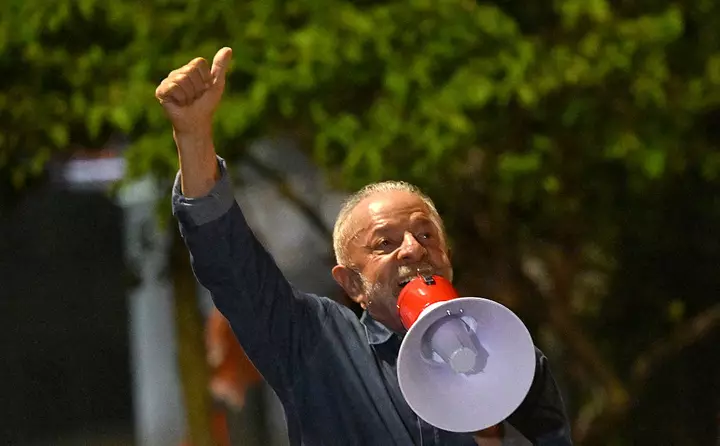
Brazilian President Luiz Inacio Lula da Silva has achieved a stunning election victory, defeating far-right rival Senator Flavio Bolsonaro, despite trailing him by more than two million votes in the first round held earlier in October. The 80-year-old leftist secured an unprecedented fourth term on Sunday, becoming the first candidate since Brazil’s return to democracy in 1985 to win a presidential run-off after finishing second in the opening round. Tomorrow, the fight continues,” Lula told cheering fans at a victory parade in Sao Paulo.
So how did Lula turn things around in just three weeks, and what challenges does he face? Lula, who turns 81 on Tuesday, secured 51.79 percent of valid votes, or 64.26 million ballots, compared with Bolsonaro’s 48.21 percent, or 59.83 million votes, according to the final tally. The result marked a dramatic reversal from the October 4 first round, when Bolsonaro won 47.03 percent against Lula’s 45.16 percent, a lead of approximately 2.2 million votes.
Turnout on Sunday was 80.8 percent, nearly 2 percent higher than the previous round, when 78.92 percent of the electorate cast their votes. Bolsonaro refused to concede and called for the run-off result to be annulled after Supreme Court Justice Cristiano Zanin ordered voting to be extended by two hours. Both candidates had requested extensions, citing transport disruptions and severe weather.
The controversy echoes the aftermath of the 2022 election, when Flavio’s father, Jair Bolsonaro, refused to accept his defeat. He was subsequently convicted of plotting a coup and sentenced to 27 years in prison, which he is serving under house arrest. However, experts say Flavio faces significant obstacles in overturning the result.
Rodrigues Vieira, an economics and international relations professor at the Armando Alvares Penteado Foundation, told Al Jazeera that Bolsonaro’s legal arguments were weak, particularly because his own campaign had requested an extension. Lula’s comeback was driven by a revitalised grassroots campaign, youth mobilisation and a shift towards digital campaigning, analysts said. Al Jazeera correspondent Monica Yanakiew, reporting from Sao Paulo, said young Brazilians spontaneously organised online after Bolsonaro’s first-round victory, creating what became known as “Lula’s army”.
Editor-in-chief of The Brazilian Report, Gustavo Ribeiro, told Al Jazeera that Lula’s campaign had initially appeared complacent. Academic Vieira argued that the senator had become overconfident after winning the first round. He was appointing ministers,” the economics professor pointed out.
Extract — continue reading at the source.