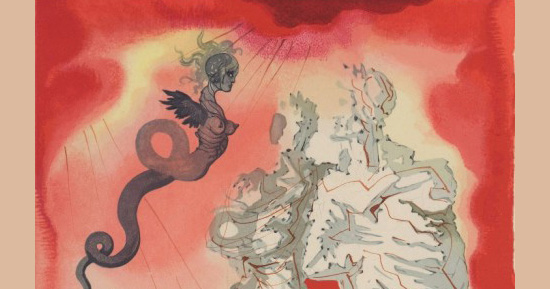
There, it is perennially difficult to know what we really want; difficult to distinguish between love and lust; difficult not to succumb to our perilous tendency to idealize; difficult to reconcile the closeness needed for intimacy with the psychological distance needed for desire. How, then, do we really know that we love another person? That’s what Martha Nussbaum, whom I continue to consider the most compelling philosopher of our time, examines in her 1990 book Love’s Knowledge: Essays on Philosophy and Literature (public library) — the sandbox in which Nussbaum worked out the ideas that would become, a decade later, her incisive treatise on the intelligence of emotions.
Devising a sort of incompleteness theorem of the heart’s truth, Nussbaum writes: We deceive ourselves about love — about who; and how; and when; and whether. We also discover and correct our self-deceptions. The forces making for both deception and unmasking here are various and powerful: the unsurpassed danger, the urgent need for protection and self-sufficiency, the opposite and equal need for joy and communication and connection.
Any of these can serve either truth or falsity, as the occasion demands. The difficulty then becomes: how in the midst of this confusion (and delight and pain) do we know what view of ourselves, what parts of ourselves, to trust? Which stories about the condition of the heart are the reliable ones and which the self-deceiving fictions?
We find ourselves asking where, in this plurality of discordant voices with which we address ourselves on this topic of perennial self-interest, is the criterion of truth? (And what does it mean to look for a criterion here? Could that demand itself be a tool of self-deception?) With an eye to Proust’s In Search of Lost Time and its central theme of how our intellect blinds us to the wisdom of the heart, Nussbaum contemplates the nature of those experiences “in which the self-protective tissue of rationalization is in a moment cut through, as if by a surgeon’s knife”: Proust’s protagonist, Marcel, has rationally convinced himself that he no longer loves his beloved, Albertine, but is jolted into confronting the falsity of that rationalization upon receiving news of her death; in the shock of his intense sorrow, he instantly gains the knowledge, far deeper and more sinewy than the intellect’s, that he did, in fact, love Albertine. In a testament to Proust’s assertion that “the end of a book’s wisdom appears to us as merely the start of our own,” Nussbaum writes: Proust tells us that the sort of knowledge of the heart we need in this case cannot be given us by the sciences of psychology, or, indeed, by any sort of scientific use of intellect.
Knowledge of the heart must come from the heart — from and in its pains and longings, its emotional responses. Such a conception of love’s knowledge, to be sure, stands radically against the long intellectual tradition of rationalism stretching from Plato to Locke like an enormous string of reason that plays only one note, deaf to the symphonic complexity of the emotional universe. The Proustian view calls for a restoration of lost nuance.
Pointing to “the pseudotruths of the intellect,” Nussbaum revisits Marcel’s predicament, wherein the intellect has imposed an illusory sense of order and structure upon the entropy of the emotions: The shock of loss and the attendant welling up of pain show him that his theories were forms of self-deceptive rationalization — not only false about his condition but also manifestations and accomplices of a reflex to deny and close off one’s vulnerabilities that Proust finds to be very deep in all of human life. The primary and most ubiquitous form of this reflex is seen in the operations of habit, which makes the pain of our vulnerability tolerable to us by concealing need, concealing particularity (hence vulnerability to loss), concealing all the pain-inflicting features of the world — simply making us used to them, dead to their assaults. When we are used to them we do not feel them or long for them in the same way; we are no longer so painfully afflicted by our failure to control and possess them.
Extract — continue reading at the source.


/https://tf-cmsv2-smithsonianmag-media.s3.amazonaws.com/filer_public/1a/e7/1ae729d1-7a37-4650-b971-dfdb66c8f7a8/eo_pe_iss062e117852_sm.webp)