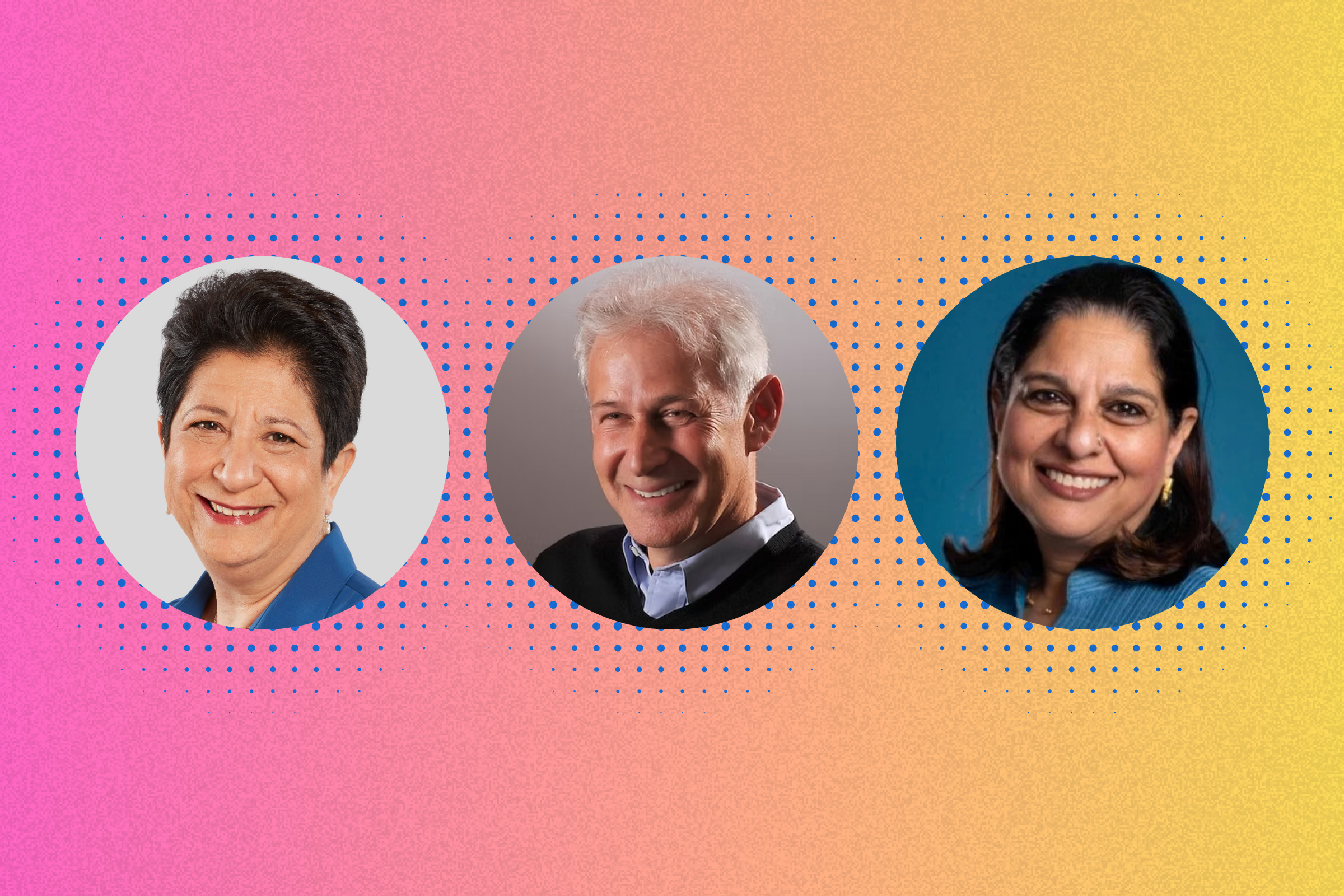
Most experts working in early childhood development agree: the first years of a child’s life shape not just their academic readiness, but also a child’s lifelong health, resilience, emotional well-being and brain development. But Jack Shonkoff, a professor of child health and development at Harvard University, believes that researchers and policymakers need to expand those conversations in order to address disparities in early childhood. The panel, which centered on reimagining early childhood in a changing world, also included Pia Rebello Britto, global director of education at UNICEF, and Rosemarie Truglio, senior vice president of global education at Sesame Workshop.
Britto said that UNICEF is trying to create “practical steps” to better the lives of children around the world and prevent perpetuating unequal circumstances. These steps include investing in children’s abilities to “eat, play, and love.” “Eat: We are working to ensure adequate, right, appropriate nutrition. Play: Because it's all about that interaction with children, the stimulation that sparks the brain connections,” Britto said.
And love, she continued, is “the foundation of it all.” “That human trust, the protection,” she said. We talk about children being affected by war and by climate change. How do you nurture that love?” Sesame Workshop, the global nonprofit educational organization behind the beloved childhood show Sesame Street, works especially in that “play” step, Truglio said, emphasizing the importance of opportunities for children to learn cognitive processing skills, self-regulation, and social empathy.
She highlighted how important the last goal on that list is for building a better future full of kinder adults, adding: “Boy, do we need more perspective-taking and collaboration and truly listening and seeing the people in our lives and treating them with compassion and respect.” Sesame Workshop attempts to teach children those lessons through media and with “joy and fun and happiness,” she said. The panelists discussed the challenges in implementing more equitable programs for children at the local and government levels. One of these challenges is the “our children versus other people’s children” mentality, according to Shonkoff.
Sesame Workshop, Truglio said, is trying to do the same in order to create “blueprints” for caregivers of all kinds. We want this to be practical and useful.” These voices are going to be even more important, the experts said, as artificial intelligence and rapidly developing technologies change the way that children learn and that adults care for and educate children. Shonkoff said that while AI will certainly change how childhood education occurs, certain needs like a child’s “social connection” will never change.
That's not going to change no matter what happens with the digital world,” he said. Early childhood educators may be able to apply AI—but with caution and specific purposes, Truglio said, adding that Sesame Workshop is exploring the “developmentally appropriate” uses for it.
Extract — continue reading at the source.