The Federal Reserve is widely expected to raise its interest rate on Wednesday for the first time in three years, in a move that could increase borrowing costs for already-struggling American would-be homebuyers. In his late August speech in Jackson Hole, Wyoming, the central bank’s chairman Kevin Warsh acknowledged that inflation has been "too high" for too long, admitting that "the responsibility for 65 months of sustained, elevated inflation" in the United States "sits squarely with the central bank." But, while his words were interpreted by many as declaring that the Federal Reserve must act on higher inflation, Warsh did not make any pledge to do so. A rate hike became a much more credible threat after the country’s core inflation came in slightly hotter than expected in the latest report released on Friday.
The consumer price index rose 0.4 percent in August, putting the 12-month increase at 3.4 percent, in line with expectations. But the core CPI, which is stripped of food and energy prices, accelerated 0.3 percent for the month, as the annual inflation rate stood at 2.4 percent, the Bureau of Labor Statistics reported. This is one key indicator that the central bank’s rate-setting body, the Federal Open Market Committee (FOMC), will take into consideration when making a decision on a possible rate hike on Wednesday.
The central bank’s funds rate, which influences consumer borrowing costs like credit cards and mortgages, is currently between 3.5 percent and 3.75 percent. Markets are anticipating a quarter-point hike to be announced this week. The Federal Reserve’s rate-setting body is taking its decision as mortgage rates are hovering between 6.9 percent and 7 percent and the 10-year Treasury yield recently climbed above 5 percent, its highest level since the fall of 2023.
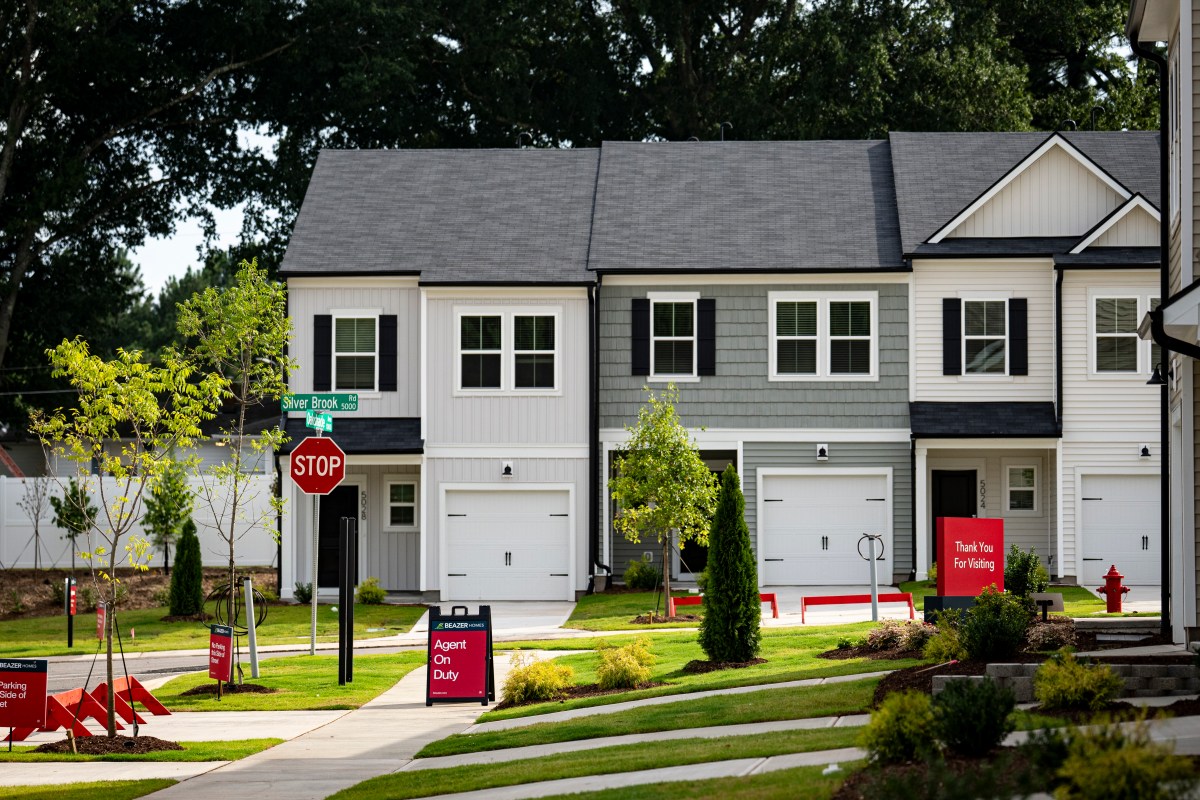
While the central bank does not directly set mortgage rates, their fluctuations are driven by the bond market and long-term investor expectations, which are heavily influenced by the Federal Reserve’s decisions. The 10-year Treasury yield influences mortgage rates because it sets the benchmark for long-term borrowing costs, with lenders pricing fixed-rate mortgages at a spread above the Treasury yield to compensate for risk and other costs. High mortgage rates—together with rising home prices, property taxes, and homeowners insurance premiums—have been one of Americans’ many challenges to homeownership over the past few years.
After the Federal Reserve launched an aggressive rate-hiking campaign in 2022 to stop the rise of inflation, mortgage rates nearly doubled from their pandemic lows of 2-3 percent. Since then, they have not come down significantly. While, in late February, just before the U.S. and Israel launched joint strikes on Iran starting the war in the Middle East, the average 30-year fixed-rate mortgage had reached 5.98 percent, rates have since shot back up, reaching again above 6.5 percent as of July.
As of the week ending on September 10, the 30-year fixed-rate mortgage was 6.76 percent, according to Freddie Mac. That was the highest level in 15 months, further hindering many American first-time homebuyers’ chances of stepping onto the property ladder. But, while normally a rate hike by the Federal Reserve triggers higher mortgage rates, this might not be the case this time, according to experts.
Extract — continue reading at the source.