How we reported this story: The author, Danielle Zickl, a health journalist, interviewed two experts, a physical therapist and a sports scientist, who explained why exercise is necessary for bone health. Whether you’re scrambling up a mountainside or shredding uneven singletrack on your bike, outdoor athletes need a sturdy foundation. While the focus is usually on cardiovascular stamina or muscle strength, strong bones matter just as much—and are often overlooked.
But recent research in the BMJ journal makes a compelling case for paying attention to your bone health—and how your favorite activities could actually slow down age-related loss of bone mineral density (BMD). BMD measures the amount of minerals in your bone—the more minerals there are, the denser it is, and the less likely it is to break. Diamos is a physical therapist and founder of PT Pearls, a physical therapy practice based in Chicago, Illinois.
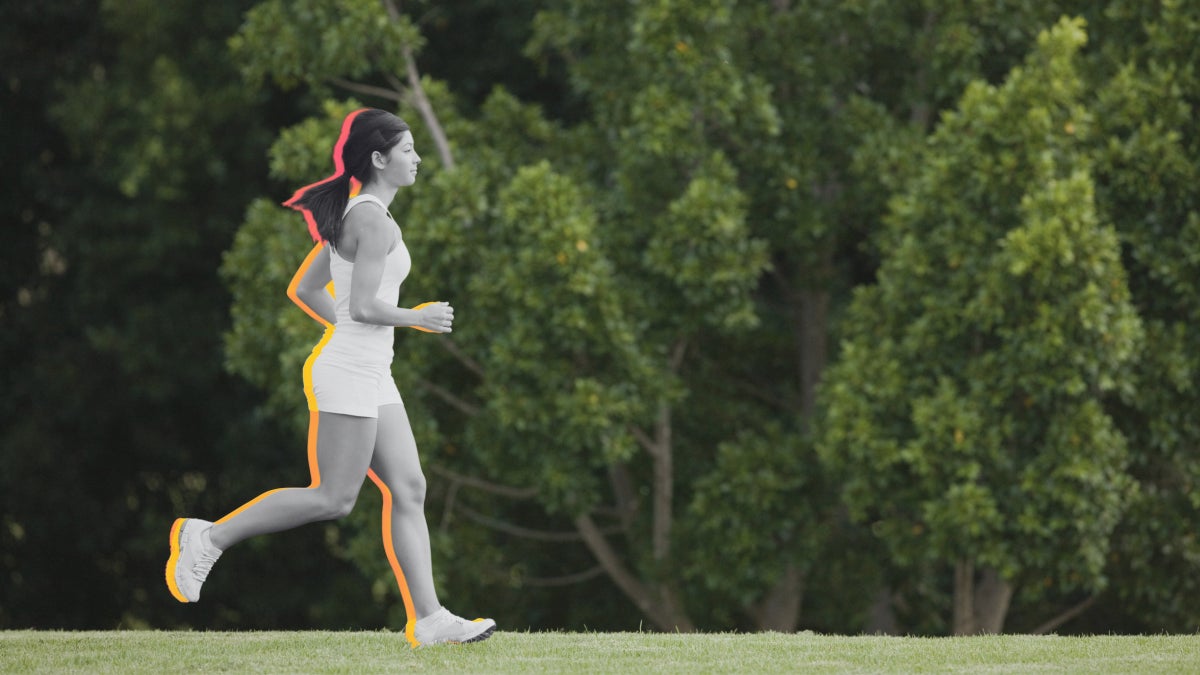
Here’s what the study found and how you can protect your bones as you age. The study’s researchers examined data from 124 clinical trials involving 18,429 participants aged 40 and older and looked at which types and amounts of exercise best preserve bone density and prevent fractures. Results showed that roughly two to three hours per week—or about 20 to 25 minutes a day—of brisk walking, jogging, or similar moderate-intensity activity helps protect bone health by slowing age-related loss of bone mineral density in people aged 40 and up.
For protecting the spine, brisk walking or jogging, as well as combined aerobic and resistance training, were effective. For protecting the thigh bones, brisk walking or jogging and mind-body exercises, such as Tai Chi or yoga, were effective. And for protecting the hip bones, brisk walking or jogging was particularly beneficial.
Mind-body exercises were also associated with an approximately 42 percent lower risk of fractures. The study authors note that data on race, ethnicity, and socioeconomic status “were rarely reported and could not be incorporated,” which they acknowledge is a “limitation for assessing equity in exercise effects on bone health.” Walking and jogging create repetitive ground reaction forces that travel through the bone and stimulate new bone growth, Susie Reiner, PhD, told Outside. Reiner is an assistant professor of exercise and sport science at Seton Hall University and founder of TheoryEx, a sports science consulting firm.
Muscle contractions against resistance also put force on tendons, ligaments, and bone, which can help preserve and improve bone mass, she said. Yoga and Tai Chi incorporate body-weight resistance while also challenging mobility, stability, balance, core control, and coordination, Diamos said. The outdoors are unpredictable, she noted.
Extract — continue reading at the source.