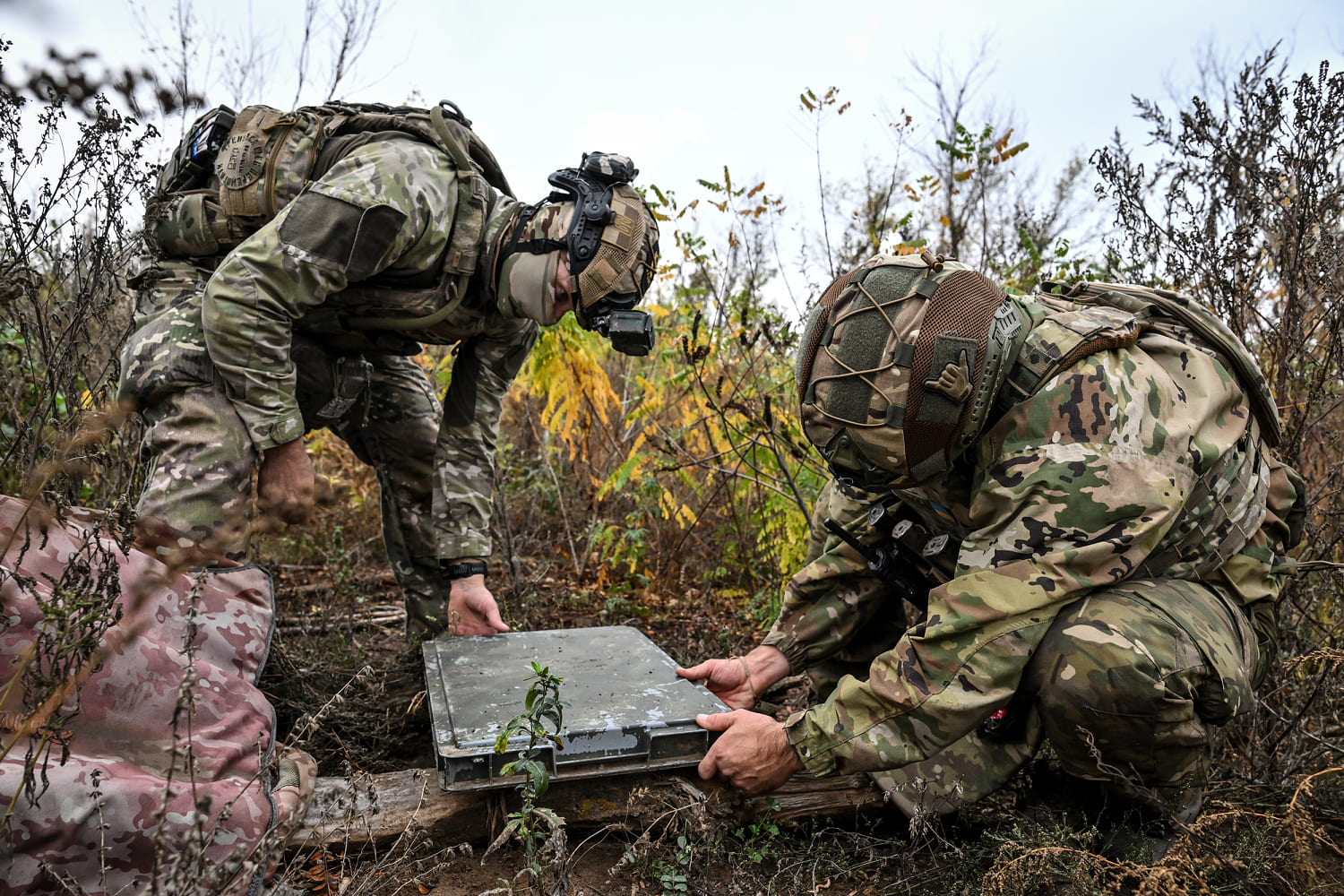
The drone unit he leads has been helping push back Russian troops on the front lines in southeastern Ukraine. Then, late last Tuesday, a drone launched toward Russian troops suddenly lost connection. The drone fell to the ground, aborting the mission, Flint said in a series of messages on WhatsApp.
He fears the technology inside “may have fallen into enemy hands.” “Only after analyzing the flight, it became clear that the issue was specifically related to the Starlink speed limit,” he added. Ukraine said last week that limits were imposed without warning on its use of Starshield, the military variant of the Starlink internet service run by Elon Musk’s SpaceX, affecting battlefield missions reliant on it. President Donald Trump said Thursday that Musk had restored the service in Ukraine, but Kyiv said Friday that it was not seeing any lifting of restrictions.
Trump did not say why the limits were in place, though Musk had previously said that “any limits on speed or usage are decided by the U.S. military and ultimately POTUS.” Ukraine had also warned of gaps in intelligence sharing from the U.S., something the White House has denied. A second drone pilot, serving in the eastern Kharkiv region, said that Ukraine does not have an alternative that’s as effective as Starlink for flying drones, but it also affects the unit’s movements — and ultimately survival chances out in the field. He said his unit relies on Starshield to fly attack and reconnaissance drones at anything from Russian troops to command posts to tanks.
Should Starshield restrictions continue, a large portion of their drones will never even get off the ground, he said, while others will be highly vulnerable, flying at lower speeds. Ukrainian President Volodymyr Zelenskyy said Friday that restrictions on Starlink were still in place, but that U.S. Secretary of State Marco Rubio had told him it would be fully back in about 48 to 72 hours.
Before the latest collapse in relations with Washington, Ukraine’s military had been chipping away at land seized by Russia in the eastern Donetsk region, part of the Donbas heartland that the Kremlin has been struggling to capture. In one major operation, more than 100 square miles of territory and 16 settlements have been reclaimed, Ukrainian officials have said, crediting methods like using bomber drones to fly robot vehicles behind enemy lines. The offensive — dubbed Operation Vivaldi — was made public several weeks before the drastic turn from the United States.
Trump has agreed to a diesel deal with Russia, waived sweeping new sanctions and seen his peace envoy laud Russian President Vladimir Putin as a “humanitarian.” Ukraine accused the U.S. of briefly withholding intelligence warnings about Russian attacks, and has said the Starlink slowdown has affected battlefield missions. The U.S. has vehemently denied freezing Ukraine out, but the slew of dramatic developments have left Ukrainian troops disheartened. NBC News spoke with five soldiers, mostly drone operators, who said they felt betrayed by the U.S., and Trump in particular.
Extract — continue reading at the source.