Bonobos have a well-earned reputation as the hippies of the great apes. Not only do they practice free love, using sex to bond socially, the more matriarchal species are also generally more cooperative and less violent than their patriarchal chimpanzee relatives. These different evolutionary pathways were most likely carved by the Congo River around 1.5 to 2 million years ago and are rooted in their diets.
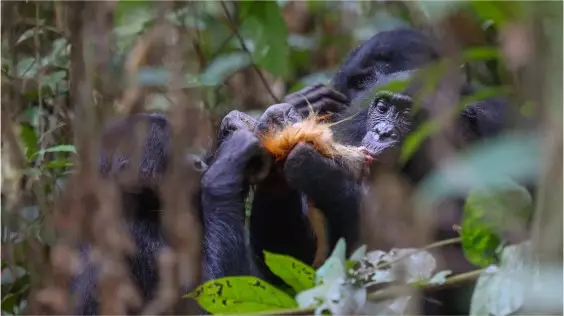
Unlike bonobos, chimps north of the river shared their territory with gorillas and competed with them for fruit, forcing them to adopt an omnivorous diet that relied on hunting. Their close relatives south of the river lived in a gorilla-free territory, allowing female bonobos to form social foraging groups that gathered fruit. But they do still hunt, and according to a new study published in Current Biology, females shoulder most of that burden.
Primatologists from the Max Planck Institute of Animal Behavior followed two communities of bonobos at the LuiKotale field site in the Democratic Republic of the Congo, cataloging 415 prey captures during the decade-long study period. The team only analyzed captures in which the hunter could be identified, ignoring the odd bonobos who showed up with mystery meat of unknown origins. They found that female hunters accounted for 60 percent of successful captures.
The most dangerous game—arboreal monkeys capable of fighting back, like the red colobus—were hunted by male and female bonobos equally. The team found that older females tended to stick closer to the ground, hunting down small ungulates like antelopes. And they particularly excelled at downing terrestrial prey, accounting for three times as many successful hunts as their male counterparts.
This unequal division of labor helped cement a dominant role for females, like it does for male chimpanzees. Once they felled their prey they were also able to keep it for themselves, deciding who got to share in the bounty. Subscribe to our free newsletter.
Extract — continue reading at the source.