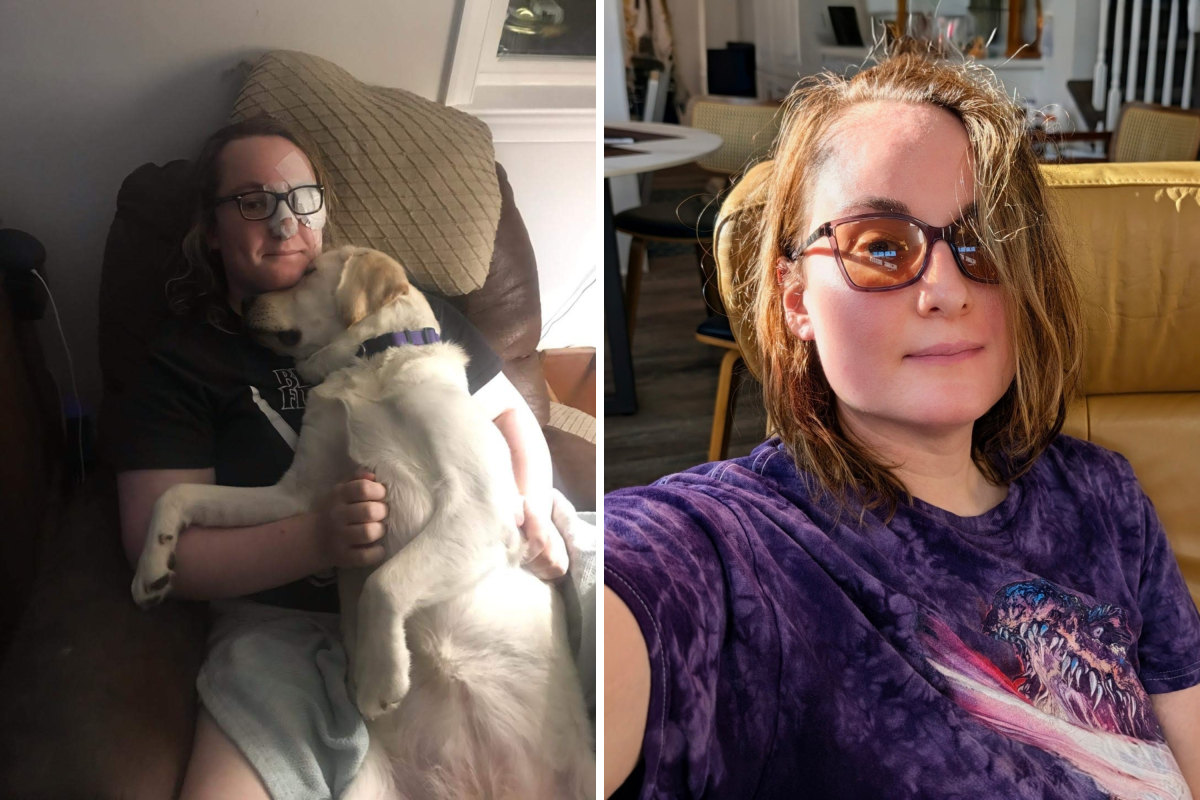
When I woke up from a colonoscopy, doctors told me I had colon cancer. Not only had I not expected the diagnosis, but I also didn't even know what colon cancer was. The procedure had been prompted by abnormal bloodwork found during my annual hormone replacement therapy (HRT) checkup.
I'd been on HRT since I was 19 and began transitioning from male to female, so regular blood tests were part of my care. Looking back, the diagnosis made sense. I had experienced rectal bleeding for the first time at 16 and was told it was hemorrhoids.
Throughout my late teens and early 20s, I seemed to be constantly ill. I was always exhausted and dealt with back pain that was diagnosed as sciatica, along with pneumonia, whooping cough, stomach ulcers and bouts of vomiting. I would recover from one illness only to be hit by another.
Still, cancer was the last thing I expected. I've had tests and there's zero family history of cancer or genetic conditions. So, the cause of my colon cancer is a mystery.
In December 2017, three weeks after my diagnosis, I underwent a colectomy. Surgeons removed a 5-centimeter tumor, 30 centimeters of my colon and 25 lymph nodes; two of which were positive for cancer. Doctors later discovered that the tumor had wrapped around a nerve, causing the symptoms that had been mistaken for sciatica.
A 5-millimeter nodule was also found on my left lung, but it was considered too small to be a concern. After 12 rounds of full-dose FOLFOX chemotherapy in 2018, the nodule disappeared and I was declared to have no evidence of disease (NED). My oncologist left the hospital, and nobody ever followed me up.
Extract — continue reading at the source.