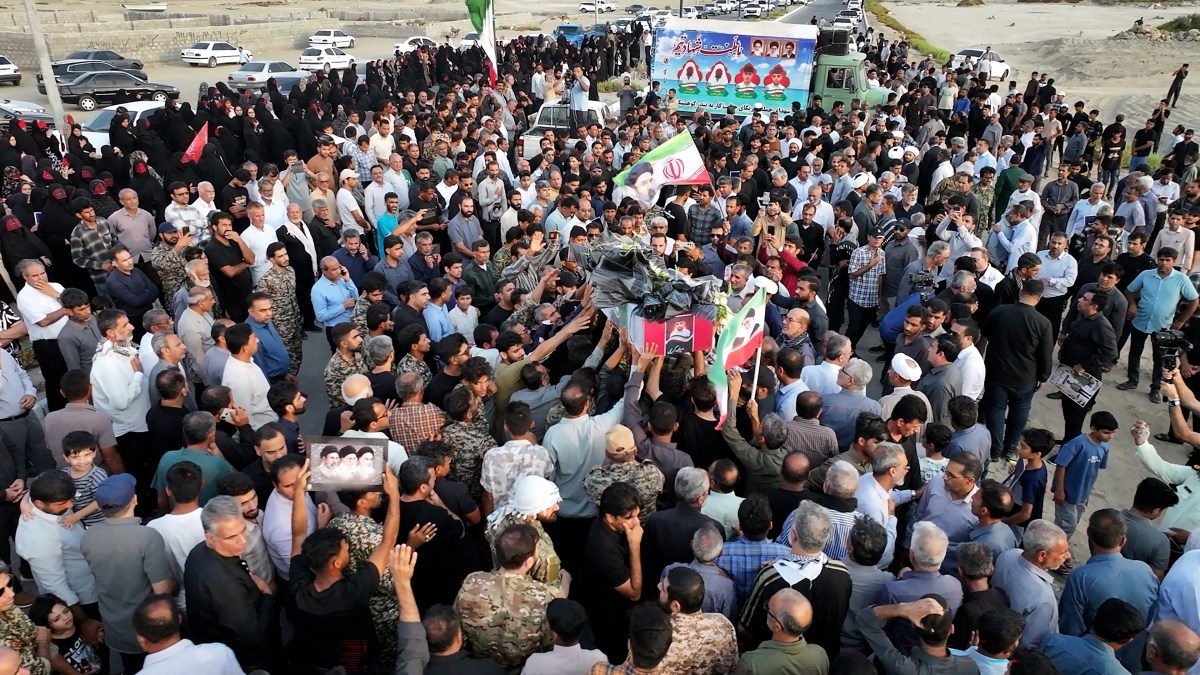
According to Iranian officials, a recent American strike hit a house in Kuhestak where a wedding was underway. More than 60 people were wounded and five were killed. Two of them were children.
Somewhere in Iran today, other children are hearing the sound of war above them. Some may be running with their parents to whatever place feels safest, and years from now, long after today's arguments over military strategy have faded, they may still remember exactly what that sounded like. I know because I was one of those children.
My first memories are of a Pinocchio-themed tent and a siren. My brother and I were young boys in Tehran, and Iran had been at war with Iraq for three years, my whole life at that point. We played in that tent, and when the sirens went off our parents carried us down to the basement.
I did not know yet that people flew to space, or that rockets could take them there. I knew only that things came out of the sky, and that when they did, the adults were afraid. Later that year, my parents gave up their professions, left everything they had built and brought us to America.
Let me be clear about what I am not saying. I am not going to pretend that the choices surrounding Iran are simple, or that I am qualified to resolve them. I am a cardiologist, not a diplomat, and there are people far better qualified than I am to argue about military strategy and foreign policy.
But there is something I do know from experience: When governments make decisions about war, the consequences for children cannot be reduced to a casualty count. The effects of a bomb are measured not only by who dies that day, but by what the children who survive carry with them for years afterward. Beyond the physical destruction, war can change a child's understanding of the world.
Extract — continue reading at the source.