He looks up from his hands on a rainy morning in Belfast. The former Ireland international, who played the role of enforcer for Ulster, Bath and Exeter, then laughs softly in acknowledgment of that incongruous word. We have spoken for almost two hours about a wide range of dark and heavy subjects – from his addiction issues and imprisonment to his injury-riddled rugby career and the last big concussion that ended his playing days and sent him plunging into a deeper spiral of suicidal depression.
Caldwell has also explained how he slowly healed himself, after he went into the Amazon jungle and took the first of multiple doses of ayahuasca, the plant-based hallucinogenic, and how he now helps others as he listens to people’s problems while teaching breathwork and meditation. Caldwell is 6ft 7in and covered in tattoos but the big man, who turns 42 on Tuesday, is gentle and often amusing company. The former second-row is also about to publish a book, White Lines: a Rugby Life Broken and Rebuilt, which might just be the sporting autobiography of the year.
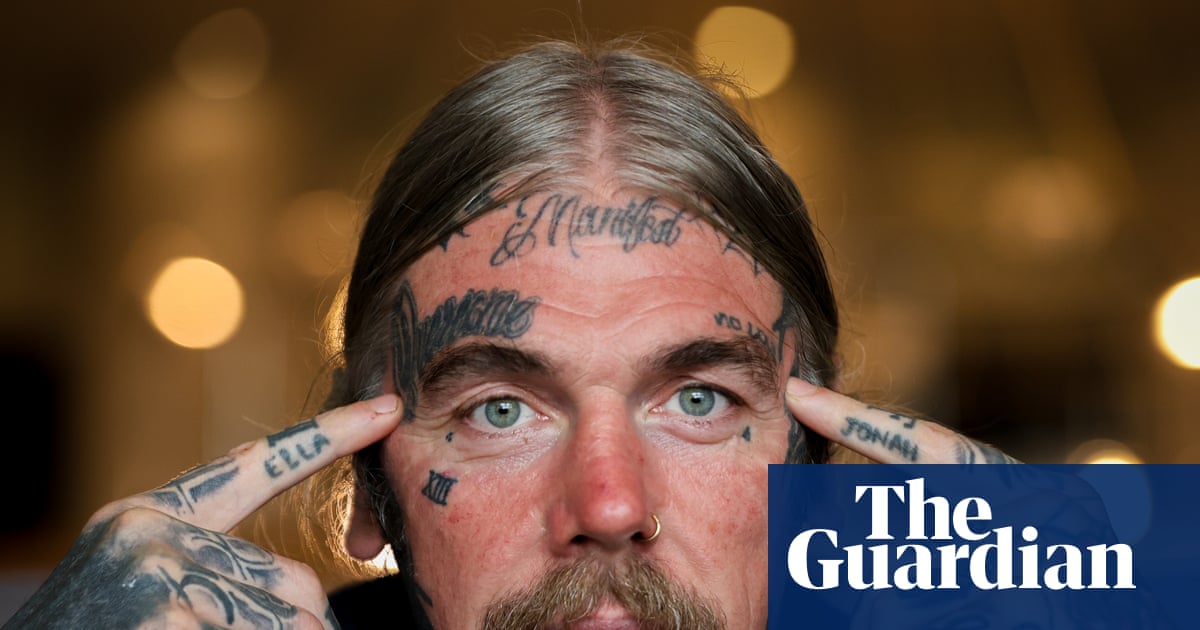
It’s a gripping read, full of sobering insights into professional rugby and life. But, near the end of an engrossing interview, I want to hear more about the blue ink that covers so much of his face and body. My mum cried and I was like: ‘Och, Mummy, it’s only skin deep.’” How many tattoos does he have?
A few wee gaps, here and there, but most of me is tattooed. I now don’t want to get more tattoos and haven’t in a few years. But they’re just part of me.” The words “no love” are tattooed above one eyebrow which seems strange because Caldwell’s life has been full of love from his family.
In that state, it’s hard to see the love other people have for you.” As a boy, Caldwell fell for rugby union because it “felt wild and alive, and so did I”. He loved the game’s intense physicality and the freedom it gave him to smash into other players. But during his rise as a schoolboy prodigy, and then while playing professionally for Ulster, rugby made Caldwell believe it was wrong to show any insecurity or vulnerability.
He was a hard man who only lost his shyness when getting up to all kinds of drunken and ridiculous antics where trying to be loud and funny with his teammates was more important than being authentic and truthful. Caldwell writes that, “despite the hard-man exterior, I was a sensitive soul. I felt things really deeply.
Extract — continue reading at the source.