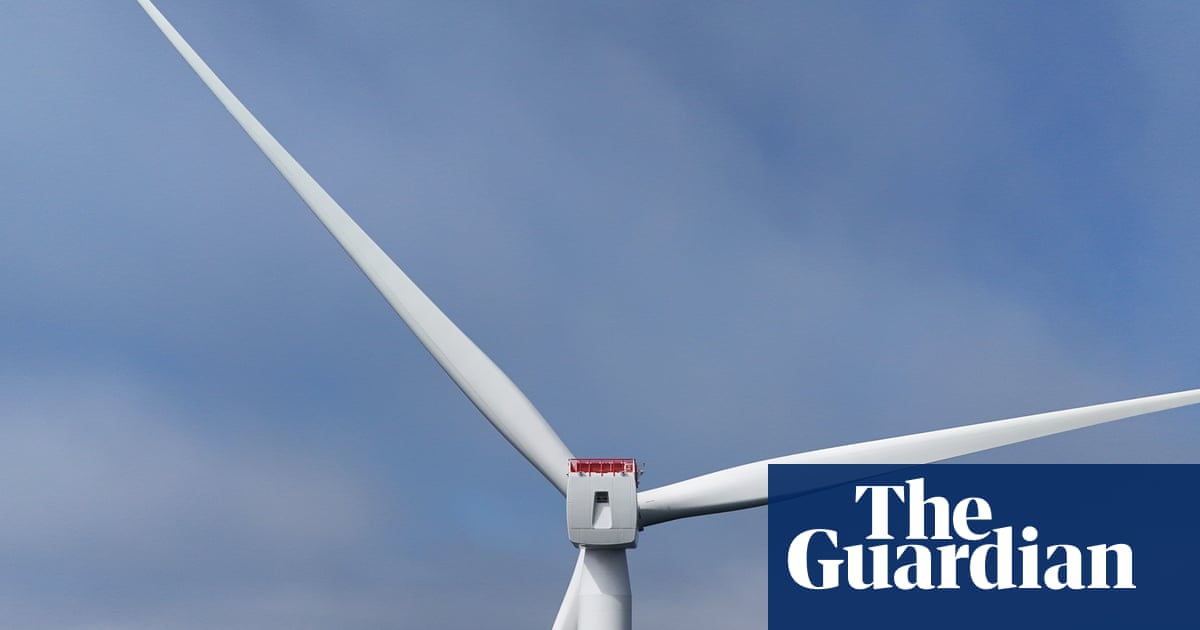
After years as collateral damage in Donald Trump’s war on climate action, the Democrats’ sweeping triumph in the US midterm elections has emerged as a victory for the global renewable energy industry, too. Across the world’s financial centres the market value of renewable energy developers climbed as the election results confirmed the Republicans had lost control of the Senate and House of Representatives. For the world’s largest offshore wind developer, Ørsted, the shift in power could spell a reprieve from the White House’s assaults on the Danish company’s multibillion-dollar offshore wind investments off the north-east US coast.
Ørsted’s market value jumped by almost 10% within hours of the Democratic victory, before closing almost 5% higher. The share price of other European renewables companies active in the US also climbed. Portugal’s EDP Renewables and the French utility Engie rose by more than 3%.
Shares in Germany’s RWE added about 1%. The clean energy market rally marks a modest boost for Ørsted, which has lost more than 70% of its market value since Trump returned to the White House in 2025 and resumed his salvoes against the industry as it struggled against fast-rising interest rates and supply chain pressures. The White House has levelled multiple stop-orders against Ørsted’s Revolution Wind project since the re-election of Trump, a vocal supporter of the fossil fuel industry, who has repeatedly opposed the development of “ugly, costly and inefficient” windfarms – which he refers to has windmills – in the US and abroad.
You want to see a bird graveyard? Go under a windmill someday. You’ll see more birds than you’ve ever seen in your life.” The impact has been chilling for the growing US renewables sector, too.
The US is home to renewable energy projects with a combined capacity of 388 gigawatts, or enough to power more than 83m American homes. The sector also directly employs more than 400,000 people across the country. This fleet of wind, solar, hydro and geothermal power projects has made up about 30% of the electricity generated across the US this year – well below the 50% share across the EU and China’s 40%.
While there is no binding US-wide clean energy target, there are 24 states, plus the District of Columbia, with plans to achieve 100% clean electricity or net zero carbon emissions between 2035 and 2050. But there has been growing disquiet over whether the forecast surge in electricity-hungry AI datacentres poses a threat to green targets by increasing the US reliance on gas power plants – and energy costs. Rising concerns over energy costs and the looming impact of datacentres on energy supplies had played a key role in Republican defeat, she said.
Extract — continue reading at the source.