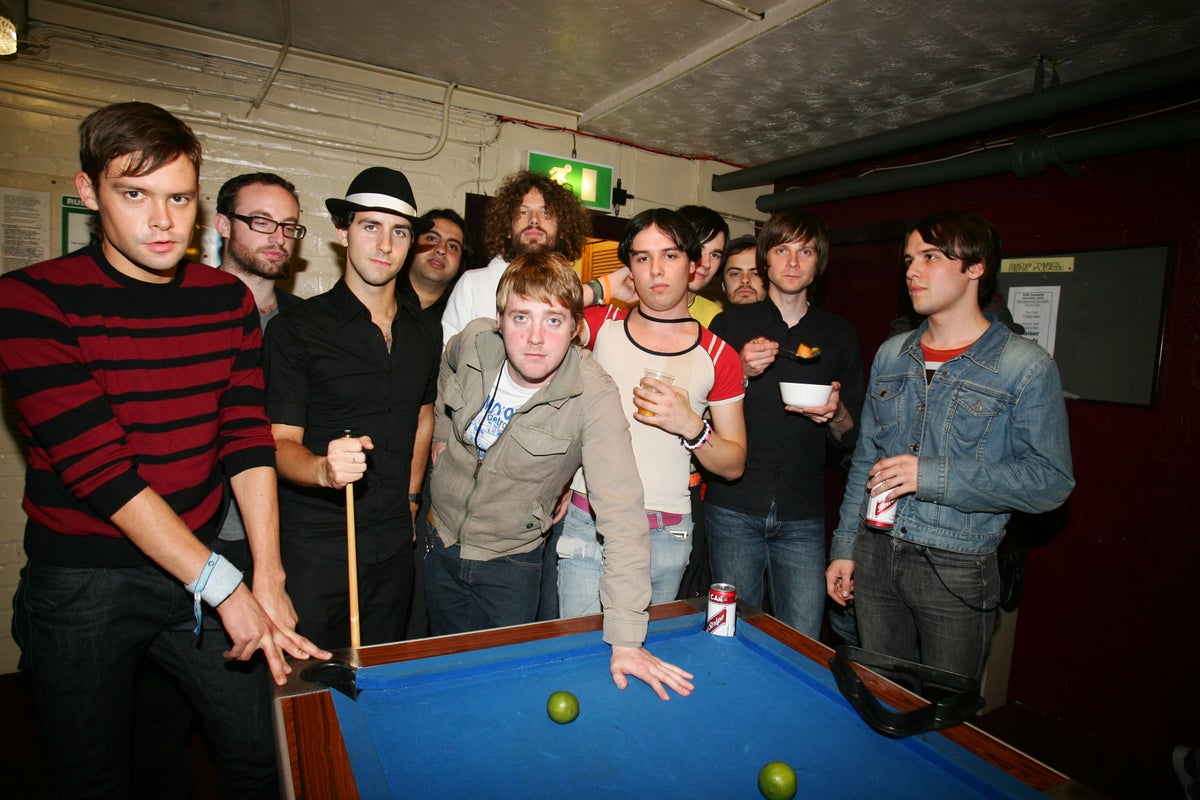
At the millennium's turn, guitar music seemed to be exploding out of every basement club and back-room rehearsal space. Everyone knew someone in a band or thought they were about to get famous. Over the next decade, I built a career as a music publicist working with some of the hottest new bands of the era.
I had a front-row seat as the Noughties indie scene exploded – and, without quite recognising it at the time, to the particular version of masculinity it was busy creating. The sense of possibility was palpable. You could hear it in the opening riff of Franz Ferdinand's “Take Me Out”, Pete Doherty's raw, anarchic howl on “Up the Bracket”, or the propulsive unease of Matt Tong's drumming on Bloc Party's debut single, “She's Hearing Voices”.
But looking back, the pattern becomes obvious. The default image of the Noughties indie star was almost always four blokes with guitars, skinny jeans and increasingly ambitious hair. The Others were a perfect example: a band who paid tribute to the charismatic 1970s Queens Park Rangers maverick Stan Bowles and staged guerrilla gigs in places as unlikely as a London Underground carriage.
As their frontman, Dominic Masters, puts it: “It was white, Anglo-Saxon, Protestant boys who were on the posters.” It wasn't much different behind the scenes. During that period, every A&R person I worked with was a man. Every manager was a man, bar one: Banny Poostchi, who managed The Libertines from 2000 and helped get them signed to Rough Trade.
Poostchi eventually resigned, exhausted by the chaos surrounding a band whose frontman was becoming increasingly unmanageable. It was hard not to notice that she was also dealing with another challenge: being a woman in what was very much a boys' club. Her ability was questioned at every step.
The reality was that she was dealing with an increasingly impossible artist. Alan McGee, the legendary music mogul who followed her as manager, would discover that too. Strangely, nobody seemed to question his ability.
Extract — continue reading at the source.