Europe is a continent that’s rich in history, but it’s also rich in prehistory. Sifting through the remains of tools, dwellings, and other artifacts, archaeologists have discovered a succession of distinct cultures. The Gravettian culture, which existed from roughly 33,000 to 22,000 years ago, were hunter-gatherers known for crafting tanged arrowheads and carving Venus figurines from mammoth ivory.
Although the Gravettian culture was widespread throughout Europe, the Gravettians themselves clustered into two distinct genetic groups—one in the western Europe and one in central and eastern Europe. Now a new study published in Science Advances is blurring the lines between the two. Read more: “Ice Age CSI: Mammoth Cold Case Files” A team of paleogeneticists extracted DNA from several different Gravettian individuals who lived between 30,000 and 22,000 years ago in different parts of Europe and sequenced their genomes.
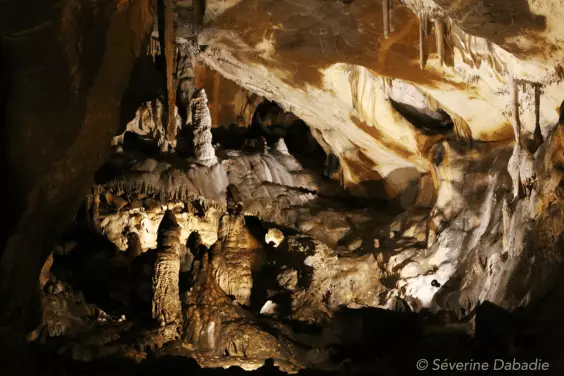
One, a woman who lived in Isturitz Cave in southwestern France near the Spanish border, provided the oldest complete genome discovered in the region to date. Combing through this treasure trove of genetic information, the researchers uncovered a fascinating clue about Gravettian life. According to the team, most sequences from the Isturitz woman’s genome matched those from other western European lineages, but she also carried genes from far off central and eastern Europe.
Using genetic modeling, they were able to determine a pulse of gene flow from east to west likely occurred around 32,500–31,500 years ago. According to the team, that could mean Isturitz was a hub of Gravettian activity, where a confluence of prehistoric peoples mingled and mated. If so, southern France’s reputation for romance extends back way farther than previously thought.
Subscribe to our free newsletter.
Extract — continue reading at the source.