Iceland is holding a long-awaited referendum on Aug. 29 to decide whether the country should resume accession negotiations with the European Union. The country initially applied for E.U. membership in 2009, but accession negotiations were halted upon a change in government in 2013. Then, in 2015, Iceland announced it "should not be regarded as a candidate country for E.U. membership.” However, the membership application was never formally withdrawn.
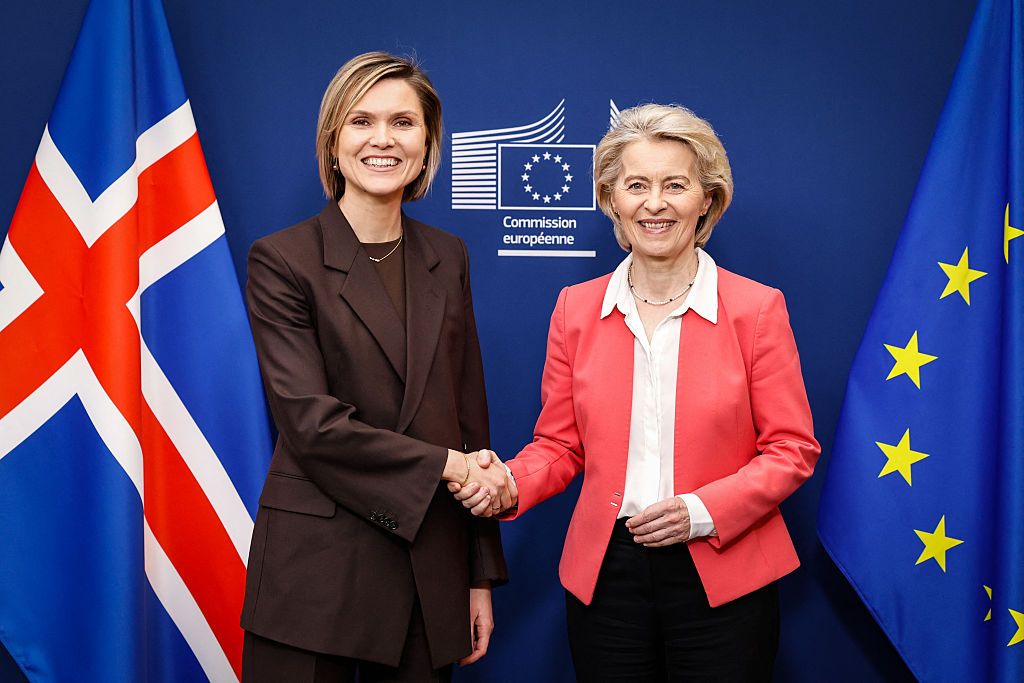
Iceland’s Prime Minister Kristrún Frostadóttir said she believes now “is a great time for Iceland to join [the E.U.] because of the geopolitical situation we're in.” She praised the conduct of the E.U. in recent years and said it had made her want to expedite the referendum process. The E.U. is “looking strategically around. They're aware that the world is changing.
The Arctic has increased focus now, and I think a lot of European countries, and the European bureaucracy in Brussels is aware, that they need increased flexibility for Europe to stay more modern,” she said. "This is where Iceland comes in." Read More: Why the Movements of a U.S. Oil Company in Greenland Have Attracted Attention The E.U. in June signaled a willingness to enlarge the bloc by opening the first negotiating clusters for Ukraine and Moldova.
Here’s what you need to know about Iceland's referendum, what will be asked of the roughly 400,000-strong population, and what could come next. The exact question being put to voters for a yes or no answer is: “Should Iceland reopen accession negotiations with the European Union?” Eirikur Bergmann, a professor of politics at Bifröst University in Iceland, describes the vote as more of a "pre-referendum," because while it could resume negotiations, it does not mean Iceland is set to join the bloc. Accession negotiations are the formal process by which a country and the E.U. set out the conditions for admission into the bloc.
These are based on the country’s adoption and implementation of the E.U. acquis—the body of common E.U. law. Typically, before a country begins accession negotiations, all 27 member states must unanimously agree to open them. A country negotiates membership with the E.U. in certain chapters.
Iceland previously opened 27 of the 35 chapters and provisionally closed 11 of them. Iceland and the E.U. would need to review the chapters that were already closed, but experts predict this would likely be a relatively quick process. The country “is already almost completely aligned with the E.U. on most of the issues that have been difficult for the accession of other countries,” he explains.
Extract — continue reading at the source.