This article has been reviewed according to Science X's editorial process and policies. Editors have highlighted the following attributes while ensuring the content's credibility: A patrol boat off the coast of Gabon intercepted three trawlers in July 2026, inside the Grand Sud Reserve. This is one of West and Central Africa's largest marine reserves, where industrial trawling is banned.
None of the trawlers held a valid license. The patrol found them because analysts at the nonprofit Global Fishing Watch had studied satellite data and worked out where to look. Most illegal fishing is not caught at all.
In 2024, researchers at Global Fishing Watch found that between 72% and 76% of the world's industrial fishing vessels never appear in public tracking. Most of that activity is concentrated around South and Southeast Asia and Africa. Africa has about 30,500km (18,950 miles) of coastline shared among 38 coastal states, and illegal fishing costs African economies an estimated $11 billion to $13 billion a year.
The reason illegal fishing continues is not complicated. Public tracking depends on vessels reporting their own positions through the automatic identification system, a transponder designed to stop ships colliding. A crew that does not want to be seen switches it off.
But African governments are still leaning on the system of self-reporting. In June 2026, at the Our Ocean Conference in Mombasa, 15 governments signed a declaration promising to open up information about who owns fishing vessels and where they operate. Seven were African, Somalia among them.
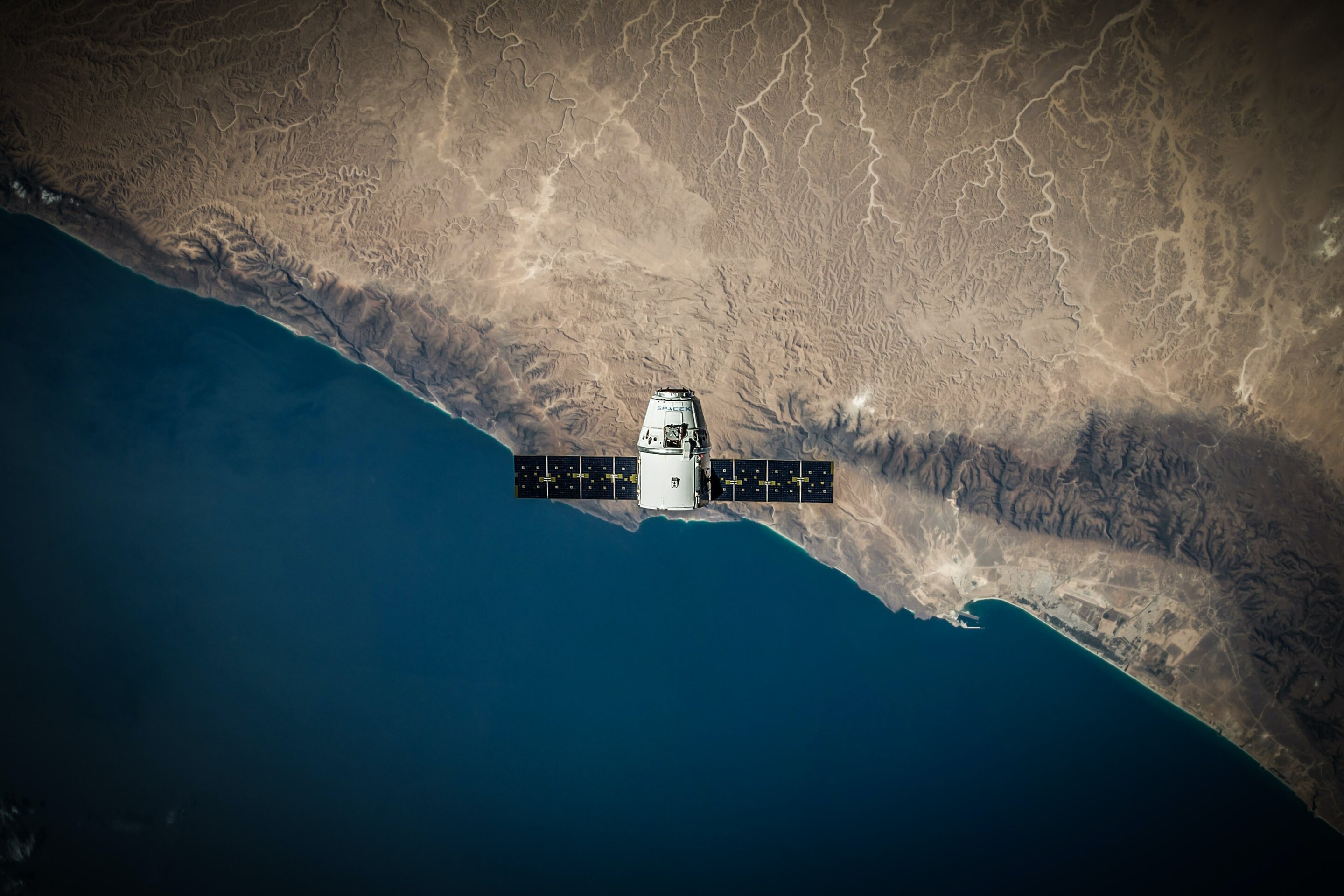
There is another way to track illegal fishing, however: from satellites that look for vessels directly. I am a Ph.D. candidate in aerospace engineering at the University of Florida, where I design spacecraft systems and the software that coordinates them. My supervisor, Norman Fitz-Coy, and I designed a tracking system for the Somali Basin, the stretch of the western Indian Ocean off the Horn of Africa between Somalia and Kenya.
Extract — continue reading at the source.


