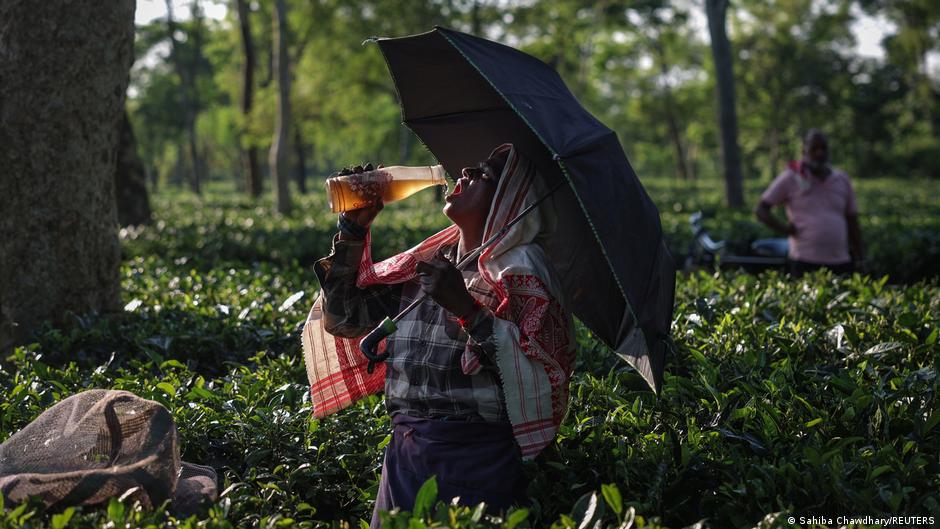
The problems facing upper Assam's tea gardens are becoming increasingly difficult to ignore for workers like Bidesh Kamar and Sumitra Tanti. Recent floods disrupted work for weeks in the northeast Indian state, adding even more uncertainty to their already precarious livelihood. More than 50 tea gardens were damaged following a devastating storm that swept across parts of Assam.
"Life has become unpredictable," Tanti told DW. "The weather can disrupt work, while wages remain low and work is not as dependable as it once was," she added. Kamar said the economics of tea have changed.
"Tea is not as profitable as it once was, and there is less certainty about the work," Kamar told DW. After 15 years working tea plantations, Kamar is now considering whether it is time to "move on to greener pastures." Their experience points to a growing problem for Assam's tea industry. With the business becoming less profitable and working conditions more uncertain, the industry is struggling to retain the experienced workforce which forms the backbone of the state's tea production.
Assam produces about 52% of India's tea and supports around 700,000 plantation workers and 140,000 small tea growers. For generations, it's tea plantations have depended on a vast workforce picking leaves by hand. But that model is now under pressure as the climate gets hotter, tea becomes less profitable and locals increasingly look elsewhere for work.
Oversupply has pushed prices down, while higher wages, fertilizer and fuel costs are squeezing producers. Sanjiv Gogoi, who owns the 400-acre (162-hectares) Sanjiv Tea estate, said tea producers are grappling with a whole range of problems. "Productivity has fallen, and the labor supply is not always reliable.
More workers are leaving the plantations because the work no longer pays enough," Gogoi told DW. The pressure is even greater on small growers, who produce nearly half of Assam's tea, he said. "They have little bargaining power and often have to sell their freshly picked leaves to factories at low prices." At the same time, erratic rainfall, rising temperatures and new pests are reducing yields and making traditional tea-growing areas increasingly vulnerable.
Extract — continue reading at the source.