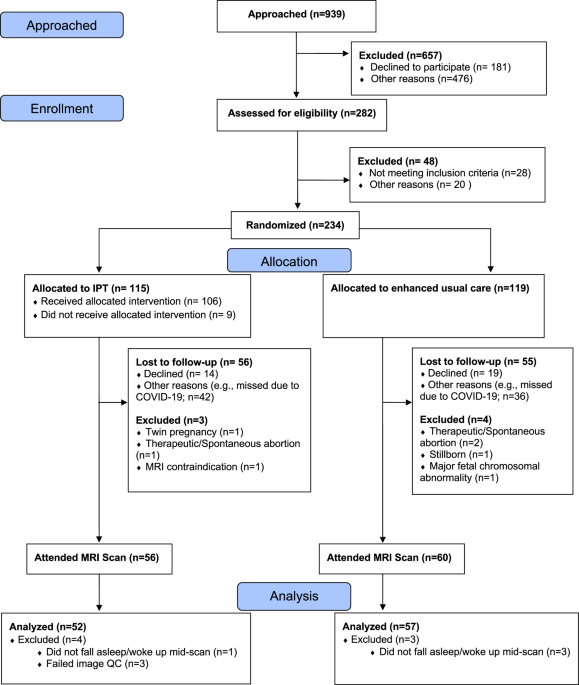
Prenatal maternal depression may have intergenerational effects on offspring brain development, with potential socioemotional consequences. This observational follow-up study examines brain development and subsequent negative emotionality among 109 infants born to mothers participating in a randomized clinical trial (NCT03011801). In the prior trial, brief interpersonal psychotherapy significantly reduced prenatal depression symptoms and disorder as the published primary and secondary endpoints.
Exploratory infant outcomes include hippocampal and amygdala volumes at 6 weeks and negative emotionality at 6 months. Here we show that infants of mothers randomized to interpersonal psychotherapy during pregnancy have lower right hippocampal volume than infants of mothers in the enhanced usual care group (p = .002, d = 0.62). No statistically significant group differences are observed in left hippocampal or amygdala volume.
Smaller hippocampal volume predicts subsequent lower negative emotionality (r = 0.19, p = 0.045). In this study, a maternal prenatal depression intervention is associated with differences in infant brain development with implications for their subsequent emotional health. The remarkable transformation from a single-celled zygote to a fully developed human newborn is profoundly influenced by environmental factors, particularly during sensitive periods of fetal brain development.
Research spanning decades has established a compelling link between prenatal maternal mental health and long-term offspring health outcomes, supporting the Fetal or Developmental Origins of Health and Disease Hypothesis1. However, existing human research has been limited by its reliance on correlational evidence. Experimental control through intervention is needed2.
As an observational follow-up of a randomized clinical trial (RCT), the current study evaluates neurodevelopmental outcomes of infants whose mothers participated in an effective depression intervention during pregnancy3. This research identifies differences in brain structure of infants born to mothers randomized to the active intervention group relative to the enhanced usual care group, highlighting the intergenerational impact of prenatal mental health treatment. Maternal depression is one of the most common prenatal complications, with 20-40% of individuals reporting elevated symptoms of depression during pregnancy4,5.
Rates of depression are even higher among socioeconomically at-risk populations6,7. Longitudinal correlational studies show robust intergenerational associations between maternal depression and a range of adverse child developmental outcomes, including socioemotional and cognitive difficulties and a nearly 3-fold increased risk of psychopathology8,9,10,11,12. Experimental evidence in rodents13 and correlational studies in humans suggest that prenatal exposure to maternal depression, a form of early life adversity, has cascading effects on offspring brain development14, particularly within limbic regions such as the amygdala and the hippocampus (for reviews see refs. 15,16,17).
Extract — continue reading at the source.