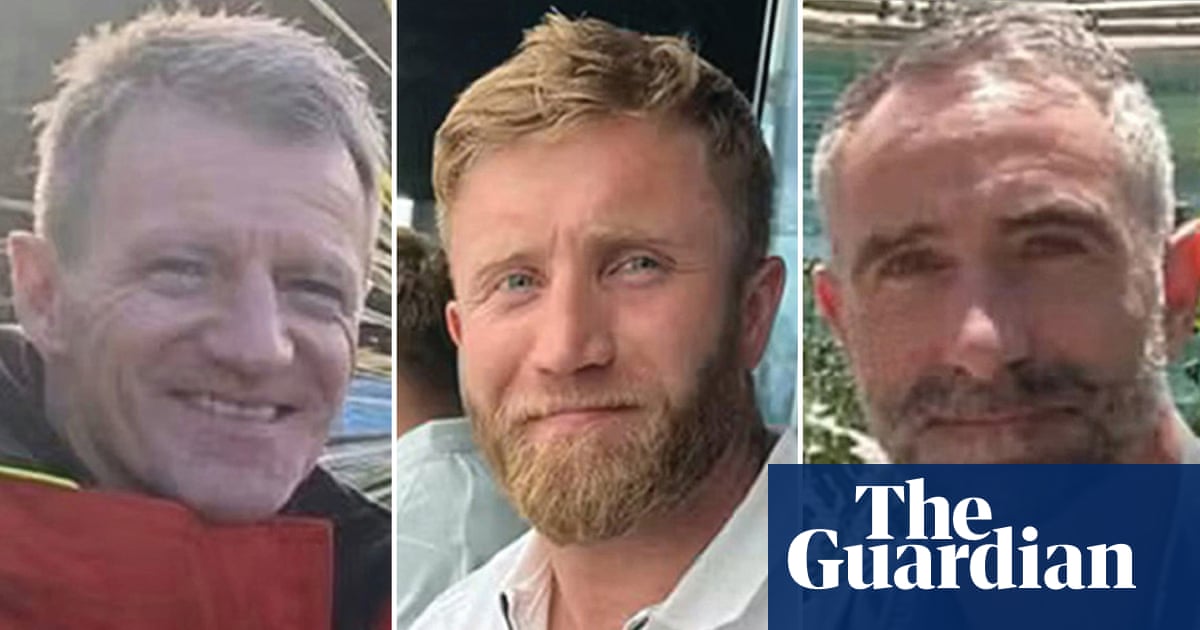
Israeli and UK military commanders could be requested to give evidence to an inquest concerning three British workers killed in Gaza when aid vehicles they were travelling in were hit by an airstrike. It is also possible that the inquest into the deaths of John Chapman, 57, Jim Henderson, 33, and James Kirby, 47, may examine whether the weaponry that killed the men was made in the UK. Until now, the focus of the inquest has been on the role played by the aid organisation in charge of the convoy and the security firm that was protecting it.
But at a pre-inquest review, Maria Voisin, the senior coroner for Avon, indicated that the scope of the final hearing would probably be widened to include the role of Israeli authorities in the deaths. The coroner said she was “minded” to designate the Israel Defense Forces (IDF) and the colonel who ordered the strikes, Nochi Mendel, as “interested parties” for the inquest. Interested parties are often relatives of the person who died or an organisation or individual believed to be closely involved in what happened.
Israeli military authorities last month said they would not open criminal investigations into the strike which, along with the three Britons, also killed the Australian aid worker Zomi Frankcom, and one each from Poland, Palestine and the US. The UK, Australian and Canadian governments called the Israeli decision “shameful”. In a written submission to the court, Pete Weatherby KC, for Henderson, compared the case to that of the novichok attack by the Russian state in Salisbury, in which the British woman Dawn Sturgess was killed.
In that case, the high court in London ruled the lack of any criminal investigation by the Russian authorities and the strong public concern surrounding the circumstances of Sturgess’s death necessitated the expansion of the scope of the investigation. Lawyers for the three men accepted that it was possible Israel would not cooperate with the inquest but called for UK ministers to try to apply pressure if needed. Another element the families are keen to have investigated is the role the British military may have played in the incident in April 2024.
Weatherby’s submission says that a Royal Air Force surveillance plane spent about five hours above Gaza on the day of the attack, seemingly returning to base minutes before the airstrikes were launched. The families want to know what, if any, surveillance the plane gathered about the convoy – and what was shared with the Israeli authorities. The barrister also told the review hearing in Flax Bourton, near Bristol, it was a “matter of public concern” and “great importance to the family” to find out if the weaponry that killed the men was made in the UK.
Voisin said she was open minded about which issues the inquest would consider and would keep some under review. Henderson’s father, Neil Henderson, said in a statement: “We hope the coroner will carry out a thorough investigation into the attack that killed Jim and the others [including] an exploration of all the issues relevant to his death, encompassing the decisions and policies leading to the attack, and what role, if any, UK authorities or military equipment originating from the UK may have played.” Tayab Ali, who is representing the Kirby family, said: “On behalf of the Kirby family they are very pleased that the coroner took onboard their concerns and extended the scope of the inquiry to include those actors that actually caused James’s death.” The scope of the inquiry has also been widened to include inquiries of the IDF and the Israeli defence ministry. It is understood that inquiries will be made of the UK Foreign Office, Ministry of Defence (MoD) and the Israeli arms manufacturer Elbit Systems as well.
Extract — continue reading at the source.