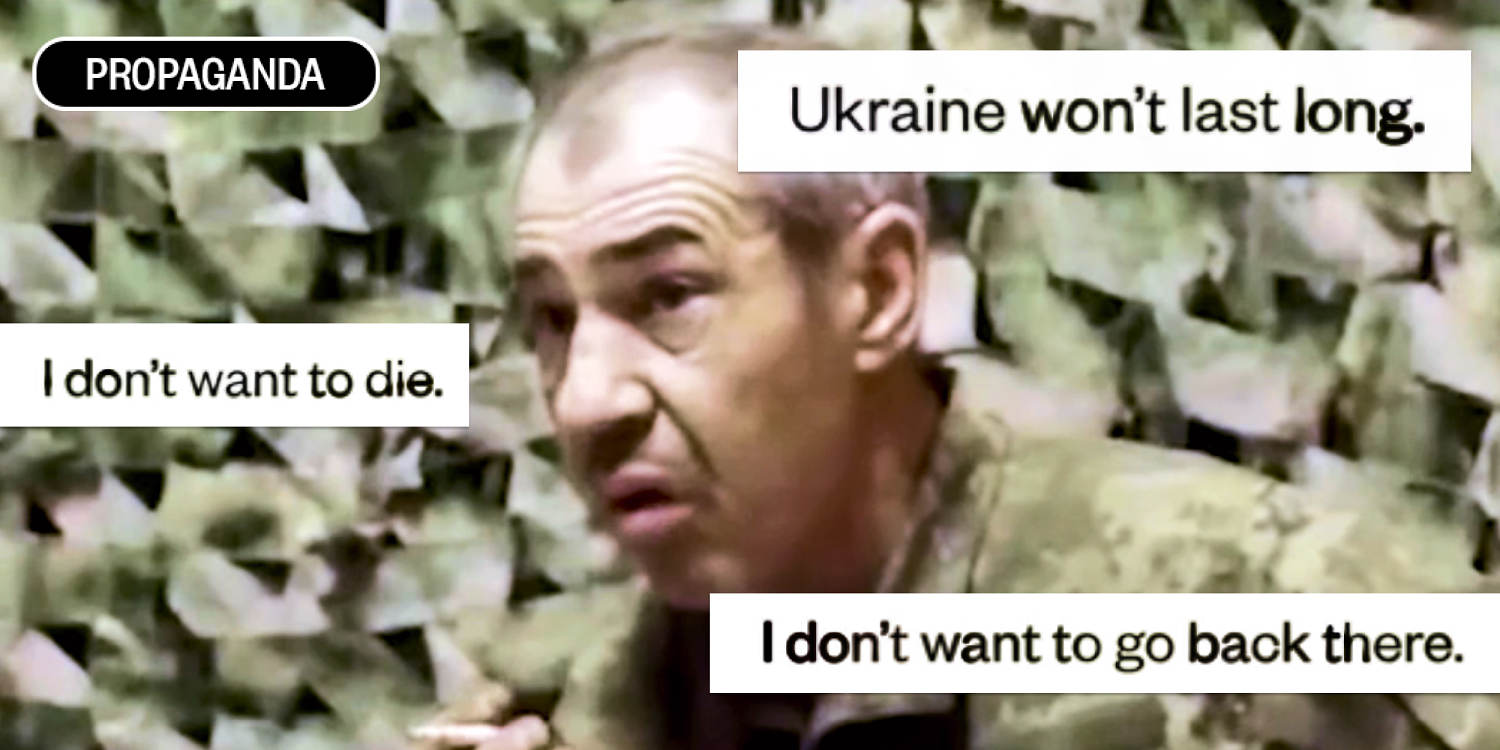
KARPYLIVKA, Ukraine — Volodymyr Srebrodolskyy, a Ukrainian soldier with gray hair and deep wrinkles, smoked a cigarette while speaking to his Russian captor behind the camera. Weeks before it was posted on Telegram, Srebrodolskyy was fighting for Ukraine on the eastern front line against the men who captured him. Now, he was following their script.
Arguments over whether Srebrodolskyy betrayed his country tore apart his hometown of Karpylivka, a village of 500 nestled in the golden wheat fields of Ukraine’s Chernihiv region. Some labeled him a traitor. When his body was ready for burial this spring, some of his neighbors — believing the propaganda — threatened violence against the village mayor if he allowed Srebrodolskyy to be placed in the town’s cemetery.
Others defended him, saying he went to war willingly, without trying to evade the draft. Thousands of such videos have been posted to Russian social media channels, some of them airing on state-run television. They follow a formula: Ukrainian prisoners decry their commanders, decline to return home, denounce corruption and say they hope for the war to end soon.
The message has been repeated since the beginning of Russia’s full-scale invasion in 2022 with few variations, reinforcing Russian narratives about the country it invaded and seeding distrust toward the army in Ukrainian communities. Human rights organizations have called on Russia to stop broadcasting videos of prisoners of war since the early days of the full-scale invasion. The videos are recorded inside a detention system the United Nations Human Rights Monitoring Mission to Ukraine has found to be systematically abusive — sustained in part by “dehumanizing language in state-owned media.” In interviews with more than 850 Ukrainian prisoners of war conducted by the U.N., 96% said they endured torture or mistreatment, including beatings, electric shocks to the genitals, sleep deprivation and mock executions.
The abuse can last for years, the report says. Over half of Russian prisoners of war have also reported mistreatment to U.N. investigators, saying it took place at the point of capture. Russian prisoners have been made to film similar videos, which the U.N. has condemned.
However, unlike Russia, Ukraine allows monitoring groups unhindered access to the facilities holding the prisoners, which the U.N. says are compliant with the Geneva Conventions. The Media Initiative for Human Rights, a Ukrainian nonprofit, has documented 240 detention facilities holding Ukrainians on occupied and Russian territory. Her own husband endured Russian captivity from 2015 to 2017.
Extract — continue reading at the source.