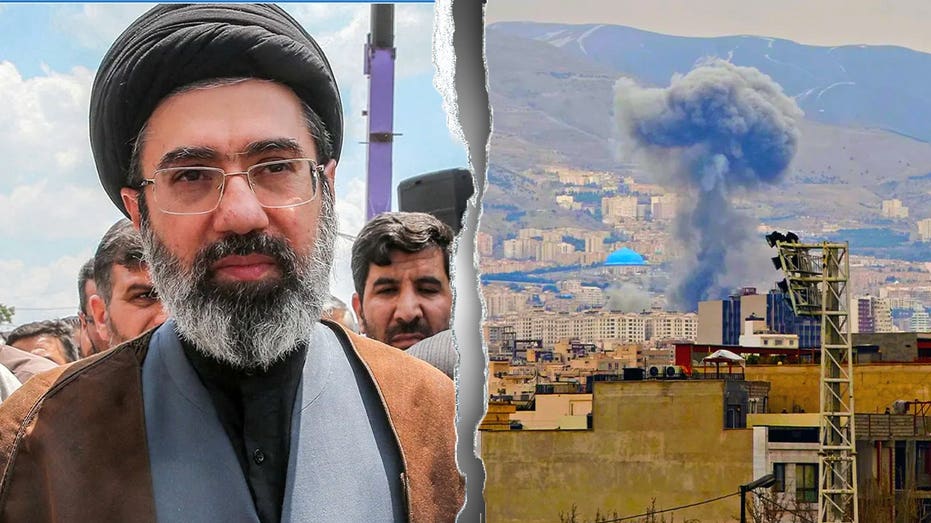
Iran failed to reach a final deal with the U.S. by Monday’s deadline, leaving disputes over Tehran’s nuclear program and the Strait of Hormuz unresolved nearly six months into the war. Tehran instead announced an understanding with Oman on a new commercial transit route through the strait, but the plan cannot take effect without U.S. approval, and leaves unresolved Washington’s blockade, Iran’s nuclear program and the broader negotiations. Hormuz, where a fifth of the world's oil traverses, remained at the heart of the deadlock, leaving the two sides without a path to a broader agreement on ending the war or resolving the nuclear dispute.
Iran insists it must retain authority over passage through the strait, while the United States has demanded unrestricted commercial navigation. TRUMP WARNS IRAN FIGHTING ISN'T OVER AS HE VOWS US WILL 'WIN' AS TALKS FADE Iranian Foreign Ministry spokesperson Esmail Baghaei said the two countries had reached "an understanding … regarding the map of the transit route" and were working to finalize a joint statement. President Donald Trump responded in a Fox News interview: "If Oman gets in the way, we’ll bomb the s--- out of them." Trump also said Iran should surrender to end the war, telling Fox News, "They should put up the white flag of surrender." He has maintained that preventing Iran from obtaining a nuclear weapon remains the administration’s central objective.
The 60-day window was established under a June memorandum of understanding (MOU) intended to halt hostilities, reopen the Strait of Hormuz and provide a framework for a broader agreement on Iran’s nuclear program, sanctions and regional security issues. The White House did not respond to Fox News Digital’s request for comment on the conclusion of the negotiating period with no deal reached. GULF COUNTRIES STRONGLY CONDEMN IRAN'S DRONE ATTACK ON BAHRAIN AS RISING TENSIONS THREATEN MOU Instead, the framework broke down as Iran and the United States accused each other of violating its terms and resumed military action.
Iran has demanded sanctions relief, the release of frozen Iranian assets and an end to the U.S. naval blockade, while maintaining that it must retain authority over passage through Hormuz. Washington has demanded unrestricted commercial navigation through the strait, which carried roughly one-fifth of the world’s oil and liquefied natural gas before the war. The ceasefire arrangement was repeatedly tested by attacks on commercial shipping and U.S. retaliation inside Iran.
Iran was blamed for a June 25 strike on a commercial vessel in the Strait of Hormuz, prompting U.S. strikes on Iranian missile and drone storage sites and radar facilities, according to U.S. Central Command (CENTCOM). Fighting escalated again in July after Iran struck three vessels in the waterway.
CENTCOM said it struck more than 300 Iranian military targets over three nights, including missile and drone sites, naval capabilities, ammunition storage facilities, communications networks and coastal surveillance positions. U.S. strikes continued through July 22, with CENTCOM saying the operations targeted Iran’s maritime capabilities, missile and drone storage facilities, coastal surveillance sites and air defense assets. The command did not release an updated cumulative target count.
Extract — continue reading at the source.