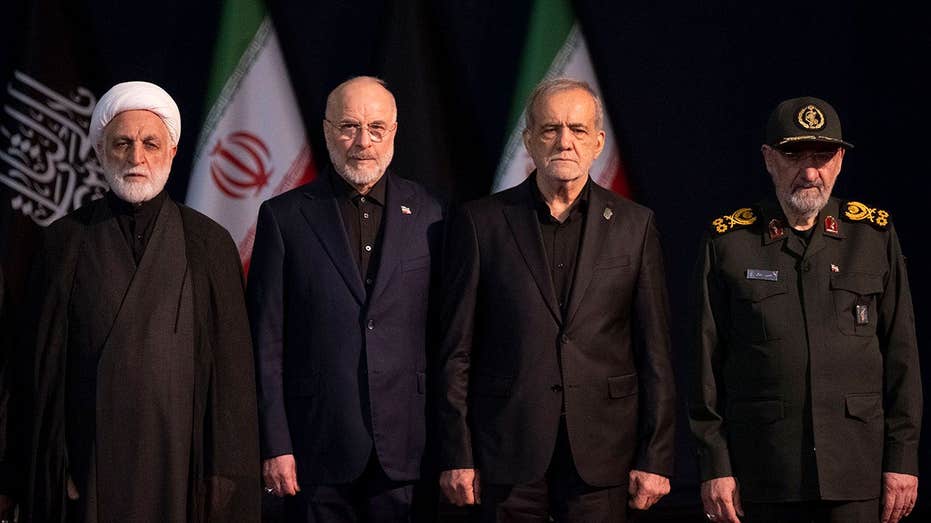
Iran is rebuilding the upper ranks of its military and security establishment after months of wartime losses by turning largely to familiar veterans — figures whose careers in some cases stretch back to the 1979 Islamic Revolution, the Iran-Iraq War and previous domestic crackdowns. The appointments follow the deaths of several senior Iranian commanders in U.S.-Israeli strikes since the war began Feb. 28, The National reported Aug. 11. For Washington, the stakes go beyond who fills the vacancies.
The reshuffle puts veteran hardliners atop institutions that shape Iran’s military operations, national-security policy and internal security at a time of renewed confrontation with the United States. The appointments do not prove that Tehran has run out of younger commanders or that loyalty was the sole criterion, but the reliance on figures whose careers stretch back decades is raising a broader question for U.S. policymakers: whether wartime losses have left Iran increasingly dependent on a smaller circle of trusted ideologues — potentially narrowing the room for compromise even as Washington tries to pressure Tehran back toward a deal. IRAN’S REVOLUTIONARY GUARD SIDELINES PRESIDENT AS MILITARY GRIP EXPANDS Former American prisoner Morad Tahbaz, who was detained in Iran in 2018 and freed in a U.S.-Iran prisoner exchange in September 2023, told Fox News Digital that he views the latest appointments as evidence of Tehran's continued dependence on longtime loyalists.
"They keep rotating the same old people, most of whom are fairly inept but are loyal to the Khamenei father and son," Tahbaz told Fox News Digital. The reshuffle spans Iran's conventional military, the Islamic Revolutionary Guard Corps, its naval arm, the Basij paramilitary force and the country's highest national-security council. Iran's state-run IRNA reported Aug. 10 that Supreme Leader Mojtaba Khamenei appointed Ali Abdollahi chief of staff of the Armed Forces, Kioumars Heydari his deputy, Ahmad Vahidi commander of the IRGC, Mostafa Izadi deputy IRGC commander, Ali Ozmaei commander of the IRGC Navy and Hossein Taeb head of the Basij.
The previous day, former IRGC commander Mohsen Rezaei, 71, was named secretary of the Supreme National Security Council and Khamenei's representative on the powerful body. reported Aug. 10 that the SNSC coordinates Iran's security and foreign policy and that Rezaei replaced Mohammad Baqer Zolqadr, who had been appointed secretary in late March following the death of his predecessor, Ali Larijani. The appointments do not establish that Iran has run out of younger or less familiar commanders. But the reliance on longtime military and security figures has fueled assessments that wartime losses have narrowed the regime's pool of officials it regards as sufficiently experienced and politically trustworthy.
Erfan Fard wrote for the Middle East Forum on Aug. 15 that Khamenei was not promoting a new generation but turning to veterans of the revolution, the Iran-Iraq War, intelligence operations and domestic repression, arguing that an architecture based on "institutional memory, loyalty, and coercive power" was taking shape. The Foundation for Defense of Democracies argued in an Aug. 12 policy brief that the reshuffle looked "less like renewal than a game of musical chairs among regime veterans." The appointments also formalized the position of Ahmad Vahidi, a veteran hardliner who had already emerged near the center of wartime decision-making. Vahidi was a major player in shaping Tehran's wartime policy and had risen through the IRGC's early intelligence and external-operations apparatus before later serving as defense and interior minister.
As interior minister, Vahidi oversaw police units involved in the crackdown on the 2022 protests. IRNA confirmed Aug. 10 that Khamenei promoted Vahidi to major general and formally appointed him commander-in-chief of the IRGC. IRAN’S NEW IRGC CHIEF TIED TO GLOBAL ATTACKS AND ‘DEATH TO AMERICA’ IDEOLOGY One of the most closely watched appointments is Hossein Taeb, the cleric and veteran security official tapped to lead the Basij, the IRGC's volunteer paramilitary force that has repeatedly been used against domestic dissent.
Extract — continue reading at the source.