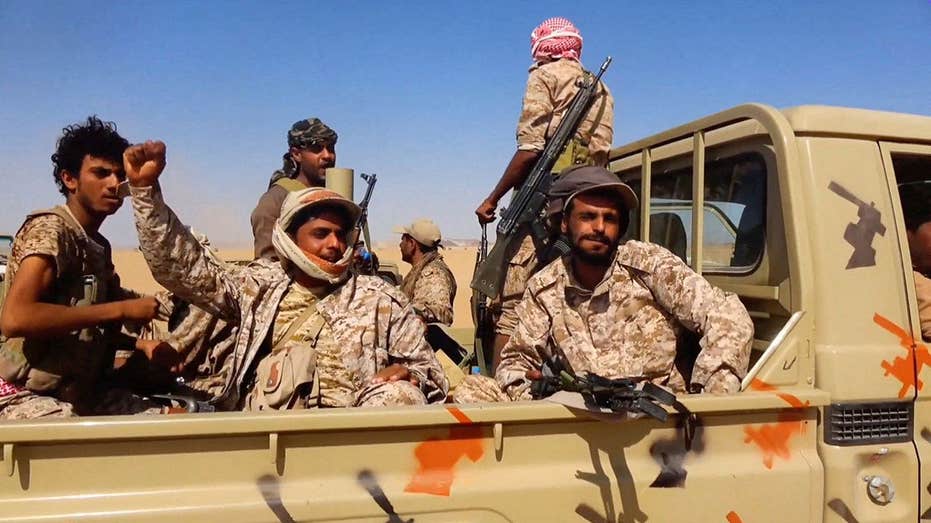
The Houthis’ rapid advance toward one of the world’s most important shipping chokepoints is putting fresh scrutiny on the sprawling financial network that has helped transform the Iran-backed group from a Yemeni insurgency into a heavily armed regional power capable of threatening global trade. The group has seized new territory along Yemen’s Red Sea coast, including the strategic port city of Mocha, and expanded toward the Bab el-Mandeb Strait. The waterway connects the Red Sea to the Gulf of Aden and carries a significant share of global maritime trade and energy shipments.
For the Trump administration, the Houthi advance is becoming as much a financial challenge as a military one. Washington is intensifying efforts to choke off the money sustaining Iran and its proxies, but the Houthis have built a sprawling sanctions-evasion network while controlling ports, trade routes and millions of Yemenis — raising a difficult question for Treasury: how do you cut off the cash fueling the group without cutting off food, fuel and other lifelines to civilians? SAUDI ARABIA TELLS TRUMP NOW IS THE TIME FOR MILITARY ACTION AS IRAN-BACKED HOUTHIS ADVANCE The Houthis operate a financial network that extends far beyond Yemen, according to Adam Rousselle, founder of Between the Lines Research.
"We’re dealing with a very well-capitalized group," Rousselle told Fox News Digital. In a 2025 investigation for the Global Network on Extremism and Technology, Rousselle traced a financing system spanning Houthi-controlled ports, tariffs, Iranian oil, informal hawala networks, cryptocurrency exchanges and foreign facilitators across Russia, Türkiye and Southeast Asia. Control of ports has historically been central to Houthi revenue because Yemen depends heavily on imports.
Rousselle’s GNET report said the Houthis have imposed steep fees at ports they control and tariffs on goods brought into their territory from rival Yemeni ports. HOUTHIS ENTER US 'KILL BOX' AFTER SEIZING RED SEA 'CORK,' FORMER PENTAGON OFFICIAL WARNS The group’s latest territorial gains could strengthen that economic base even further. Nadwa Al-Dawsari, a Yemen expert and associate fellow at the Middle East Institute, told lawmakers in Sept. 1 testimony before the House Foreign Affairs Committee that territory is central to the Houthis’ ability to withstand outside pressure.
"The most important source of that leverage is territory," Al-Dawsari testified. "The Houthis have been able to consolidate their power and build increasingly sophisticated military capabilities because they control significant territory, a large population, ports, infrastructure, and resources." "That territorial base allows them to recruit, generate revenue, manufacture and store weapons, control smuggling routes, and regenerate capabilities degraded by airstrikes and sanctions," she added. IRAN LOSES KEY ECONOMIC LIFELINE IN MIDDLE EAST THAT TRUMP'S SANCTIONS COULDN'T REACH AS DEADLOCK PERSISTS Rousselle said the Houthis’ finances should not be understood simply as Tehran handing cash to an Iranian proxy.
"It’s a bit of a misunderstanding that the Iranians just give them money," he said, describing the Houthis instead as embedded in a broader Iranian commercial ecosystem. "The Houthis aren't sanctions-proof; they're sanctions-adapted," Miad Maleki, senior fellow at the Foundation for Defense of Democracies, told Fox News Digital. "Most of their money is made inside Yemen — customs and taxes at Hodeidah and Ras Isa, and fuel above all." Treasury has estimated that the Houthis generate more than $2 billion a year from oil sales, while Iran provides the group with a free monthly oil shipment through Iranian-owned or affiliated companies based in Dubai.
Extract — continue reading at the source.