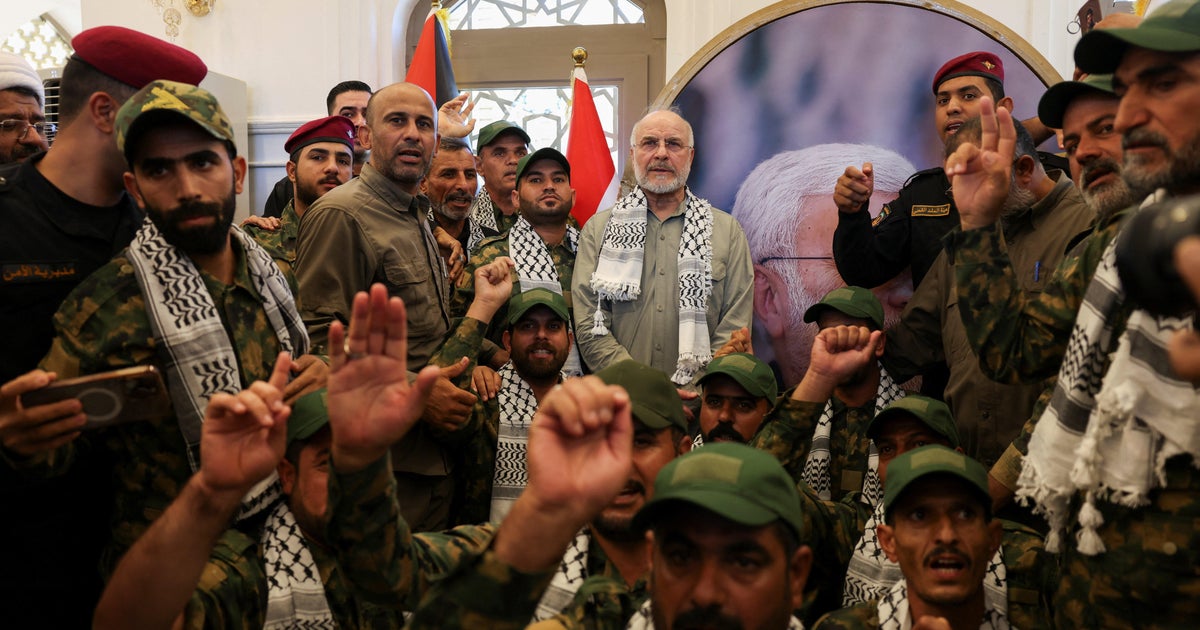
Iranian Parliament Speaker Mohammad Bagher Ghalibaf called on Iran and Iraq to strengthen economic cooperation and prepare for what he described as "unjust sanctions," warning that the United States and Israel had shifted toward economic warfare after failing to defeat the two countries militarily. Speaking to Iranian and Iraqi businesspeople at the Iranian Embassy in Baghdad on Thursday, Ghalibaf said the two countries should develop mechanisms to withstand sanctions and reduce their dependence on the U.S. dollar. "If you look at the resources and raw materials of Muslim countries, you will realize that our enemies come to plunder them," Ghalibaf said, according to a post on his channel on the Telegram messaging app.
He called for plans to overcome sanctions and argued that Iran and Iraq could conduct trade using their own national currencies. "Today, it is possible to conduct trade exchanges using national currencies and strike at the mouth of the U.S. dollar," he said. Ghalibaf also stressed the close link between economic strength and security, describing them as "two wings of the same bird." Ghalibaf said the U.S. and Israel had recognized that they could not overcome Iran and Iraq through conventional military warfare and had therefore turned to "cognitive and economic warfare." "You are now the soldiers and commanders of this battlefield," he told the business community.
Iran has finalized a preferential trade agreement with Oman, according to the Islamic Republic's official Trade Promotion Organization. The agreement, which Oman has not yet confirmed, still requires approval by Iran's parliament and other authorities. The announcement, relayed by Iranian state media, came two days after President Trump heralded a shift in U.S. tactics in the nearly six-month war to a "crushing economic operation," and seemingly away from the heavy weapons used during the first phase of the conflict.
Vice President JD Vance said Thursday "the most effective tool that we have is the economic pressure that we can apply" on Iran, as Treasury Secretary Scott Bessent underlined in an interview with CNBC that Washington expects both allies and rivals to join the ramped-up campaign against Iran. "This is going to be the greatest coordinated economic isolation in the history of the world," he said, adding that the Trump administration was saying to all nations "you are either with us or against us." Oman has discussed taking future joint control of the Strait of Hormuz with Iran for weeks, and those talks — which have included the notion of fees being charged for commercial ships to use the maritime route — have drawn stern warnings from the White House about interfering in Mr. Trump's push for a deal to end the war.
The Iranian trade office on Friday called the agreement with Oman part of Tehran's broader push to strengthen economic ties with regional partners through trade diplomacy and improved logistics infrastructure. In addition to the Oman agreement, Iran is pursuing renewed preferential trade talks with Turkey, reopening border markets with Iraq and Turkey, and expanding its network of commercial centers and trade advisers across the region as part of a wider strategy to boost non-oil exports and regional economic cooperation. China said on Friday that U.S.
"sanctions and pressure" wouldn't resolve the Middle East conflict, after Washington urged governments including Beijing to join efforts to isolate Iran's economy. "Sanctions and pressure will not help resolve the issue," Chinese foreign ministry spokesman Lin Jian told reporters at a news briefing, calling on "all relevant parties to take responsible measures and resolve the problem through political and diplomatic means." President Trump threatened Iran with "economic D-Day" on Wednesday, vowing to wield "Economic Warfare and Isolation on an unprecedented scale." Iran quickly dismissed the threat as a distraction and said it would backfire. Treasury Secretary Scott Bessent underlined in an interview with CNBC on Thursday that Washington expects both allies and rivals to join the ramped-up campaign against Iran.
Extract — continue reading at the source.