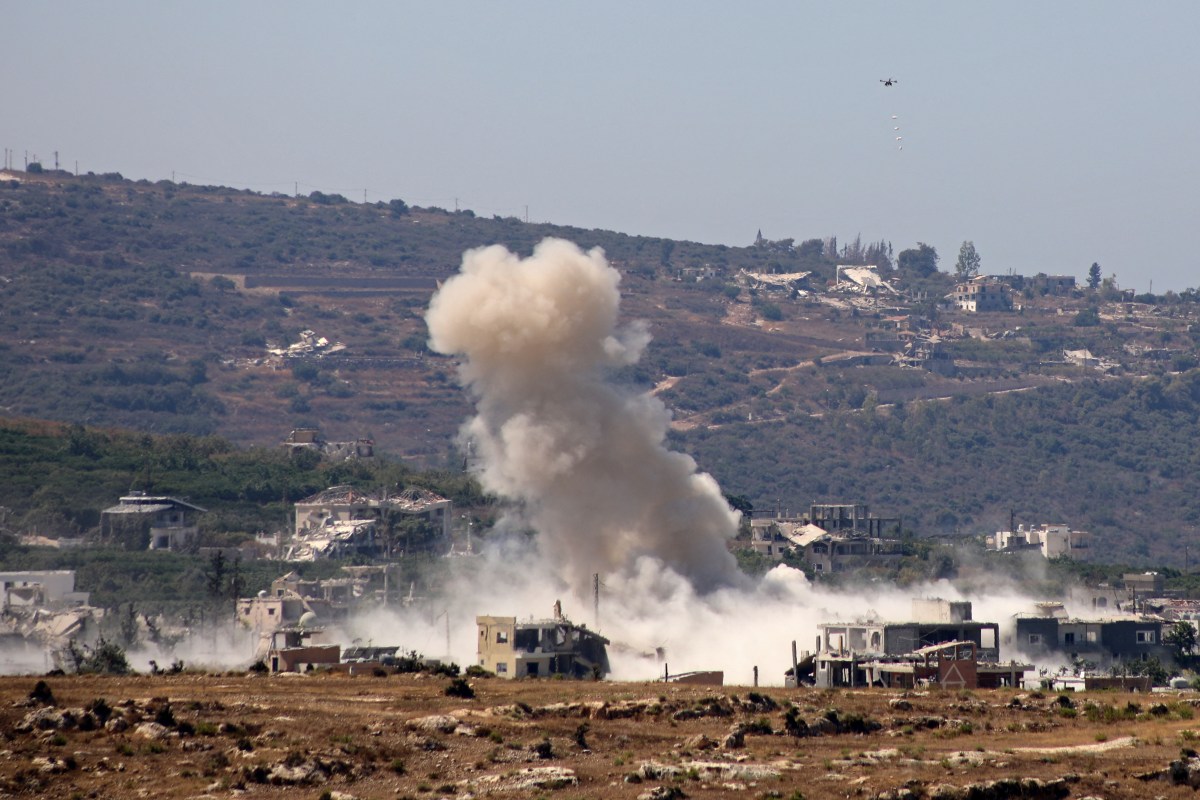
The war in Iran has already carried a nearly $40 billion price tag for the U.S. military, new analysis from the Congressional Budget Office (CBO) shows—and new polling finds half of U.S. registered voters say sending troops to fight in Iran was a mistake. The nonpartisan congressional agency estimates the Iran conflict has cost the Defense Department about $38 billion as of August 1. That includes the cost of replacing expended weapons and equipment, increased flying hours, higher fuel costs, and other operations.
Defense Secretary Pete Hegseth said in July that the war had cost $37.5 billion, a figure similar to the CBO's estimate. The conflict could cost roughly $2 billion a month if fighting remains at lower levels, with costs rising to about $3 billion a month if fighting intensifies, CBO estimates. But the war's costs extend beyond military spending.
Inflationary pressures are the main economic impact of the Iran war, the CBO estimates, driven by reduced shipments of oil and natural gas through the Strait of Hormuz and disruptions to shipping through the Red Sea. The CBO's findings come as most U.S. registered voters say the war is contributing to inflation, according to a new Economist/YouGov poll. Nine in 10 U.S. registered voters said they blamed the war for inflation, with 56 percent saying they blamed it “a lot” and 34 percent saying “a little.” Ten percent said they did not blame the conflict “at all.” The same poll found half of registered voters said the U.S. made a mistake sending troops to fight in Iran.
About 34 percent said it was not a mistake, and 17 percent were unsure. The poll, conducted September 11-14, had a margin of error of ±3.3 percentage points. Meanwhile, the Trump administration is planning a $2.8 billion arms package for Israel that would include 40,000 bombs, according to the .
Two U.S. officials and a person familiar with the plan described the package to the AP, including that most of it would be paid for through foreign military financing, speaking on condition of anonymity because the deal has not yet been finalized. Tucker Carlson, a former Trump ally and Fox News host who has continued criticizing the Iran war, responded to the reported deal in a post on X Tuesday, writing that there was “no precedent” for what the Trump administration was doing. A senior Trump administration official told Newsweek on Tuesday in response to the article on Tucker Carlson, “All foreign arms sales are moving through the appropriate process.
We do not comment on pending sales," and a State Department official told Newsweek, "As a matter of policy, the Department does not confirm or comment on proposed arms sales until they have been formally notified to Congress." The conflict is also putting fresh pressure on global energy markets. Saudi Crown Prince Mohammed bin Salman sought Egypt's backing Tuesday as Yemen's Houthis intensified attacks on Saudi shipping and infrastructure, disruptions that have helped drive up global oil prices. The inflation pressures are also rippling through financial markets.
Extract — continue reading at the source.