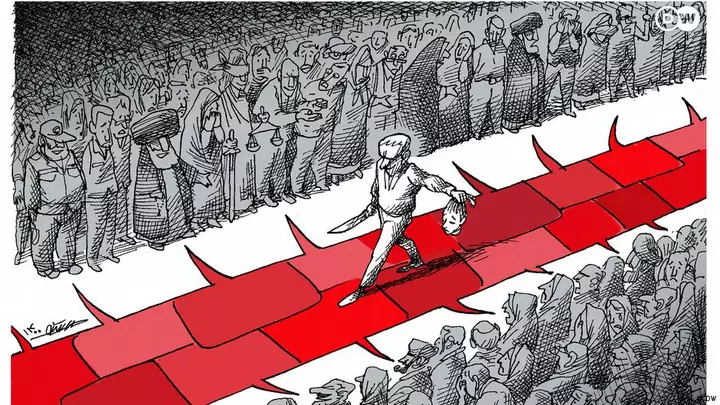
In the early hours of Monday, October 5, 2026, the life of Maryam Yarmohammadi came to a violent end. The 28-year-old mother of two was attacked with knives by her brother and husband on Qeshm Island in southern Iran. Her genitalia were mutilated.
She died shortly afterward in hospital. Both her husband and brother were arrested. According to media reports, around 50 relatives gathered outside the hospital to protest the arrests.
They reportedly believed that death had been the "least severe punishment" Maryam Yarmohammadi deserved. What exactly the young woman had done, and why her relatives considered her guilty, remains unknown. Yet both the circumstances of the case and the extreme violence involved follow a familiar pattern seen in so-called honor killings.
In such cases, the underlying belief is often that a man must erase a perceived "dishonor" brought upon the family by a sister, daughter, or wife. Failure to do so may expose him to rejection, humiliation or social exclusion within his community. To view this video please enable JavaScript, and consider upgrading to a web browser that supports HTML5 video What constitutes "honor" or "proper conduct" is often defined by family expectations or local social and cultural norms.
In some traditionally conservative regions, even laughing loudly or engaging in a friendly conversation with an unrelated man may be viewed as a violation of these norms. Women accused of such transgressions are frequently denied any meaningful opportunity to defend themselves against the allegations. For years, women's rights activists in Iran have sought to establish nationwide support networks offering counseling and protection to women at risk.
One such initiative is the Campaign to End Honor Killings. Rezvan Moghaddam, a spokesperson for the campaign, told DW that there appeared to be no activist or local group in the region capable of supporting Maryam Yarmohammadi. Through civil society networks, the campaign has in some cases succeeded in relocating threatened women to safe locations and securing shelter for them.
Extract — continue reading at the source.


