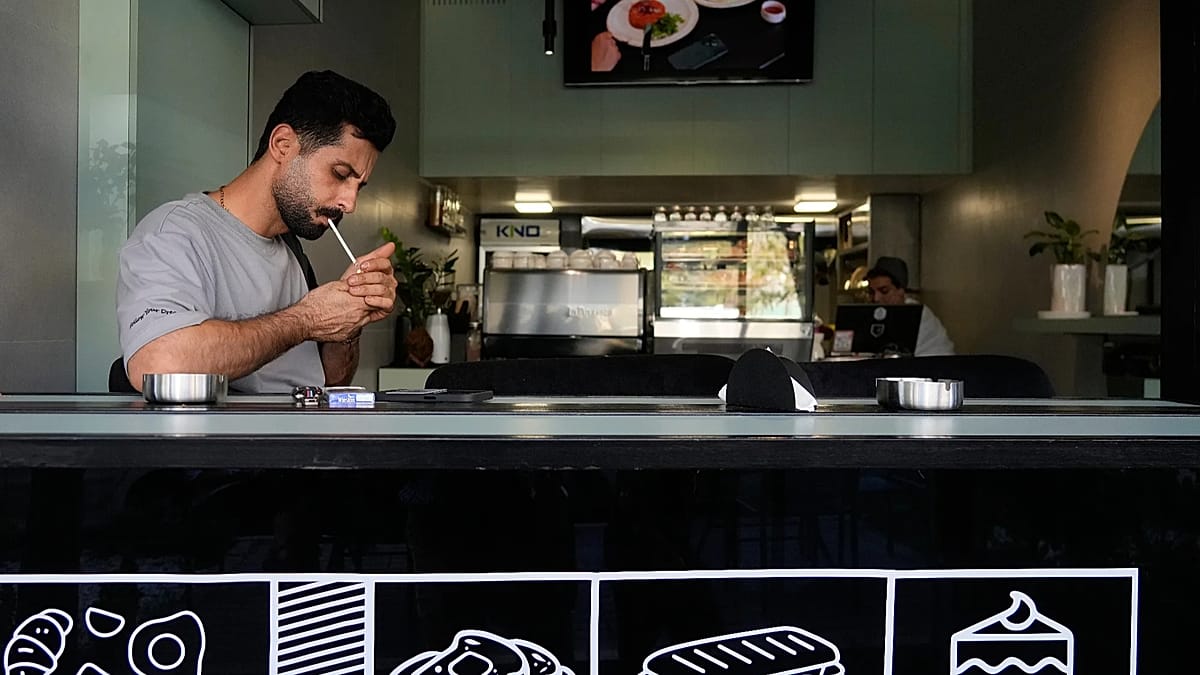
An Iranian café chain boss has been sentenced to more than 12 years in prison and had all his property confiscated by the state for supporting the January protests, in one of the harshest sentences handed down to an entrepreneur in connection with the unrest. Sadegh Saeedinia, manager of the Saeedinia café chain, was convicted on charges including "media and propaganda activities against national security," "conducting propaganda against the system," and "taking operational action on behalf of hostile groups." He will also be barred from working in the café sector for two years after his release. The charges relate to posting material about the protests on Instagram, backing calls for strikes, shutting down the group's cafes and shops and encouraging staff to participate in demonstrations.
The judiciary also described Saeedinia — the son of businessman Mohammad Saeedinia, founder of the Saeedinia food group — as an "instigator" of protests in Qom and linked him to the destruction of public and private property. No independent evidence establishing a direct connection between his activities and any physical damage has been made public. The case is part of a broader campaign targeting his family.
Before his son's conviction, Mohammad Saeedinia had already faced judicial action, after his cafes and restaurants were shut down and some branches sealed. Fars News Agency claimed his assets were worth roughly the same as the financial damage inflicted on Tehran during the protests. In a subsequent letter, Mohammad Saeedinia described the closures as "a mistake," apologised to the public and expressed obedience to the ayatollah.
Several social media users described the letter as written under duress. Iran has sharply expanded its use of asset confiscation as a tool of political pressure, a practice that has changed in form and scope over more than four decades. The policy began in 1979 when Ayatollah Ruhollah Khomeini ordered the confiscation of property belonging to the Pahlavi family and officials of the former regime, with the stated aim of redistributing assets to the poor.
Over subsequent decades it was extended to cover entrepreneurs, political opponents, artists, activists and religious minorities. Article 49 of the constitution created a formal judicial mechanism for seizing property deemed "illicit," and a significant share of confiscated assets passed to bodies operating under the authority of the ayatollah. The Headquarters for Executing the Order of Imam Khomeini, known as Setad, is among the most prominent of these structures, and its name has appeared in cases involving confiscated property including the real estate of Baha'i citizens.
Since the January protests, confiscation has expanded further. In April, the Tehran prosecutor announced that orders had been issued to identify and seize the assets and freeze the bank accounts of more than 100 prominent figures living abroad, described as supporters of the enemy. On the same day, authorities issued orders to freeze the accounts of 63 managers and employees of Iran International and 25 managers and employees of Manoto TV in London.
Extract — continue reading at the source.