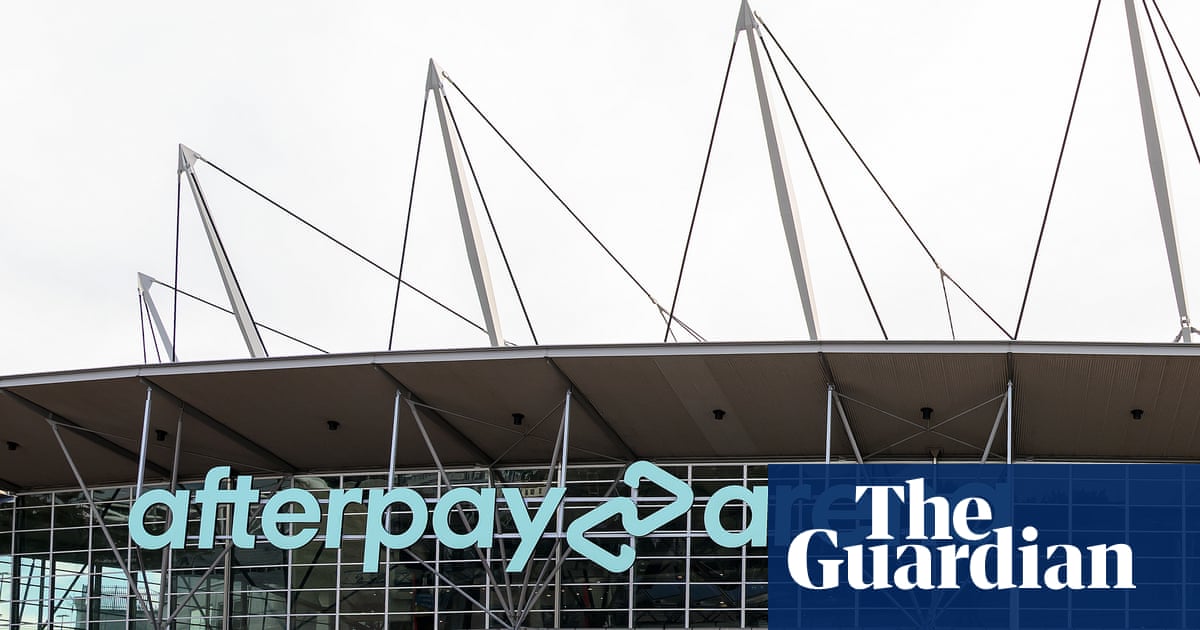
Last month, it spent millions to take over a Sydney Olympic Park arena. The company says Afterpay Arena will be the first venue where Australians can “buy now, pay later” for their event tickets, merchandise, dinner and even alcohol. The deal to take the naming rights from a traditional lender, Qudos Bank, is the latest evolution for a sector that has rapidly expanded over the past decade.
But as growth slows and players leave the market, is the buy now, pay later (BNPL) boom over? Australians’ yearly spending through buy BNPL platforms grew $3bn a year in the late 2010s but slowed to growth of $1.5bn in 2025, according to the Reserve Bank. And while BNPL arrived promising to one day replace credit cards, Australians spent 20 times more via credit cards last year than through BNPL ($22bn).
At least eight BNPL platforms have left Australia since 2022, including the National Australia Bank withdrawing its product earlier this year, leaving four major operators: PayPal, Klarna and Zip (each with about 2 million customers) and Afterpay, with 4.5 million. Afterpay and Klarna report that they are growing, while PayPal’s Pay-in-4 service customers have not grown since 2023 and Zip has seen a 7% year-on-year fall in users. Zip will leave the New Zealand market on Monday.
Credit agency Equifax has found new BNPL account applications in the three months to June 2026 were down 35% from the previous year. Experts attribute the slowdown in part to 2025 laws that aimed to stop companies approving customers for funds they couldn’t afford to repay. The reforms defined BNPL as a form of credit, forcing companies to perform credit checks and report new accounts to credit agencies, potentially affecting future activities like mortgage applications.
Kevin James, analyst at Equifax, says the reforms have stopped platforms from offering instant approvals, detracting from their unique appeal. Some customers have turned to other forms of lending like credit cards and personal loans, he says. Users were instead lumped with late payment fees, or cut off from platforms, if they failed to repay.
Afterpay has reported 2.9% of customers were three months late on repayments in June 2025, compared with 2.1% for credit cards. Contacted for comment, the company said 2% of purchases in the last three months 2025 attracted late fees. The company earned $123m in late fee revenue annually in 2024 and 2025, according to its Australian accounts.
Extract — continue reading at the source.