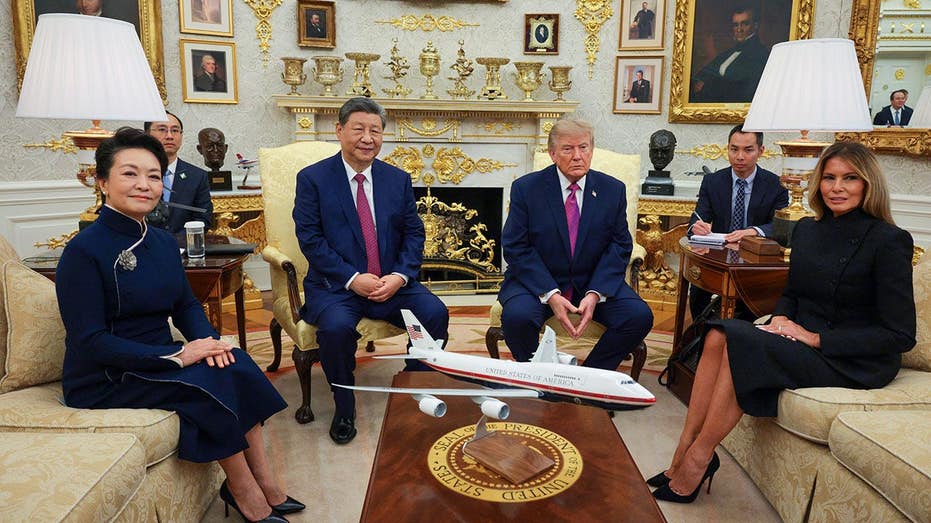
First, the Gulf of Mexico became the Gulf of America — in US federal documents, if not globally. Then Lake Ontario became Lake America. Now he wants to rebrand the defining technology of our time: artificial intelligence (AI).
Earlier this month, the US president claimed on his Truth Social platform that the term artificial intelligence is "inaccurate" and "ineloquent." He said "superior," "extreme," or "supreme" intelligence were better alternatives. In a three-day social media poll, Trump fans chose "Super Intelligence" (SI) by about 65% to 35% (for Superior Intelligence), allowing him to announce at the United Nations General Assembly last week that US federal documents would use his new term going forward. To view this video please enable JavaScript, and consider upgrading to a web browser that supports HTML5 video The tech industry has yet to adopt the phrase, however, while academics warn that superintelligence is a future term for when technology can beat humans across the board.
They say the current AI models are years away from that milestone. "Most AI is not superintelligence — it's just different intelligence," Pedro Domingos, a computer science professor from the University of Washington, told DW. "AI is doing different things from what humans do, so calling it superintelligence is misleading." Computer scientists and mathematicians coined the name "artificial intelligence" in 1956 at a summer workshop at Dartmouth College in New Hampshire.
"Artificial" simply meant made by humans, as opposed to natural human intelligence. Not all experts agreed with the name. In the book "Machines Who Think," historian Pamela McCorduck cited AI pioneer Arthur Samuel, who said the term "makes you think there's something kind of phony about this." Despite this, the name artificial intelligence has stuck for 70 years.
Critics say changing it now will not quieten the many fears around AI, including job losses, human obsolescence or machines slipping out of our control. "The name change is fostering these kinds of fears: 'Oh, this is superintelligence and it's going to make humans obsolete, turn on us and take our jobs'," warned Domingos. "If you want to maximize the backlash against AI, rename it Superior Intelligence." Those public fears are growing fast.
In a Public First poll for Politico earlier this month, about half of respondents in six countries — the United States, Canada, France, Spain, Germany and the United Kingdom — backed a pause in further AI development to reduce the risk that the new tech could destroy humanity. A separate CNN/SSRS poll found nearly nine in 10 Americans are more concerned than excited about AI surpassing human intelligence. Those concerns have already reached the US Congress.
Extract — continue reading at the source.