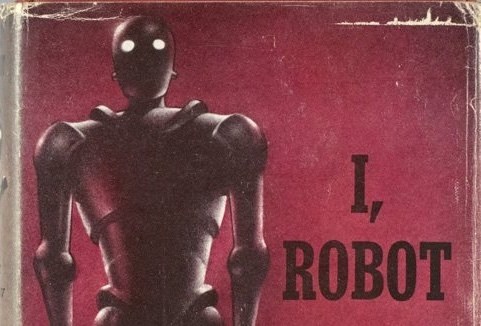
In Isaac Asimov’s 1942 story Runaround, a robot named SPD-13 (Speedy) malfunctions while on a critical mission to save his human operators from roasting to death under the planet Mercury’s relentless sun. Speedy is tasked with bringing them some selenium, to help restore their life support system, but instead he stumbles around the selenium pool in circles, acting “drunk” and quoting Gilbert and Sullivan. One of the engineers realizes the robot is caught in a logic loop between conflicting orders.
Speedy was designed to follow Asimov’s now-famous three laws of robotics. Those laws are as follows. 1. A robot may not injure a human being, or through inaction, allow a human being to come to harm. 2.
A robot must obey orders given to it by human beings unless such orders would conflict with the first law. 3. A robot must protect its own existence, as long as such protection does not conflict with the first two laws. Because Speedy was so expensive to build, its programmers placed special emphasis on number three.
Read more: “How Science Fiction Can Save Us” How robots and humans negotiate these three laws became the backbone for dozens of stories Asimov wrote in the following decades, many of which were published together in I, Robot in 1950. The shiny whirring puzzles at the beating heart of these stories have become frighteningly and increasingly relevant to real life on planet Earth in 2026. Artificial intelligence was supposed to democratize knowledge and solve intractable problems for humanity.
But AI bots have already been linked to horrific injury to humans, including psychosis and death by suicide. Some early evidence suggests they may be making us dumber by the minute. Now human societies are struggling with how to ensure that AI not only doesn’t further harm individual humans—but that it doesn’t spark the extinction of the entire human race within a decade, as some AI insiders warned it could just a few weeks ago.
In a television interview in 1986, Asimov stated that out of the millions of words he had published in science fiction stories and novels, he was convinced that 100 years later, the 60-odd words that make up the three laws of robotics would be the only ones to survive. He was right to anticipate their staying power. Over the decades, other science fiction authors have reinterpreted and rewritten his laws in countless sci-fi stories, and they have played a major role in shaping real-life discussions of ethics in the development of artificial intelligence.
Extract — continue reading at the source.




/https://tf-cmsv2-smithsonianmag-media.s3.amazonaws.com/filer_public/bd/0a/bd0ada23-18c3-41a6-984e-9eeae21d1a20/el-nino-heat.jpg)