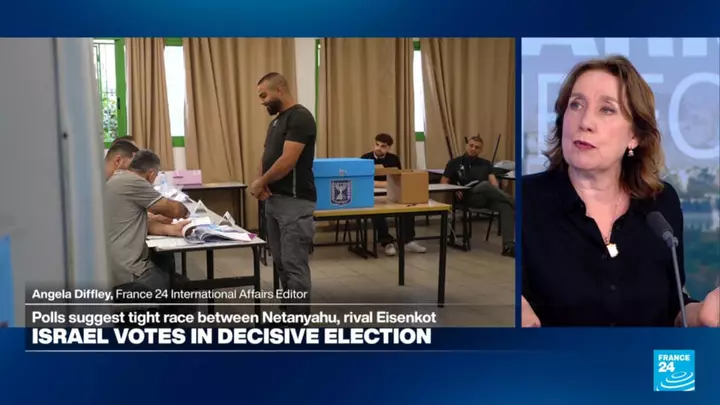
It could be weeks or even months before we know who will be Israel’s next prime minister Polling stations in Israel will close on Tuesday evening, but it could be weeks before Benjamin Netanyahu or one of his opponents will be declared the next prime minister. That's because Israelis vote for parties and not candidates. None of the several main parties is expected to win anywhere close to a 61-seat majority in Israel's parliament, known as the Knesset.
So the next prime minister will have to cobble together a coalition. Polls show a tight race between coalitions supporting Netanyahu and his main opponent, retired Gen. In the end, both could fall short of a 61-seat majority, meaning another election would be held in the coming months with Netanyahu's government staying on as a caretaker.
Shortly after polls close at 10 p.m. local time (1900 GMT), Israel's three main television broadcasters will release exit polls estimating how many seats were won by each party. The exit polls usually provide a good indication of how people have voted. But they also could vary and may not be borne out by the official results, which will be released in the coming days.
The calls thousands of elections in the United States, but doesn't declare winners in foreign elections. If, as expected, neither coalition pulls off a clear victory, then the coming weeks will see intense negotiations and bargaining among party leaders as they try to get to 61 seats. Israel's largely ceremonial president, Isaac Herzog, will hold consultations with all the party leaders after the election and ask the candidate who appears most likely to form a coalition to do so.
If that candidate is unable to assemble a majority within a maximum of six weeks, then others could be given a shot. The process gives outsized power to smaller parties that can often provide a crucial margin. The leaders of the bigger parties typically woo them with promises of Cabinet positions, budgets or specific policies.
This election could in theory be decided by Arab-led parties. Both Netanyahu and Eisenkot have so far ruled out any partnership with them. But they could allow Eisenkot to form a minority government by backing him from outside the coalition or even just abstaining from the Knesset vote to seat the next government.
Extract — continue reading at the source.