There is a process in clinical psychology known as semantic satiation. Subjects are asked to repeat a word or phrase so many times that it loses any kind of meaning. Suddenly “daffodils” is just an absurd, empty set of sounds.
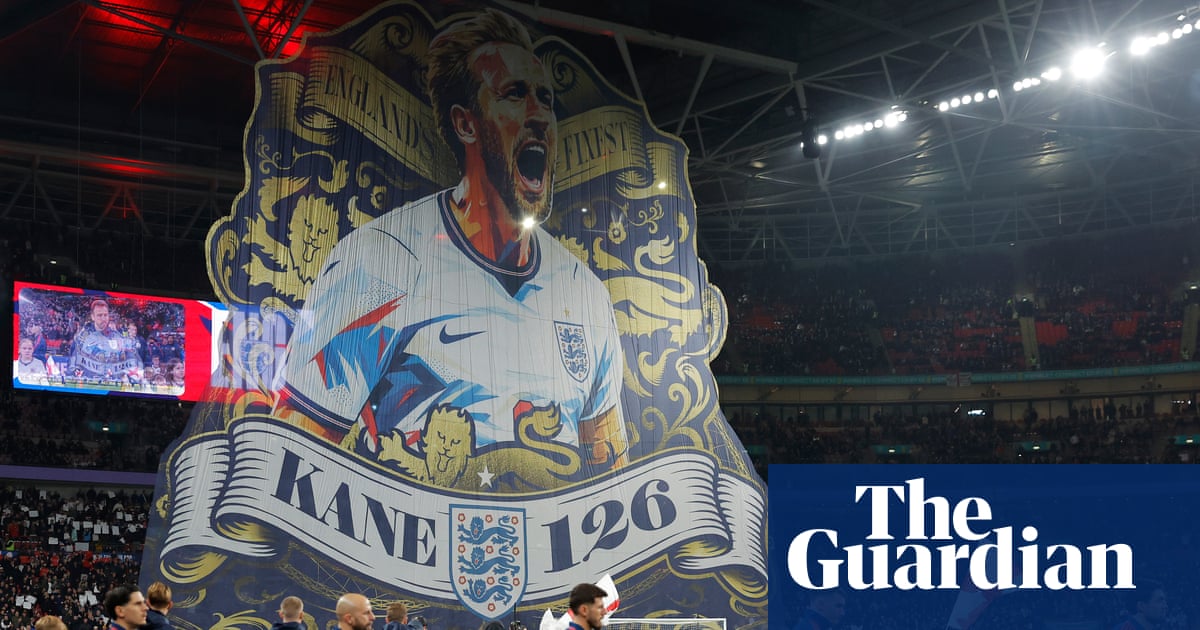
So it was in the buildup to Harry Kane’s record-breaking 126th cap, at the end of Harry Kane Ballon d’Or fortnight, as Harry Kane’s England were led out by top scorer Harry Kane, climax to a week of Harry Kane tributes, Harry Kane montages, 26-page Harry Kane … wait. This was that kind of occasion from start to finish, a night where you expected to look up from your desk mid-match to see Kane’s head looming helpfully over your shoulder, to enter the Wembley toilets at half-time and find him silently offering you a breath mint and a scented tissue. Football loves its rankings and ratings.
England loves a formal march-past. The Harry Kane moment was always going to come at Wembley. And it duly arrived with 61 minutes gone and the score 1-1 in a meandering game of mid-November England product.
There may be less satisfying ways to decide a game of football than a VAR-screen penalty awarded for an overly prolonged grab of the collar on a player who wasn’t going to get the ball. But it’s hard to think of many right now. There was a gathering roar from the Wembley crowd, luxuriating in the prospect of a Kane penalty sequence: the pre-kick close-up, the jaw, the stare, the iconic hairline.
Kane delivered, rolling the ball into the centre of the goal. There was a leap, a punch of the air, an embrace in front of a billowing George Cross flag. At times like these it is hard to remember a time when Kane wasn’t exactly here doing exactly this, to accept that he won’t just be out there doing it for ever.
Although the good news is he now gets to re-break the caps record every time he plays, thereby ensuring more ceremony, more pomp, more of that sweet, sweet, neural fatigue. No doubt the haters will say: typical Kane. The numbers ticking over.
Extract — continue reading at the source.