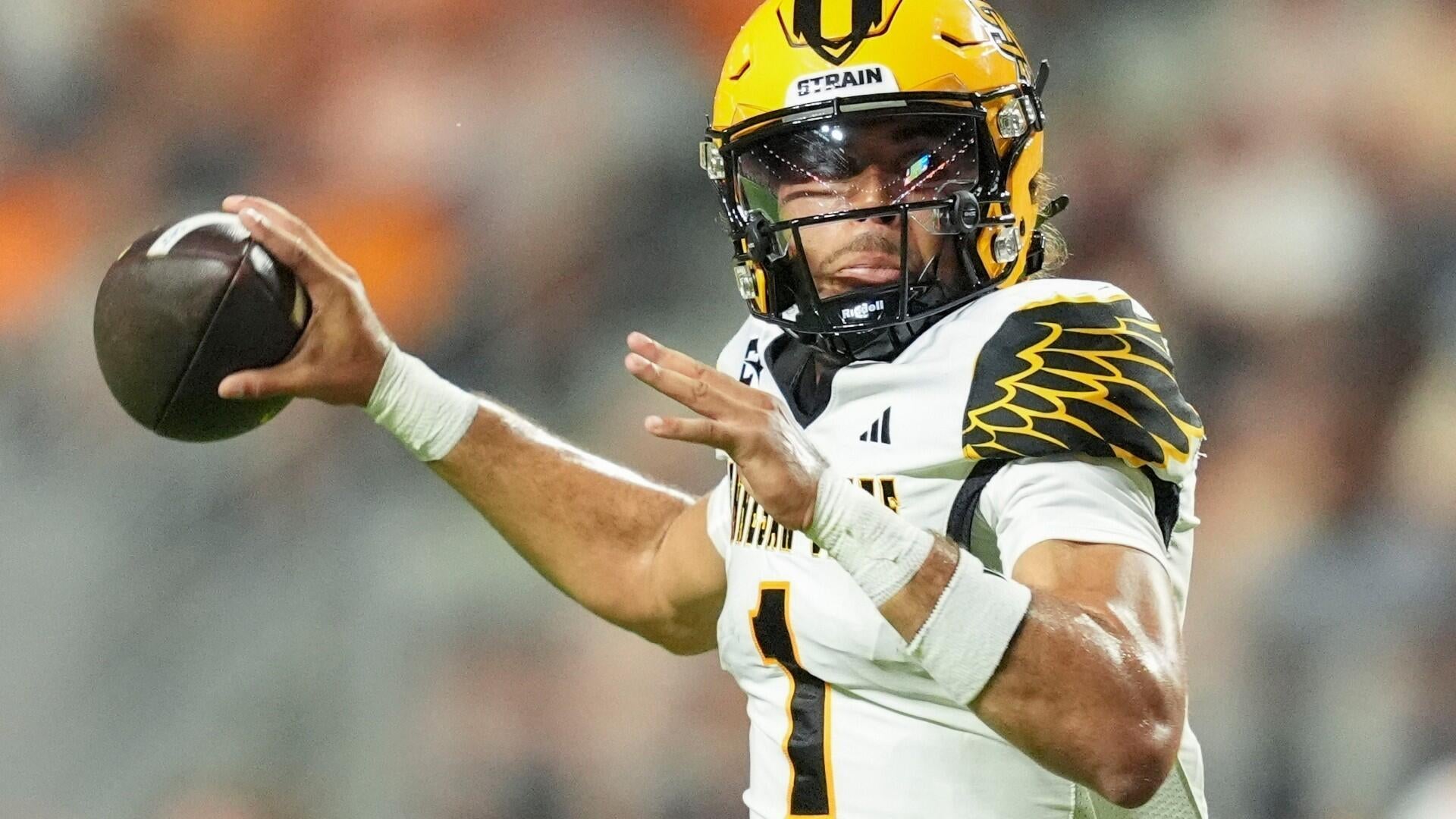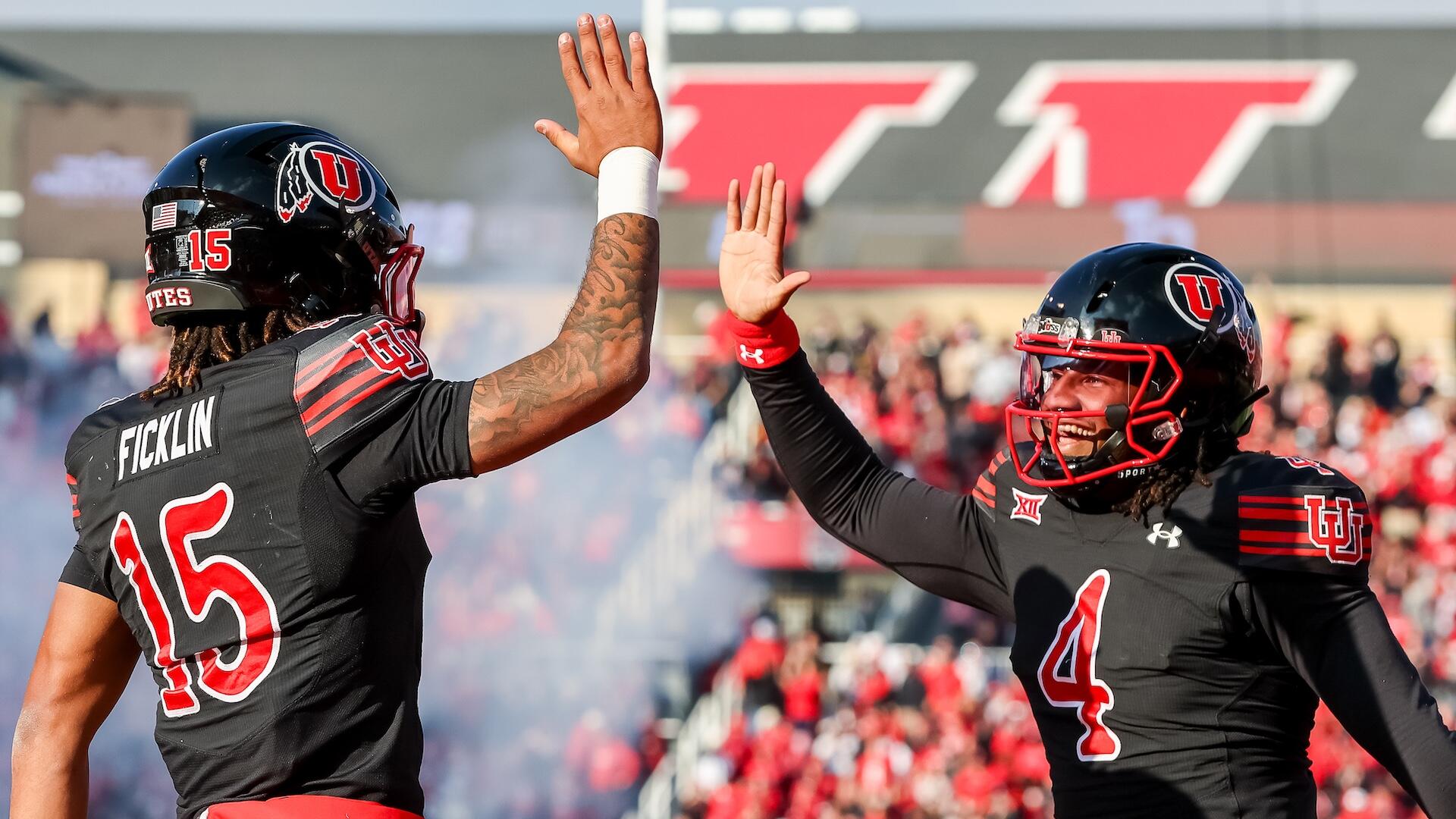
Utah's backup quarterback lined up wide on the right side of the formation while Devon Dampier stood in the shotgun awaiting the snap. It was the first play of Utah's game against Arkansas, and the Razorbacks had to figure out which quarterback mattered in the formation. The Hogs weren't fooled after studying the formation on film and practicing against it that week -- but it also didn't matter.
Byrd Ficklin sprinted right, swinging behind Dampier in an orbit motion before the snap. Dampier palmed the ball and threw it backward to the left. Ficklin snagged it, reared back his left arm and unleashed a throw from the left hash mark all the way across to the right sideline.
The pass traveled at least 42 yards in the air and was dropped over the shoulder and into the hands of running back Wayshawn Parker, who was covered closely by a cornerback, for a 36-yard gain. "We saw it coming, but we just weren't in a good enough position to make the play," Arkansas coach Ryan Silverfield said. "We got to find ways to make those plays, but credit to them, and shame on us." That night's 43-10 win featured even more cunning deception, marking neither the debut nor the end of Utah's multi-QB looks.
Opponents still haven't figured out how to counter the Utes' inventive dual-quarterback schemes. Flying under the radar as a playoff contender, No. 12 Utah (4-0, 1-0 Big 12) enters Saturday's matchup against Kansas (2-2, 0-1) with a 10-game winning streak and eyeing its first 5-0 start since 2015. Statistically, the Utes present a compelling case as an elite contender.
They have led by at least 20 points at halftime in every game this season -- a feat matched over the last decade only by CFP semifinalists Ohio State in 2019 and Texas in 2024. The success comes from a system built around a pair of dual-threat quarterbacks deployed simultaneously, seamlessly swapping roles across skill positions—from quarterback to backfield to receiver, in the slot and out wide. It's not the Wildcat formation or a gimmick trick play that so many others run.
Utah uses it so often that it's just another play in its script. First-year offensive coordinator Kevin McGiven doesn't even like calling it a two-quarterback package. "I guess people might view it as a two-quarterback package, but we really just have [Ficklin] in some spots that a running back would be playing in or a receiver would be playing," McGiven told CBS Sports.
Extract — continue reading at the source.