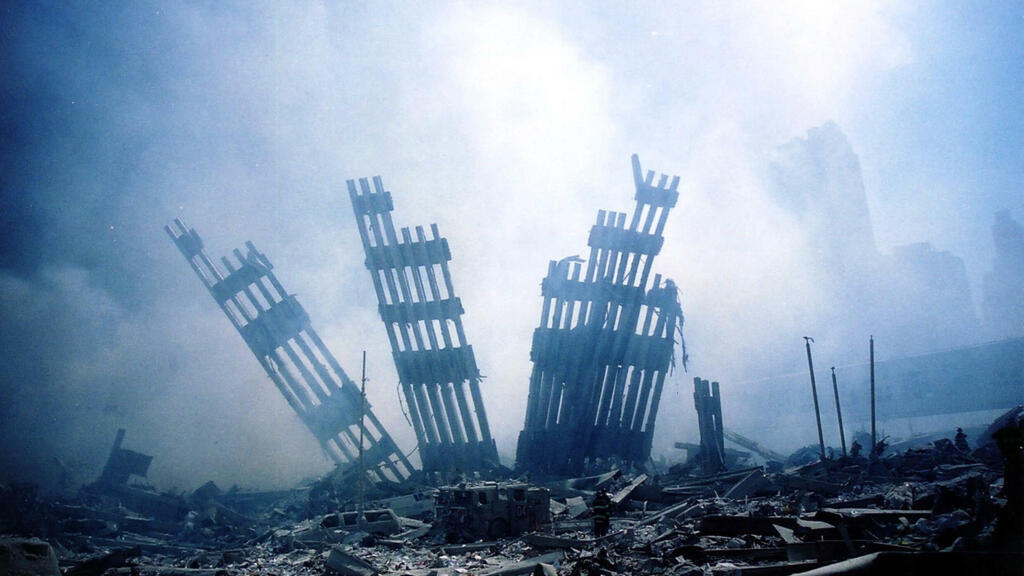
A generation of spies had lost an enemy but not yet found a role. A decade after the dissolution of the Soviet Union, al-Qaida’s devastating attacks on New York and Washington on 11 September 2001 announced to the Central Intelligence Agency (CIA) that the long era of battling communism, for which it had been founded, was officially at an end. It was to be replaced by a no-holds-barred “war on terror” that would leave the CIA with a soiled reputation over falsified intelligence that led to the invasion and occupation of Iraq, and an extraordinary rendition program in which suspects were subjected to “enhanced interrogations” at secret sites that official US inquiries subsequently defined as torture.
The US intelligence community was dramatically transformed after two planes flew into the World Trade Center, a third smashed into the Pentagon, and a fourth crashed in the Pennsylvania countryside after passengers overcame the hijackers. Accounts of what unfolded inside the CIA’s headquarters in Langley, Virginia, suggests an organization unprepared for the drastically changed world the attacks ushered in, despite an awareness among some in the intelligence community that al-Qaida and its leader, Osama bin Laden, represented a clear and present danger. Margaret Henoch, then a counter-intelligence officer with little knowledge of terrorism, recalls confusion, chaos and an initial lack of direction from senior leadership as staff struggled to process what seemed like a bolt from a clear blue sky on that balmy late summer day.
To this day, Henoch – who had previously been stationed in Vienna, where she focused on the International Atomic Energy Agency and nuclear threats – is haunted by the apparent vacuum that followed. About 40 minutes after the first attack, with no clear direction from the top of CIA, she decided to go up to the seventh floor, which accommodated the agency’s senior figures, including its then director, George Tenet. To her surprise, the area was deserted, apart from three assistants.
Because if the Pentagon was hit, there was a chance that we, too, were a target – and it would be nice to believe that the people who left the building rapidly had a thought for all those who worked for them. The Guardian contacted Tenet, now working in the private sector, for comment. In an emailed response, Bill Harlow, the CIA’s public affairs director at the time of the attacks, cited details in the 2007 memoir, At The Center Of the Storm, which he co-wrote with Tenet, and said orders were issued for the majority of the staff to leave the building at “about 10am” – nearly an hour after the second plane struck at 9.03am.
Harlow added: “We were aware at the time of intelligence gathered around 1995-96 of terrorist desires to attack CIA HQ with an airplane. Notably, a decision was made that the personnel of the counter-terrorism center remained in the original headquarters building throughout that day … accepting the risk. The senior leadership team returned to the headquarters in the middle of the afternoon on 9/11.” Some time afterwards, an order was given for the thousands of personnel in the building to evacuate.
Some, including Henoch, were told to relocate to alternative sites to address the emergency. But by the time of that instruction, nearby roads were choked with traffic as commuters returned home from Washington DC after being released from work early. That prevented agency staff from departing, and triggered fears that they could be sitting ducks for the doomed fourth plane, which was already known to be in the air.
Extract — continue reading at the source.