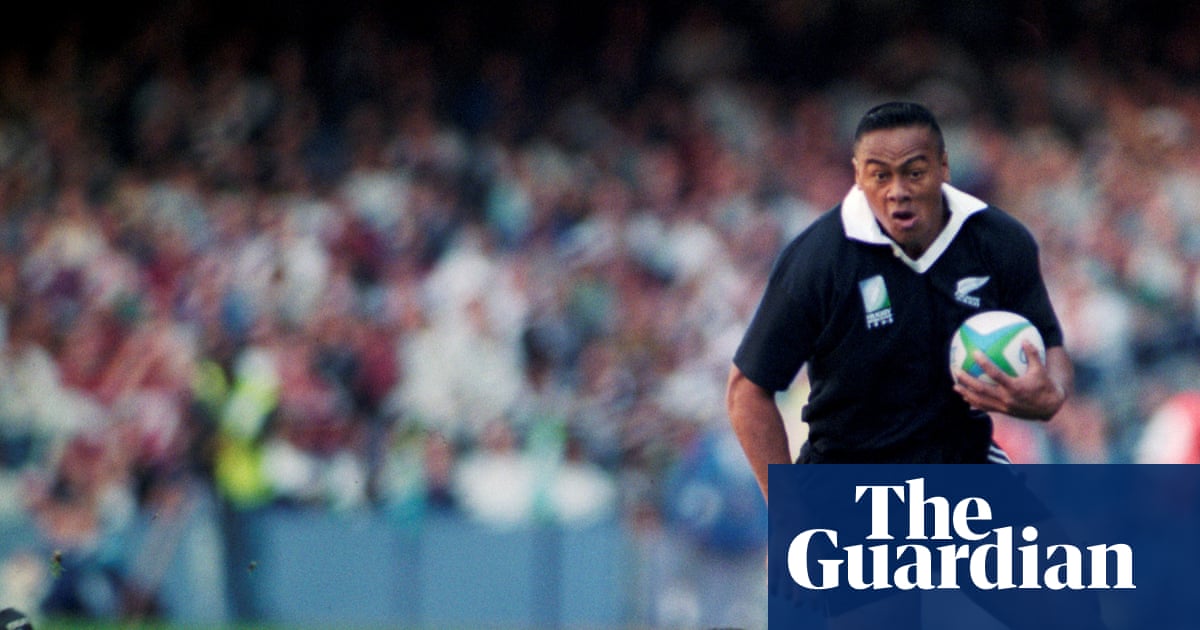
Making a film about Jonah Lomu’s life was never going to thrill everyone. The big man’s widow, Nadene, took legal action in an unsuccessful attempt to block the project and declined to be involved. You can’t imagine Mike Catt being overly delighted either.
Even 31 years later, the brutal footage of Lomu running straight over the top of England’s full-back in the 1995 World Cup semi-final in Cape Town almost merits an 18 certificate on its own. Happily, the makers of Lomu went ahead regardless and have managed to shine a fresh light on the biggest rugby phenomenon in history. There was always way more to Jonah’s story than a huge pair of thighs and here it is, laid out in a manner that is thought-provoking, affecting and wincingly nostalgic.
As the former All Blacks doctor John Mayhew puts it: “I’m disappointed he didn’t have the life he deserved to have. I wonder, even [with] the magnificent gifts he had, whether he was ever truly happy.” That last, haunting line accompanies the viewer all the way home. The film, an artful blend of compelling archive footage, honest contemporary interviews and an evocative soundtrack featuring a range of traditional Tongan music, also puts this weekend’s crucial Test between the All Blacks and South Africa into perspective.
When it comes to global recognition, how many of New Zealand’s current XV will merit a culturally important feature film 30 years from now? All of us who saw poor Catt being steamrollered at Newlands barely knew the half of it. Even the All Blacks management at the time were unaware, for example, of the full extent of Lomu’s illness, which forced him to have a kidney transplant and foreshadowed his untimely death from a heart attack in 2015 at the age of 40.
Mayhew, interviewed shortly before his own death in April last year, did not disclose the magnitude of Lomu’s health problems to the national head coach John Hart for a couple of years, the latter assuming the player must be lazy instead. You’d never see another like him.” In the background were a multitude of family and societal issues stemming from Lomu’s upbringing as the son of Tongan immigrants on the mean streets of South Auckland. As anyone who saw Once Were Warriors back in the day will testify, it was a seriously tough environment.
The Irish film-maker Gavin Fitzgerald, whose previous work includes films about Conor McGregor and Liam Gallagher, and his New Zealand-based female co-director Vea Mafile’o believed that some complex cultural issues needed airing. His backstory was quite simplified. He’s angry at his dad and that’s what makes him good at rugby.’ But when you open up the Tongan in him, all these aspects get more nuanced.” Having trawled through hours of private family video footage and interviews, Fitzgerald is convinced Lomu’s upbringing was a significant source of tension in his life.
Extract — continue reading at the source.