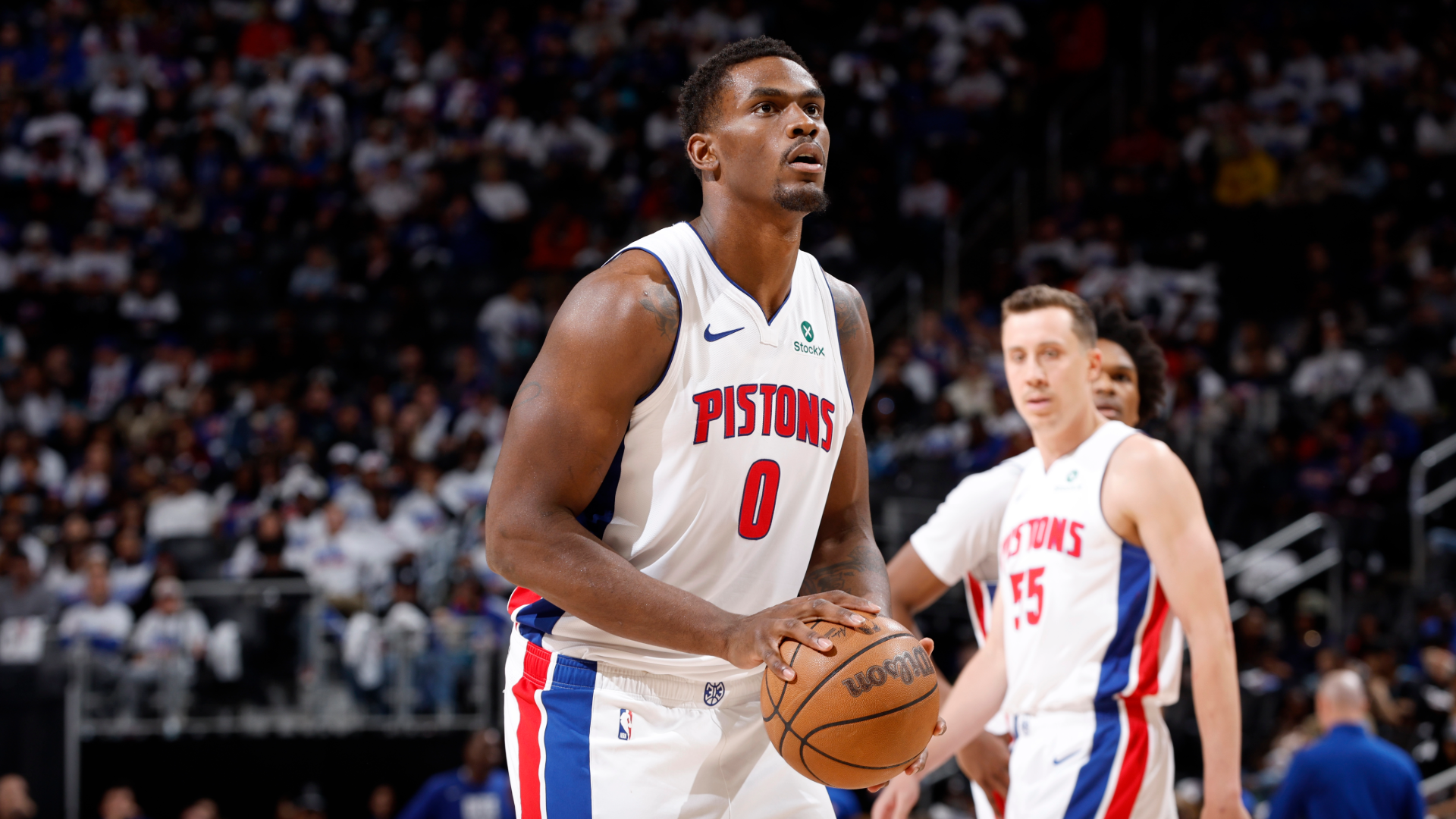
As the months dragged on during the restricted free agency standoff between Jalen Duren and the Detroit Pistons, a pretty sensible question started to arise: did Duren even want to remain with the only NBA team he'd ever known? Duren reportedly felt immense disrespect at the offers the Pistons had made him. ESPN noted that "there were fractures built within the player-team relationship during the business of restricted free agency" and that Duren skipped media day and the beginning of training camp "hoping for a potential sign and trade." In the end, though, Duren elected to accept Detroit's final, increased offer of $200 million over five years.
On Sunday, Duren addressed the media for the first time since the beginning of free agency. Questions justifiably remained even after he signed. Duren becomes trade-eligible on Jan. 15, and with teams like the Sacramento Kings reportedly open to giving him the full max offer that the Pistons ultimately didn't, the potential for a trade down the line still certainly exists.
If it happens, though, Duren indicated that it won't be by his choice. "The clearest message I can give today: I am a Detroit Piston and I want to be a Piston for life," Duren said at Sunday's press conference. He challenged the reporting by saying that "nothing came from me.
Everything that was being heard was speculation." Ultimately, the NBA is a business. The contracts Detroit offered Duren were something of a historical anomaly. As Nate Duncan noted, of the last 35 players to make an All-Star Team on their first contract, 34 of them received max contracts on their second.
Duren is the outlier, and based on what he was eligible for, he didn't even come close. As an All-NBA player, Duren could have made up to $287 million on this contract through the Derrick Rose Rule. It is exceedingly rare that the young, All-NBA players are denied max deals, so it's hardly surprising that Duren would have felt disrespected by the lesser offers the Pistons put in front of him.
That is especially true in light of the max offers he likely felt he could have gotten next summer as an unrestricted free agent. Such deals, through the four-year limitation on external suitors, the smaller annual raises available to those teams and the well-below-market qualifying offer salary Duren would have needed to take for a year to get there, would have ultimately paid him less than what Detroit ultimately offered, but there would have been no question about respect considering they would have paid him the maximum allowable amount. Detroit, meanwhile, wrestled with the new financial world NBA teams are living in.
Extract — continue reading at the source.