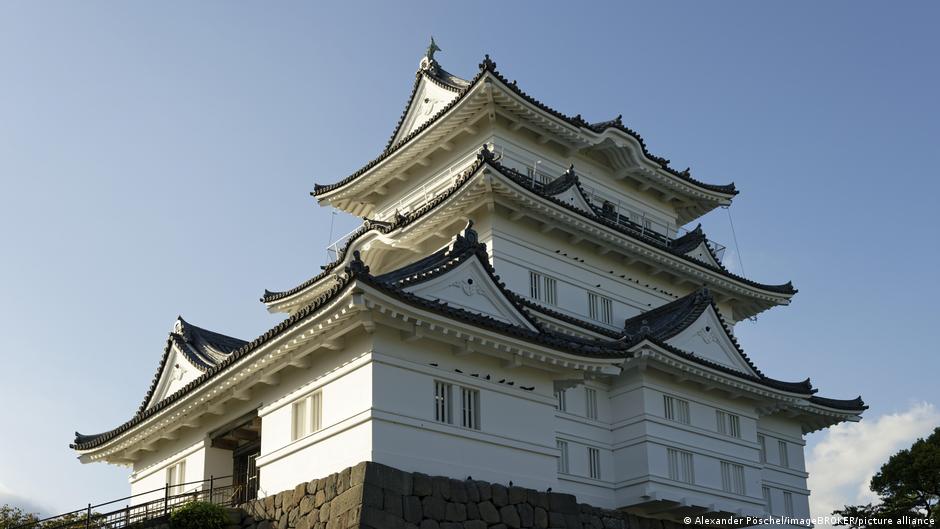
The 370-year-old structure has all the attributes of a classically designed Japanese temple, from the curved roof to the timber-frame walls, spacious tatami-mat prayer hall and elaborately decorated altar. Set in manicured gardens on the Chita Peninsula in central Japan, the 350-square-meter (3,767-square-foot) property is on the market for 482 million yen (€2.66 million). The estate agent's pitch says the price includes dismantling by "expert heritage craftsmen" and delivery to anywhere in Japan, where it would be fully restored into a "stunning" two- or three-bedroom home.
The sale and removal of the temple marks the end of its role in the local community in the hills above the Nagasawacho district, but it is a better fate than many places of worship across Japan. There are around 77,000 temples across the country, but as many as 17,000 no longer have a full-time resident priest as congregations have shrunk — particularly in rural districts experiencing rapid depopulation — and financial pressures have taken their toll. That means many temples are being sold off or simply shuttered and left to deteriorate quietly.
Tomomi Iwayama took on the abandoned Ganshu-ji temple in Odawara, a coastal town about 80 kilometers (50 miles) southwest of Tokyo, a decade ago. Today, he is the abbot of a growing congregation. "The temple had no abbot for 70 years before I arrived because it was just so difficult to operate, and it has taken me until now to get it financially back on track," he told DW.
"Even in a relatively large urban area such as Odawara, which has around 200,000 residents, it has been very hard," he said. "In the countryside, it is much more difficult." Iwayama's biggest problem is the country's shrinking population: fewer worshippers and falling demand for funerals and other traditional rites make it harder to finance the temple's upkeep. He has worked hard to reach out to the local community and has had success in selling plots in the temple graveyard.
One innovation that has attracted attention is the temple's "smart graveyard," where families scan a card, and a robotic system recovers a relative's ashes from the columbarium. Temples in rural areas of Japan face far greater challenges, he said. "Young people in villages usually leave to go to university, and then they find a job in one of the big cities, so they rarely go back," he said.
"Maybe they will go back once a year to pay their respects to their ancestors at the village temple, but that is not enough for the temple to get by on." Equally, when the head priest of a rural temple retires, his children are unlikely to want to take the role on because of these challenges. All too often, Iwayama said, the result is the temple closing. But he denies the suggestion that religion in Japan is following the same path as in the West, where Christian congregation numbers have plummeted over the decades.
Extract — continue reading at the source.