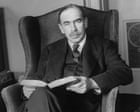
The sound of guns from the advancing German armies could be heard clearly by John Maynard Keynes as his train trundled across northern France in the spring of 1918. The evidence of the struggle on the western front was everywhere but Keynes, then a Treasury official, was not heading to Paris on war business; he was off to buy some art. Keynes made the risky trip to attend an auction of the studio of Edgar Degas, who had died the previous year.
The man who would become the foremost economist of the 20th century returned to London with some impressionist treasures for the National Gallery, having successfully petitioned the chancellor of the exchequer to spend £20,000 at the sale. This story reveals much about Keynes. His skill in lobbying officialdom for funds at a time when the country was involved in a costly war.
His love of art, which culminated in him being instrumental in setting up the Arts Council. His conviction that economics mattered less than the good things in life. All of which makes the title of James Graham’s new play about Keynes, The Standard of Living, wholly appropriate.
Keynes pored over statistics but was much more than a number cruncher. He had firm views about why the economy was malfunctioning in the 1920s and 1930s, but was just as interested in discussing philosophy with Bertrand Russell and Ludwig Wittgenstein. He believed a growing economy should provide the opportunity for more leisure time rather than the accumulation of monetary wealth.
He revolutionised economics without having a revolutionary bone in his body. Born into a well-off academic family, Keynes went to Eton before studying maths at Cambridge. His circle of friends after university was the Bloomsbury Group, painters and writers who included Virginia Woolf, and two of his lovers, Lytton Strachey and Duncan Grant.
This was a group that prided itself on being unconventional, on not accepting the status quo. Bloomsbury helped satisfy Keynes’s cultural needs but also helped shape his economic thinking. He did not see growth as an end in itself but rather as a means to live the good life or – as he put it – to live like the “lilies in the field”.
Extract — continue reading at the source.