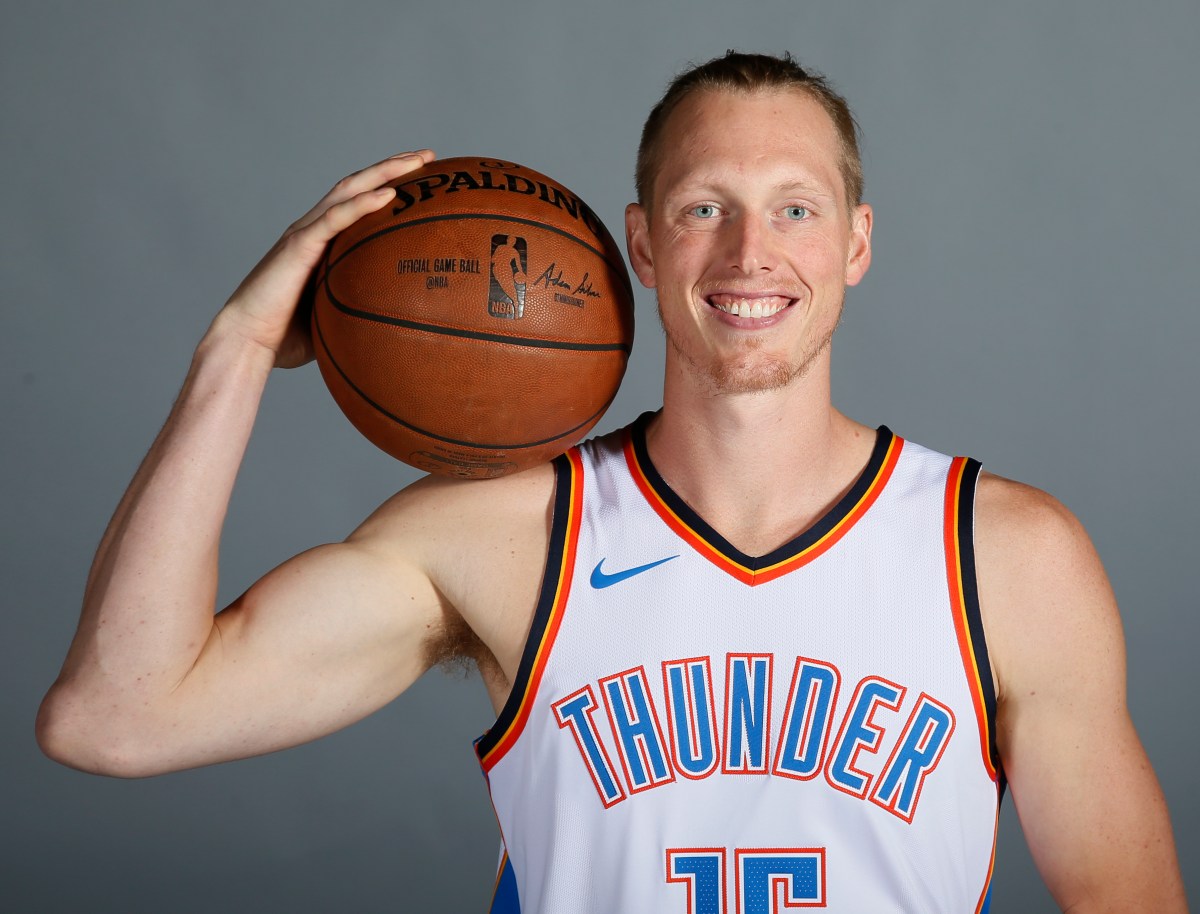
Former professional basketball player Kyle Singler posted a series of social media videos that have raised concerns among fans and mental health experts, as he made serious allegations about his safety and repeatedly called out former Duke coach Mike Krzyzewski, commonly known as Coach K, in a plea for help. Teresa Behrend Fletcher, director of Adler University’s Sport and Human Performance program, told Newsweek, “From what I see, Kyle Singler is struggling and for whatever reason, he believed reaching out through social media was the solution." “There could be a number of reasons for this behavior, including mental illness, substance use, stress, trauma, bad decision-making or a combination of factors,” she added. Jarrod Spencer told Newsweek that “While I can’t diagnose him from this video, it clearly seems that he is struggling from ‘hurt held inward,’ which is a definition of depression, and ‘fear of the unknown,’ which is a definition of anxiety.” Newsweek has reached out to Singler and Duke Athletics for comment via email on Wednesday.
Singler, 38, is a former professional basketball player who previously played at Duke University, where he helped lead the Blue Devils to the 2010 NCAA men's basketball championship and was named the NCAA Final Four Most Outstanding Player. He was selected by the Detroit Pistons in the second round of the 2011 NBA Draft. He was later traded to the Oklahoma City Thunder in 2015, where he spent four seasons.
He last appeared in an NBA game during the 2017-18 season. The Oregon native largely stayed out of the public eye until a series of recent social media videos sparked concern among fans and former players, leading to calls for support and wellness checks. He previously had posted a video in 2024 that sparked alarm among some fans.
Fletcher cautioned against drawing conclusions and “[determining] the breadth and depth of anyone’s’ challenges” based on limited public information about an individual's circumstances. Singler has not publicly disclosed a mental health diagnosis. Fletcher also noted that oftentimes “the stigma of mental illness along with shame and perceived or even real consequences,” prevents athletes from accessing the proper care and seeking mental health support.
Despite those challenges, Fletcher expressed hope that public attention surrounding the videos could ultimately lead to support and treatment if needed, noting that “social media can be both a blessing and a curse.” Mental health experts say the transition out of competitive sports can be very difficult for some former athletes. Spencer told Newsweek that “many athletes struggle with mental health concerns in the transitional process from competing to beyond.” Spencer noted that one contributing factor is the sudden loss of the physical and psychological benefits associated with high-level competition. He continued, “One of the reasons is that training at a very high level can sometimes mask some of the lower levels of serotonin and dopamine that can be associated with depression because athletes [are] getting megadoses of that from extreme workouts daily.” Beyond the end of competition itself, Spencer said retired athletes can also lose access to support systems that were available during their playing careers.
Many college athletic programs and professional sports organizations provide mental health services and counseling resources for athletes, reflecting a broader effort to address mental health concerns and reduce barriers to care. Singler posted a series of videos on Instagram on Tuesday in which he made a range of allegations about his safety and Coach K. He continued, “Set me up, man.
Extract — continue reading at the source.