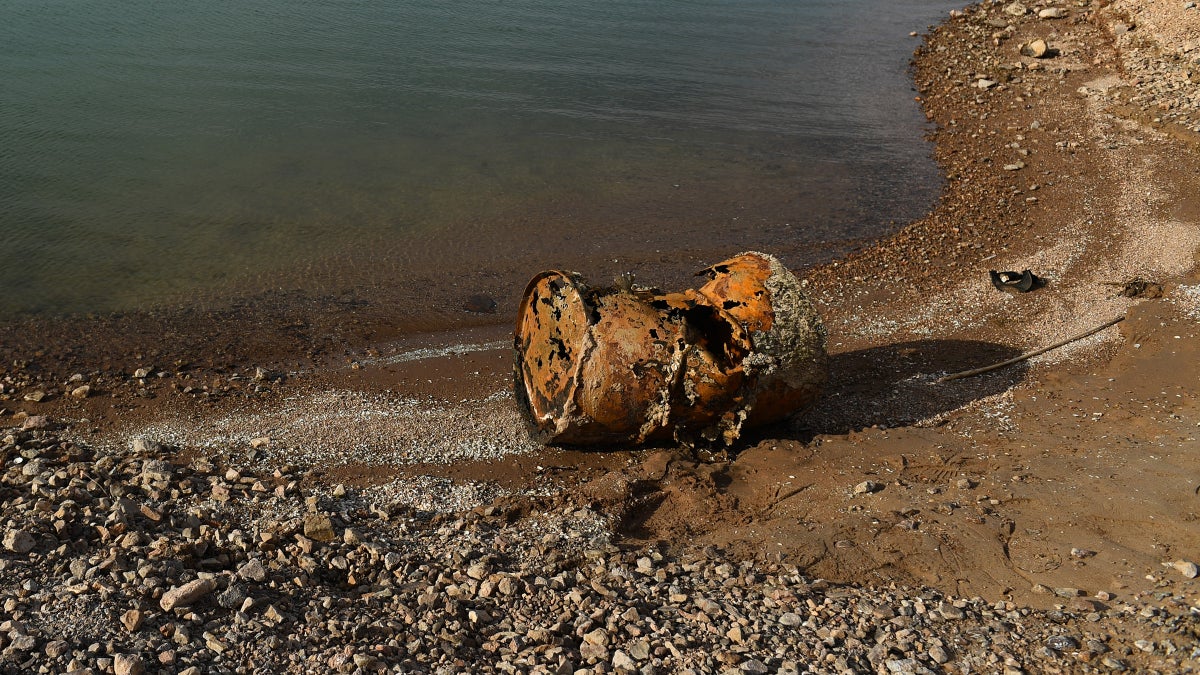
The drying lakebed at Lake Mead continues to reveal grisly discoveries ( . FALLON / IMages) One of the most grisly mysteries in the recent history of America’s national parks has finally been solved. On October 15, police in Las Vegas, Nevada, revealed the identity of human remains that were found inside of a rusting barrel on the shores of Lake Mead in 2022.
The grisly discovery by boaters led to a lengthy Outside investigation into the identity of the corpse. Law enforcement now believes the body is that of Edward Lelburian Jackson, an Arkansas man who vanished in the 1980s. In a press conference held in Las Vegas, officials said they used DNA from bone samples to determine the man’s identity.
But there’s still a lingering question at the heart of the story, authorities admitted. Nobody knows how Jackson ended up murdered and sealed in a metal drum. The mystery of the man in the can dates back to May 1, 20022.
That spring, Lake Mead was in the midst of a record drought, and water levels dropped to the lowest point on record—a depressing statistic sadly surpassed in 2026. Rapidly receding waters exposed parts of the lakebed that had been submerged for decades. And that afternoon, beachgoers near the Hemenway Harbor saw a rusted steel drum emerge from the water.
When they looked into the barrel, they saw human bones and the remains of clothes. Photos of the grisly discovery were uploaded to Instagram and quickly circulated on social media. On May 3, authorities held a press conference to reveal what they found inside the can: a body, believed to be male, who died by a gunshot wound to the head.
Authorities hypothesized that the murder had occurred in the seventies or eighties, based off of the style of clothing found in the can—garments they traced back to Kmart. The discovery kicked off a frenzy of speculation in Las Vegas, and one podcast even invited divers to try and discover more bodies from the receding waters. That prompted the National Park Service (NPS), which manages Lake Mead, to post a terse statement.
Extract — continue reading at the source.